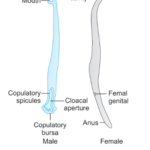
Nematodes Question 1. Write a short note on the mode of infection by Ascaris lumbricoides. Name the definitive host. Answer: Mode of Infection Infective form: Embryonated eggs Portal of entry: Alimentary canal Site of location: Small Intestine The adult worm lives in the jejunum of man. Fertilized eggs containing unsegmented ova are passed in feces. … [Read more...] about Nematodes Question And Answers
Microbiology
Malarial Parasite Question And Answers
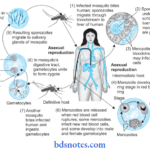
Malarial Parasite Question 1. Describe morphology, life cycle, pathogenicity and laboratory diagnosis of Plasmodium vivax. Answer: Morphology of Plasmodium Vivax The morphology of Plasmodium vivax is based on its various morphological forms which is as follows: Sporozoites: They are narrow and slightly curved. Sporozoites are of two types, i.e. tachy—fast … [Read more...] about Malarial Parasite Question And Answers
Parasitology And Entamoeba Histolytica Question And Answers
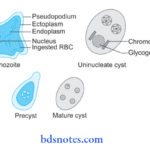
Parasitology Question 1. Describe briefly the definitive host Answer: Definitive host: When the host harbors the parasite in adult form or when the parasite utilizes the host for sexual reproduction. For example In plasmodium: The female anopheles is a definitive host. In guinea worm: The man is the definitive host. Read And Learn More: Microbiology Question And … [Read more...] about Parasitology And Entamoeba Histolytica Question And Answers
Cestodes Tapeworms Question And Answers
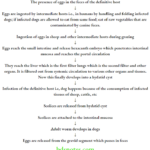
Cestodes —Tapeworms Question 1. Write a note on the life cycle of Echinococcus granulosus. Answer: Echinococcus granulosus is also known as dog tapeworm. It is a cestode, and it is the causative agent of hydatid disease. Life Cycle of Echinococcus granulosus Definitive host: Dog (also fox, wolf, and jackal) Intermediate host: Sheep, cattle, pig, goat, … [Read more...] about Cestodes Tapeworms Question And Answers
Mycology Question And Answers
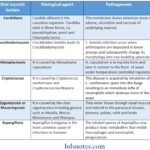
Mycology Question And Answers Question 1. Write a short note on morphology, lab diagnosis, and lesions produced by Candida albicans. Answer: Morphology Candida albicans is an ovoid or spherical budding yeast cell, 3-5 µm in diameter. It produces pseudohyphae both in culture and in tissues. "What is mycology? A detailed question and answers … [Read more...] about Mycology Question And Answers