Branchial Cleft Cyst: Causes, Types, And Symptoms
Write a short note on the branchial cyst.
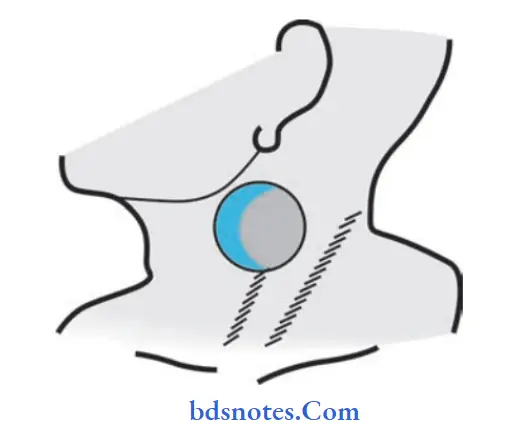
Answer. This is a cystic neck swelling in the lateral aspect of the neck, which is a result of a persisting cervical sinus formed by the second branchial cleft.
“Branchial Cleft Cyst Symptoms”
Branchial Cleft Pathogenesis
It arises from
- Epithelial remnant of branchial cleft
- Residual cervical sinus epithelium
- Cystic changes within cervical lymph nodes of epithelial inclusion
Branchial Cleft Cyst In Children
Read and learn More Cysts: Types, Causes, Symptoms, and Treatment
“Branchial Cleft Cyst And Antibiotics”

“Branchial Cleft Cyst Causes“
Branchial Cleft Clinical Features
- Swelling is seen in the neck beneath anterior border of upper third of sternomastoid muscle.
- Swelling is smooth, soft, fluctuant, and transilluminate with the sensation of a half-filed double hot water bottle.
- It is seen commonly in late adolescence and during the third decade of life.
- Swelling is painless unless it is infected.
- Mobility of swelling is restricted because of adherence to the sternomastoid muscle.
- It contains cholesterol crystals, from the lining of the mucus membrane, which consists of the sebaceous gland.
- Cheesy toothpaste-like material is typical.
Branchial Cleft Cyst Surgery
“Branchial Cleft Cyst And Infection”
Branchial Cleft Treatment
- Cyst should be excised under general anesthesia.
- A branchial cyst is with carotid, hypoglossal nerve, glossopharyngeal nerve, spinal accessory nerve, posterior belly of digastrics, and pharyngeal wall.
Medially, it is close to posterior pillar of tonsils.
During excision all the above structures should be taken care of. - Sclerotherapy with OK–432 (Picibanil) is effective and is done under ultrasonography guidance.
Second Branchial Cleft Cyst
“Branchial Cleft Cyst And Dental Research”
Branchial Cleft Complications
- Since the wall is rich in lymphatic tissue, it can undergo secondary infection with pain and swelling.
- Recurrent infection.
Leave a Reply