• Skip to main content
  • Skip to secondary menu
  • Skip to primary sidebar
  • About Us
  • Terms of Use
  • Privacy Policy
  • Disclaimer
  • Contact Us
  • Sitemap

BDS Notes

BDS notes, Question and Answers

  • Public Health Dentistry
  • Periodontics
  • Pharmacology
  • Pathology
  • Orthodontics
    • Anchorage In Orthodontics
    • Mandibular Growth, Functional Matrix
    • Retention and Relapse
  • General Surgery
    • Cysts: Types, Causes, Symptoms
    • Maxillofacial Fractures, Disorders, and Treatments
    • Lymphatic Disorders
    • Neurological and Facial Disorders
  • Temporal And Infratemporal Regions
    • Spinal and Neuroanatomy
  • Dental Materials
    • Dental Amalgam
Home » Branchial Cleft Cyst: Causes, Types, And Symptoms

Branchial Cleft Cyst: Causes, Types, And Symptoms

March 21, 2025 by Kristensmith Taylor Leave a Comment

Branchial Cleft Cyst: Causes, Types, And Symptoms

Write a short note on the branchial cyst.

Answer. This is a cystic neck swelling in the lateral aspect of the neck, which is a result of a persisting cervical sinus formed by the second branchial cleft.
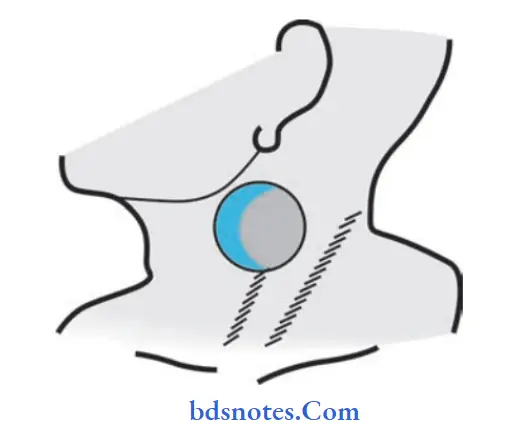
Cyst Branchial cyst

“Branchial Cleft Cyst Symptoms”

Branchial Cleft Pathogenesis

It arises from

  • Epithelial remnant of branchial cleft
  • Residual cervical sinus epithelium
  • Cystic changes within cervical lymph nodes of epithelial inclusion

Branchial Cleft Cyst In Children

Read and learn More Cysts: Types, Causes, Symptoms, and Treatment

“Branchial Cleft Cyst And Antibiotics”

Branchial Cleft Cyst Treatment Algorithm

“Branchial Cleft Cyst Causes“

Branchial Cleft  Clinical Features

  • Swelling is seen in the neck beneath anterior border of upper third of sternomastoid muscle.
  • Swelling is smooth, soft, fluctuant, and transilluminate with the sensation of a half-filed double hot water bottle.
  • It is seen commonly in late adolescence and during the third decade of life.
  • Swelling is painless unless it is infected.
  • Mobility of swelling is restricted because of adherence to the sternomastoid muscle.
  • It contains cholesterol crystals, from the lining of the mucus membrane, which consists of the sebaceous gland.
  • Cheesy toothpaste-like material is typical.

Branchial Cleft Cyst Surgery

“Branchial Cleft Cyst And Infection”

Branchial Cleft Treatment

  • Cyst should be excised under general anesthesia.
  • A branchial cyst is with carotid, hypoglossal nerve, glossopharyngeal nerve, spinal accessory nerve, posterior belly of digastrics, and pharyngeal wall.
    Medially, it is close to posterior pillar of tonsils.
    During excision all the above structures should be taken care of.
  • Sclerotherapy with OK–432 (Picibanil) is effective and is done under ultrasonography guidance.

Second Branchial Cleft Cyst

“Branchial Cleft Cyst And Dental Research”

Branchial Cleft Complications

  • Since the wall is rich in lymphatic tissue, it can undergo secondary infection with pain and swelling.
  • Recurrent infection.

Filed Under: General Surgery

Reader Interactions

Leave a Reply Cancel reply

Your email address will not be published. Required fields are marked *

Primary Sidebar

Recent Posts

  • Branchial Cleft Cyst: Background, Pathophysiology, Etiology
  • Maxillary Nerve: Origin, Course, And Branches
  • The Father Of Anatomy And A Great Anatomist Herophilus
  • Bone Structure – Anatomy
  • The External Carotid Artery: Anatomy, Branches, And Functions
  • Occipitofrontalis Muscle
  • Superficial Temporal Artery
  • Platysma Muscle
  • Cartilage
  • Cauda Equina And Conus Medullaris Syndromes
  • Subcutaneous Injections And Device Management
  • Types Of Circulation: Pulmonary, Systemic, And Portal
  • Hierarchical Organization Of Skeletal Muscle Tissue
  • Elastic Cartilage Histology Short Note For Medical Exams
  • Cellular Organelles And Structure
  • The Golgi Apparatus – The Cell
  • The Cytoplasmic Inclusions Of Certain Plant Cells
  • Dental Abscess
  • Laser Surgery
  • Our Facial Muscles And Their Functions

Copyright © 2026 · Magazine Pro on Genesis Framework · WordPress · Log in