Rifampin
Write A Short Note On Rifampin.
Answer:
Rifampicin (INH) or rifampin is a bactericidal antibiotic drug of the rifamycin group.
Rifampin Mechanism Of Action
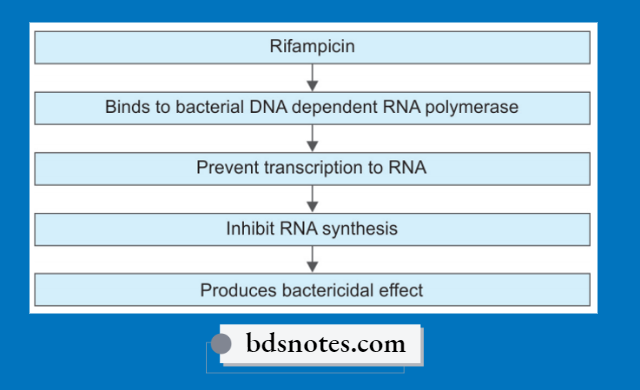
Its lipophilic nature makes it a good candidate to treat the meningitis form of tuberculosis, which requires distribution to the central nervous system and penetration through the blood-brain barrier.
Rifampin Pharmacokinetics
This is given orally and is rapidly absorbed from the gastrointestinal tract but the presence of food decreases its absorption.
The drug is distributed widely throughout the body and is metabolized in the liver. The active deacetylated form is excreted in bile and undergoes enterohepatic recycling. The left out rest of the drug is excreted in the urine.
Rifampin Uses
- Rifampicin is typically used to treat Mycobacterium infections, including tuberculosis and Hansen’s disease. With multidrug therapy used as the standard treatment of Hansen’s Disease, rifampicin is always used in combination with dapsone and clofazimine to avoid eliciting drug resistance.
- Rifampicin also has a role in the treatment of methicillin-resistant Staphylococcus aureus (MRSA) in combination with fusidic acid.
- It is used in prophylactic therapy against Neisseria meningitidis (meningococcal) infection.
- It is also used to treat infection by Listeria species, Neisseria gonorrhoeae, Haemophilus influenza, and Legionella pneumonia.
- Rifampicin has some effectiveness against the vaccinia virus.
- Rifampicin is used with doxycycline for the treatment of brucellosis.
Rifampin Adverse Effects
- Hepatotoxic: Hepatitis, jaundice, liver failure in severe cases
- Respiratory syndrome: Breathlessness along with shock and collapse
- Cutaneous: Flushing, pruritus, rash, redness, and watering of eyes
- Abdominal syndrome: Nausea, vomiting, abdominal cramps with or without diarrhea
- Flu-like symptoms: With chills, fever, headache, arthralgia, and malaise. Rifampin has good penetration into the brain, and this may directly explain some malaise and dysphoria in a minority of users.
Rifampin Interactions
Rifampicin has significant interactions with warfarin, oral contraceptives, cyclosporine, itraconazole, digoxin, verapamil, nifedipine, simvastatin, midazolam, and HIV protease inhibitors.
Leave a Reply