
• Skip to main content
  • Skip to secondary menu
  • Skip to primary sidebar
  • About Us
  • Terms of Use
  • Privacy Policy
  • Disclaimer
  • Contact Us
  • Sitemap

BDS Notes

BDS notes, Question and Answers

  • Public Health Dentistry
  • Periodontics
  • Pharmacology
  • Pathology
  • Orthodontics
    • Anchorage In Orthodontics
    • Mandibular Growth, Functional Matrix
    • Retention and Relapse
  • General Surgery
    • Cysts: Types, Causes, Symptoms
    • Maxillofacial Fractures, Disorders, and Treatments
    • Lymphatic Disorders
    • Neurological and Facial Disorders
  • Temporal And Infratemporal Regions
    • Spinal and Neuroanatomy
  • Dental Materials
    • Dental Amalgam

Medicinal Chemistry II

Antianginal Drugs Classification

March 7, 2024 by Kristensmith Taylor Leave a Comment

Antianginal Drugs Stable Angina

Antianginal Drugs Drugs Acting On the Cardiovascular System The drugs acting on the cardiovascular system are divided into four groups: Cardiotonic drugs. Anti-hypertensive drugs. Anti-arrhythmic drugs Anti-anginal drugs. Antianginal Drugs These are the drugs used in the treatment of angina pectoris. Angina pectoris, commonly known as angina, is severe chest … [Read more...] about Antianginal Drugs Classification

Medicinal Chemistry of Antineoplastic Drugs Notes
March 6, 2024 by Kristensmith Taylor Leave a Comment

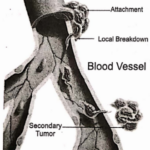
Antineoplastic Drugs Travel Of Cancer Cells

Antineoplastic Drugs Introduction Cancer is the rapid creation of abnormal cells that grow beyond their usual boundaries, and which can then invade adjoining parts of the body and spread to other organs. This process is referred to as metastasis. Metastases are the major cause of death from cancer. (WHO). Cancer known medically as a malignant neoplasm is a broad group … [Read more...] about Medicinal Chemistry of Antineoplastic Drugs Notes

Medicinal Chemistry of Antihistamines Agents Notes
March 6, 2024 by Kristensmith Taylor Leave a Comment

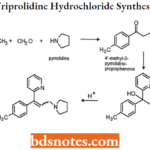
Antihistamine Agents Triprolidine Hydrochloride Synthesis

Antihistaminic Agents Histamine Histamine or β-imidazolyl ethylamine is synthesized from L-histidine by histidine decarboxylase, an enzyme that is expressed in many mammalian tissues including gastric mucosa parietal cells, mast cells, basophils, and the central nervous system (CMS). As a result, histamine plays an important role in human physiology including regulation … [Read more...] about Medicinal Chemistry of Antihistamines Agents Notes

« Previous Page

Primary Sidebar

Recent Posts

  • Branchial Cleft Cyst: Background, Pathophysiology, Etiology
  • Maxillary Nerve: Origin, Course, And Branches
  • The Father Of Anatomy And A Great Anatomist Herophilus
  • Bone Structure – Anatomy
  • The External Carotid Artery: Anatomy, Branches, And Functions
  • Occipitofrontalis Muscle
  • Superficial Temporal Artery
  • Platysma Muscle
  • Cartilage
  • Cauda Equina And Conus Medullaris Syndromes
  • Subcutaneous Injections And Device Management
  • Types Of Circulation: Pulmonary, Systemic, And Portal
  • Hierarchical Organization Of Skeletal Muscle Tissue
  • Elastic Cartilage Histology Short Note For Medical Exams
  • Cellular Organelles And Structure
  • The Golgi Apparatus – The Cell
  • The Cytoplasmic Inclusions Of Certain Plant Cells
  • Dental Abscess
  • Laser Surgery
  • Our Facial Muscles And Their Functions

Copyright © 2026 · Magazine Pro on Genesis Framework · WordPress · Log in