Canine Retraction
Write a short note on the canine retractor.
Answer.
Canine retractor
Canine retractors are the springs that are used to move canines in a direction.
“Emerging research on canine retraction techniques”
Canine retraction in orthodontics
Canine Retractors Classification
- Based on their location.
- Buccal-buccally placed.
- Palatal-palatally placed.
- Based on the presence of a helix or a loop.
- Canine retractor with helix.
- Canine retractor with loop.
- Based on their mode of action.
- Push type.
- Pull type.
“Importance of canine retraction classification in orthodontics”
Read And Learn More: Retention and Relapse in Orthodontics: Causes, Types, Functions
Types of Canine Retractors
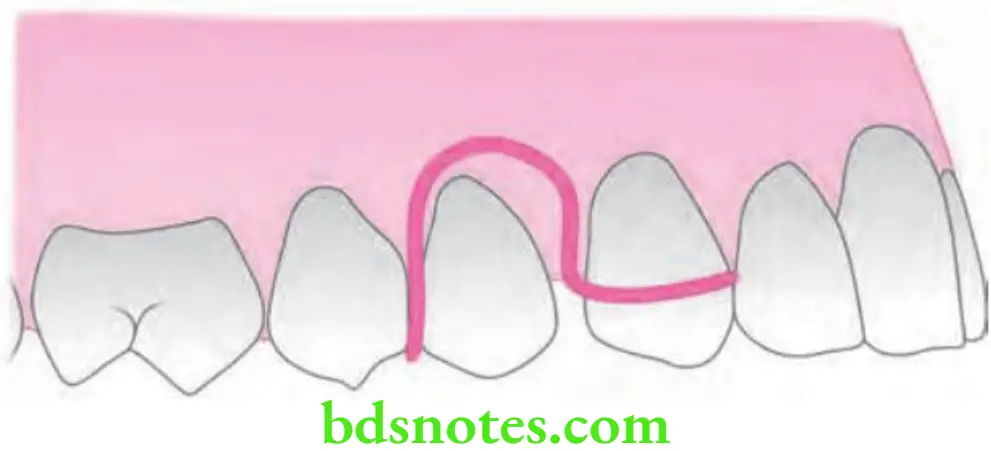
U Loop Canine Retractor
- Spring design: It is made of 0.6 mm or 0.7 mm stainless steel wire. It consists of a U loop, an active arm and a retentive arm which lies distally. The base of the U loop is 2–3 mm below the cervical margin. The mesial arm of the U loop is bent at a right angle and adapted around the canine below its mesial contact point.
Orthodontic canine retraction
- Activation: This is activated by closing the loops by 1–2mm or cutting the free end of the active arm by 2 mm and readapting it.
- Indication: Mechanically, this is the least effective and is indicated as a minimum distal retraction of 1 to 2 mm of the canine is required.
- Advantage: It is easy to fabricate, simple in design, and is less bulky.
- Disadvantage: This is the least efficient of all the canine retractors.
“Common methods of canine retraction explained”
“Role of biomechanics in canine retraction classification”
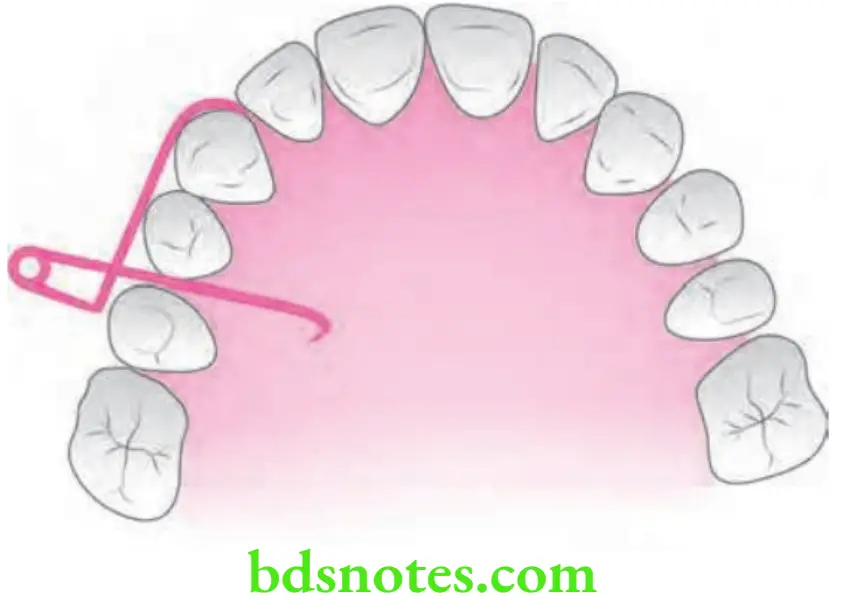
Helical Canine Retractor
- Spring design: It is also known as the reverse loop canine retractor and is made up of 0.6 mm wire. It consists of a helical loop or coil of 3 mm diameter, an active arm, and a retentive arm. The mesial arm is adapted between the premolars. The distal arm is active and is bent at a right angle to engage the canine below the height of the contour. The coil is placed 3–4 mm below the gingival margin. The height of the coil is adjusted based on the vestibular height.
Types of canine retraction
- Activation: By opening the helix by 1 mm or by cutting 1mm of the free end and readapting it around the canine.
- Indications: It is given in patients with shallow sulcus, mainly with the mandibular arch.
- Drawbacks: This is stiff in the horizontal plane and is unstable vertically.
“Impact of different canine retraction techniques on outcomes”
“Signs you need canine retraction in orthodontics”
Palatal Canine Retractor
- Spring design: It is made up of 0.6 mm stainless steel wire. This consists of a coil of 3 mm diameter, an active arm, and a guide arm. The active arm is placed mesial to the canine. Helix is placed along the long axis of the canine. And as far as possible, to have a good range of action. The retentive tag is embedded in the acrylic plate.
- Activation: It is done by
- Opening the helix 2 mm at a time.
- By pulling the free arm of the spring slightly away from the point of emergence from the coil.
- Tension is given to the spring by squeezing the coil with the tip of the pliers.
- Indication: It is used in retraction or distalization of palatally placed canines.
Two-step retraction
“Early warning signs of improper canine retraction”
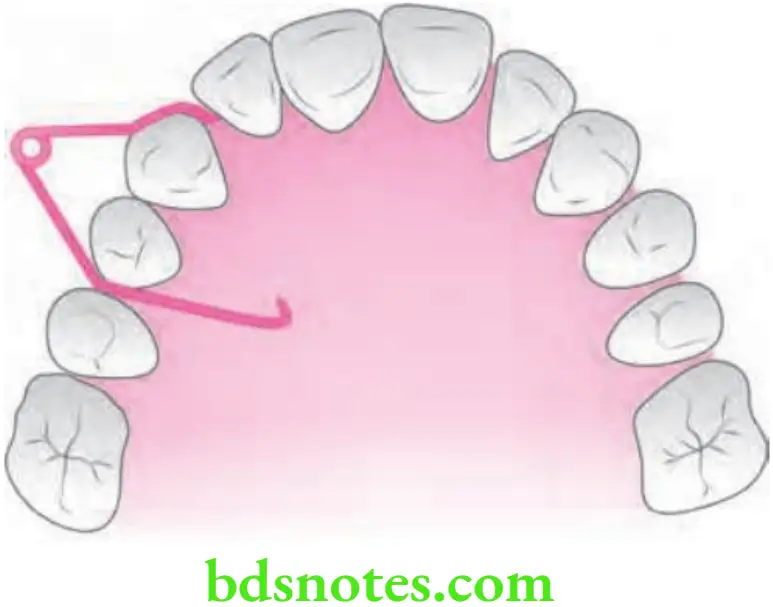
Buccal Canine Retractor
- Fabrication: It consists of a coil of 3 mm diameter, an active arm, and a retentive arm. The coil is placed distal to the long axis of the canine. The end of the spring is bent at a right angle to the canine to be moved, and then it is shaped to tooth. The tag should cross over the mesial side of the second premolar.
- Modifications: They can be of two types, i.e., supported and self-supported.
- Supported or sleeved: These canine retractors are made of 0.5 mm stainless steel wire. They are more flexible and mechanically efficient. As they lack stability, they are enclosed in stainless steel tubing.
- Self-supported: These canine retractors are made of 0.7 mm stainless steel wire so that the spring can support itself.
- Activation: Self-supported canine retractors are activated by closing the helix 1 mm at a time, while the supported canine retractors can be activated up to 2 mm at a time. Activation is carried out by using ‘hollow chop’ pliers such as Mathews or Andresen’s.
- Indications: In patients where there are buccally placed canines and canines are placed high in the vestibule. They help in the movement of canines both buccally and palatally.
Anchorage in orthodontics
“Asymptomatic vs symptomatic stages of canine retraction”
Leave a Reply