Amyloidosis
Write a short note on Amyloidosis.
Or
Write a short answer on amyloidosis.
Answer:
Amyloidosis is the term used for a group of diseases characterized by the extracellular deposition of a fibrillar proteinaceous substance called amyloid.
Classification of Amyloidosis
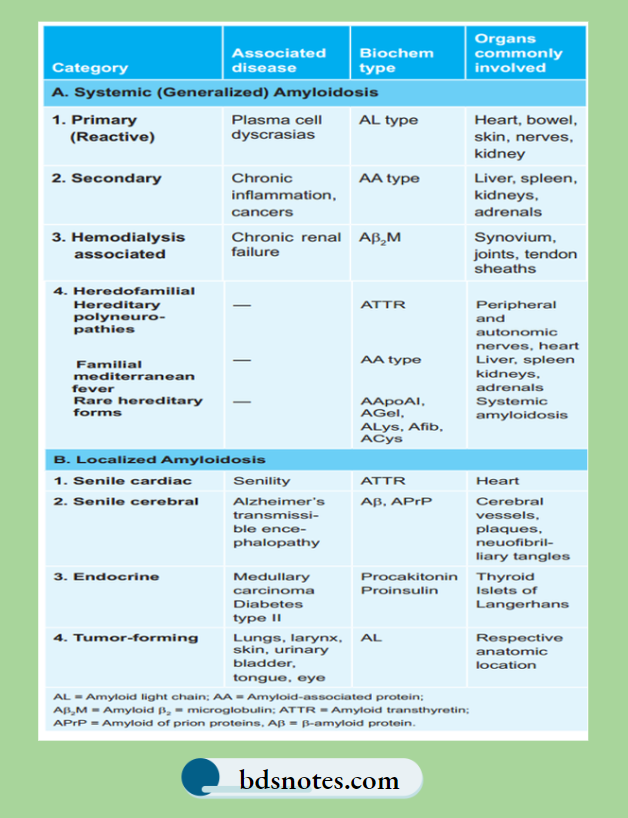
Primary Amyloidosis
- Biochemical Composition: AL protein
- Associated Organ: Kidney, heart, bowel, nerve, and skin
- Associated disease: Plasma cell dyscrasias, multiple myeloma, B-cell lymphoma.
Amyloidosis Pathogenesis
Morphology of Amyloidosis
- Primary amyloidosis: This affects the kidney, liver, spleen, lymph node, adrenal gland, and thyroid gland
- Secondary amyloidosis: This affects the heart, kidney, GIT, peripheral nerves, skin, and tongue.
Amyloidosis Gross Features
- Affected organs are fim, enlarged, and waxy.
- Painting the cut surface with iodine imparts yellow color which changes to bluish violet after the application of sulphuric acid.
Amyloidosis pathology
Pathologic Changes in Amyloidosis of Organ
- The affected organ is usually enlarged, pale, and rubbery cut surface shows fim, waxy and translucent parenchyma.
- The deposits of amyloid are found in extracellular locations, initially in the walls of small blood vessels producing microscopic changes and effects.
Leave a Reply