Vibrio
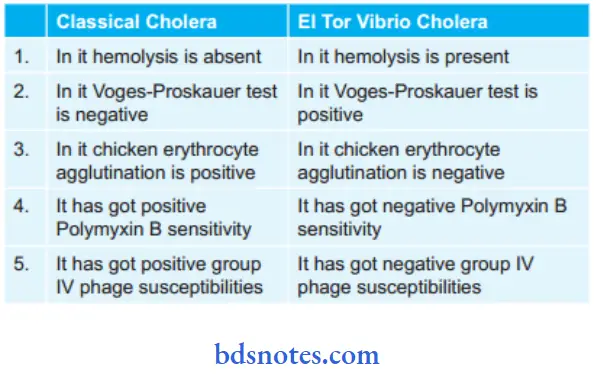
Question 1. Write the difference between classical and El Tor vibrio cholera.
Answer:
Read And Learn More: Microbiology Question And Answers
“Understanding Vibrio and Actinomyces through FAQs: Q&A explained”
Actinomyces
Question 2. Write a short note on lesions caused by actinomycosis and laboratory diagnostic features.
Answer:
Lesions Caused by Actinomycosis
The following are the lesions caused by actinomycosis:
- Actinomycosis: Actinomycosis in human beings occurs in four main clinical forms:
- Cervicofacial: Presented with indurated lesions on the cheek and submaxillary regions.
- Thoracic: Presented with lesions in the lung that may involve the pleura and pericardium and spread outwards through the chest wall.
- Abdominal: Lesion is usually present around the cecum, with the involvement of the neighboring tissues and the abdominal wall. Sometimes the infection spreads to the liver via the portal vein.
- Pelvic: Many cases of pelvic actinomycosis have been reported in association with the use of intrauterine devices and are common in females.
- Gingivitis and periodontitis
- Mycetoma
“Importance of studying Vibrio and Actinomyces for microbiology students: Questions explained”
Laboratory Diagnostic Features
The specimen to be collected is pus. In pulmonary disease, sputum is collected. Tissue can be biopsied:
- Biopsy: Biopsy from the lesional tissue is taken and is assessed microscopically. On microscopic examination, the following features are seen:
- There is a presence of a granuloma with central suppuration.
- There is a formation of abscess in the center of the lesion and at the periphery are seen chronic inflammatory cells, giant cells, and fibroblasts.
- The center of each abscess contains a bacterial colony ‘sulfur granule’ characterized by radiating filaments with hyaline, eosinophilic, club-like representatives of secreted immunoglobulins.
“Role of Vibrio cholerae toxin in causing diarrhea: Questions answered”
- Microscopy: Pus from the lesion is collected. Pus is withdrawn with a capillary pipette. Granules may also be obtained by applying gauze pads over the discharging sinuses.
- The granules are white or yellowish and range in size from minute specks to about 5 mm. They are examined microscopically under a coverslip.
- They are crushed between the slides and stained by gram stain and examined.
- The granules are bacterial colonies that are found to consist of a dense network of thin gram-positive filaments surrounded by a peripheral zone of swollen radiating club-shaped structures presenting a sun ray appearance.
- Clubs are gram-negative, acid-fast, and are of host origin.
- Staining: By Gomori’s methenamine silver stain, the organism stain positively.
- Culture: Sulfur granules or pus containing Actinomycetes are washed and inoculated into thioglycollate liquid medium or streaked on brain-heart infusion agar and incubated anaerobically at 37 °C. In thioglycollate, A. bovis produces general turbidity, whereas A. Israeli grows as fluff balls at the bottom of the tube.
“Common challenges in understanding Vibrio and Actinomyces effectively: FAQs provided”
Question 3. Write a short note on actinomycosis.
Answer:
Actinomycosis is a disease caused by Actinomyces. Actinomycosis is a chronic granulomatous, supportive, and fibrosing infection.
Pathogenesis: The disease originates when there is a disruption of the mucosal barrier, which leads to the invasion of bacteria. There is the occurrence of initial acute inflammation which is followed by a chronic indolent phase. Lesions appear as single or multiple induration.
Actinomycosis Types with Clinical Features
The disease occurs in four of clinical forms, i.e. cervicofacial, thoracic, abdominal, and pelvic actinomycosis.
- Cervicofacial: Presented with indurated lesions on the cheek and sub-maxillary regions.
- Thoracic: Presented with lesions in the lung that may involve the pleura and pericardium and spread outwards through the chest wall.
- Abdominal: Lesion is usually present around the cecum with the involvement of the neighboring tissues and the abdominal wall. Sometimes the infection spreads to the liver via the portal vein.
- Pelvic: Many cases of pelvic actinomycosis have been reported in association with the use of intrauterine devices, and are common in females.
Actinomycosis Treatment: Actinomycosis is treated by surgical removal of affected tissue with antibiotics, i.e. penicillin, tetracycline, erythromycin, and chloramphenicol.
“Factors influencing success with Vibrio and Actinomyces knowledge: Q&A”
Question 4. Write a short note on actinomycetes
Answer:
- Actinomycetes are gram-positive, filamentous bacteria intermediate in properties between true bacteria and fungi.
- Actinomycetes consist of three major medically important genera, i.e.
- Actinomyces, Nocardia, and Actinomadura. Another genus
- Streptomyces rarely cause disease in man, but its medical importance lies in the production of antibiotics by several species.
- Actinomycetes are unicellular like bacteria but produce a mycelium which is non-septate (coenocytic) and more slender like true bacteria they do not have distinct cell walls and their cell wall is without chitin and cellulose (commonly found in the cell wall of fungi).
- On culture media unlike slimy distinct colonies of true bacteria which grow quickly, actinomycetes colonies grow slowly show powdery consistency, and stick firmly to the agar surface.
- They produce hyphae and conidia/sporangia-like fungi.
- Certain actinomycetes whose hyphae undergo segmentation resemble bacteria, both morphologically and physiologically.
“Steps to explain types of Vibrio: Vibrio cholerae vs Vibrio parahaemolyticus: Q&A guide”
- Actinomycetes are numerous and widely distributed in soil and are next to bacteria in abundance.
- They are widely distributed in the soil, compost, etc. The population of actinomycetes increases with the depth of soil.
- They are heterotrophic, aerobic, and mesophilic organisms and some species are commonly present in compost and manures are thermophilic growing at 55-65 °C temperature (for example. Thermoatinomycetes, Streptomyces).
- Actinomyces species lead to actinomycosis in humans
- Nocardia species leads to nocardiosis in immunocompromised individuals with AIDS.
- Maduramycosis leads to mycetoma in humans which is the localized, chronic, granulomatous disease of subcutaneous and deeper tissues affecting the foot and presents as a tumor with multiple discharging sinuses.
Leave a Reply