• Skip to main content
  • Skip to secondary menu
  • Skip to primary sidebar
  • About Us
  • Terms of Use
  • Privacy Policy
  • Disclaimer
  • Contact Us
  • Sitemap

BDS Notes

BDS notes, Question and Answers

  • Public Health Dentistry
  • Periodontics
  • Pharmacology
  • Pathology
  • Orthodontics
    • Anchorage In Orthodontics
    • Mandibular Growth, Functional Matrix
    • Retention and Relapse
  • General Surgery
    • Cysts: Types, Causes, Symptoms
    • Maxillofacial Fractures, Disorders, and Treatments
    • Lymphatic Disorders
    • Neurological and Facial Disorders
  • Temporal And Infratemporal Regions
    • Spinal and Neuroanatomy
  • Dental Materials
    • Dental Amalgam
Home » Understanding The Stages And Physiological Changes Of Pregnancy

Understanding The Stages And Physiological Changes Of Pregnancy

February 5, 2026 by Kristensmith Taylor Leave a Comment

Understanding The Stages And Physiological Changes Of Pregnancy

Question 1. List two factors essential for spermatogenesis.
Answer:
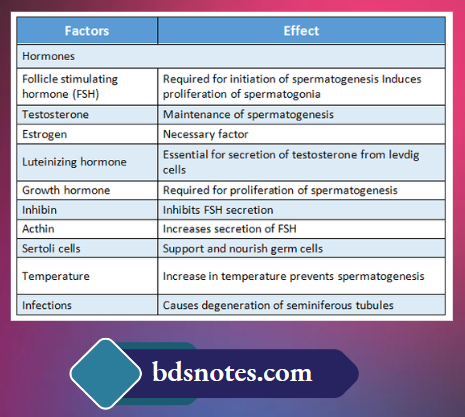
List Two Factors essential For Spermatogenesis.

Question 2. List two endometrial changes occurring during proliferative phase of menstrual cycle.
Answer:

Endometrial changes during proliferative phase of menstrual cycle:

  • Proliferation of endometrial cells occurs rapidly
  • Reappearance of epithelium on the endometrial surface
  • Development of glands and blood vessels in stroma
  • Proliferation of endometrial cells results in thickening of endometrium upto 3-4 mm

Question 3. Physiological changes in pregnancy.
Answer:

1. Hormonal changes

  • Rise in progesterone and estrogen levels
  • Increased human chorionic gonadotropin hormone to maintain progesterone production by corpus luteum
  • Prolactin levels increases due to maternal pituitary gland enlargement
  • Parathyroid hormone is increased which leads to increased calcium uptake in the gut and reabsorption by the kidneys
  • Decrease tissue sensitivity to insulin

2. Increase in body weight

3. Cardiovascular

  • Blood volume slowly increases
  • Increase in heart rate, stroke volume and cardiac output
  • Cardiac output is increased during first trimester
  • Vascular resistance is decreased due to smooth muscle relaxation
  • Vasodilation
  • Decrease in diastolic blood pressure

4. Blood changes

  • Increase in plasma volume
  • WBC count increases
  • Decrease in platelet count

5. Metabolic changes

  • Both protein and carbohydrate metabolism are affected
  • There is increased requirement for nutrients

6. Renal and lower reproductive tract

  • Increase in kidney and ureter size
  • Increase glomerular filtration rate
  • Glucosuria may be seen
  • Decreased blood urea nitrogen and creatinine

7. Gastrointestinal changes

  • Nausea and vomiting may occur
  • Prolonged gastric emptying and decreased gastroesophageal sphincter tone leads to acid reflux
  • Increased water absorption and constipation may occur

Filed Under: Anatomy

Reader Interactions

Leave a Reply Cancel reply

Your email address will not be published. Required fields are marked *

Primary Sidebar

Recent Posts

  • Branchial Cleft Cyst: Background, Pathophysiology, Etiology
  • Maxillary Nerve: Origin, Course, And Branches
  • The Father Of Anatomy And A Great Anatomist Herophilus
  • Bone Structure – Anatomy
  • The External Carotid Artery: Anatomy, Branches, And Functions
  • Occipitofrontalis Muscle
  • Superficial Temporal Artery
  • Platysma Muscle
  • Cartilage
  • Cauda Equina And Conus Medullaris Syndromes
  • Subcutaneous Injections And Device Management
  • Types Of Circulation: Pulmonary, Systemic, And Portal
  • Hierarchical Organization Of Skeletal Muscle Tissue
  • Elastic Cartilage Histology Short Note For Medical Exams
  • Cellular Organelles And Structure
  • The Golgi Apparatus – The Cell
  • The Cytoplasmic Inclusions Of Certain Plant Cells
  • Dental Abscess
  • Laser Surgery
  • Our Facial Muscles And Their Functions

Copyright © 2026 · Magazine Pro on Genesis Framework · WordPress · Log in