Understanding Anchorage In Orthodontics
Question 1. Define anchorage and its importance. Discuss various types of anchorage used in orthodontics.
Answer.
Cortical Bone Anchorage
Importance of anchorage— Whenever a force is applied, it produces an equal and opposite reactive force.
- For tooth movement to occur in the desired direction, this reactive force should be equal to or greater than the force applied.
- The areas or units that provide resistance to the reactive force, thereby preventing undesirable tooth movements, t are called anchorage units.
- Thus, anchorage prevents undesirable tooth movement and pprovidesadequate force to desirable tooth movement.
“Understanding the role of anchorage in orthodontic treatment: Q&A explained”
Types Of Orthodontic Anchorage

“Importance of studying anchorage for better orthodontic results: Questions explained”
Read And Learn More: Anchorage In Orthodontics Notes
Differentiate intermaxillary and intramaxillary anchorage
Intramaxillary Anchorage
- When all the units offering resistance are situated within the same jaw, the anchorage is described as intramaxillary.
- In this type of aanchorage the teeth to be moved and the anchorage units are all situated entirely in the maxilla or the mandible.
- For example—Class I elastics, labial bow, and coffin springs.
Orthodontic Anchorage Classification
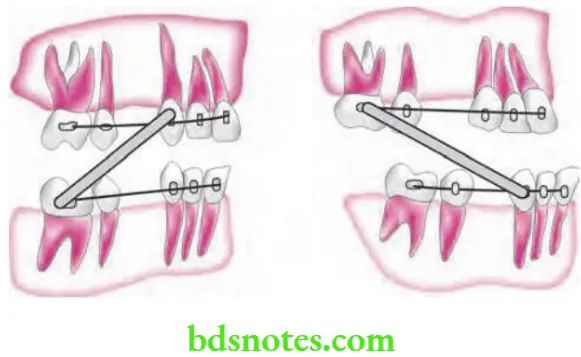
Intermaxillary Anchorage
Anchorage in which the resistance unit situated in one jaw is used to move the teeth of the poppositejaw, e.g.
“Common challenges in selecting the right type of anchorage: FAQs provided”
- Baker’s anchorage.
- Class 2 elastic traction.
- Class 3 elastic traction.
Temporary Anchorage Devices
“Steps to explain different types of anchorage in orthodontics: Intraoral vs extraoral: Q&A guide”
Leave a Reply