Tuberculous Osteomyelitis
Write a short note on tuberculous osteomyelitis.
Answer:
An infection of the bone is termed osteomyelitis.
- When it occurs by tuberculous infection, it is called tuberculous osteomyelitis.
- The tubercle bacilli M. tuberculosis reaches the bone marrow and synovium most commonly by hematogenous dissemination from an infection elsewhere.
- 1 to 3% of cases of pulmonary and extrapulmonary tuberculosis present with osseous involvement.
- Skeletal tuberculosis is present as a solitary lesion but may be multifocal in an immunodeficient state.
Tuberculous osteomyelitis
Tuberculous Osteomyelitis Modes of Spread
- Hematogenous, i.e. from active visceral disease
- Direct extension, i.e. from pulmonary focus into ribs or tracheobronchial nodes into vertebrae.
Tuberculous Osteomyelitis Clinical Features
- Commonly affected sites are the spine, knee, and hip.
- All patients present with fever, pain, and weight loss.
Tuberculous osteomyelitis Morphologic Features
- Extension of caseous material along with pus from lumbar vertebrae to sheaths of psoas muscle produces psoas abscess or lumbar cold abscess.
- A cold abscess may burst through the skin and form a sinus.
- Longstanding cases may develop systemic amyloidosis.
- Histopathologically lesion consists of central caseation necrosis surrounded by tubercular granulation tissue.
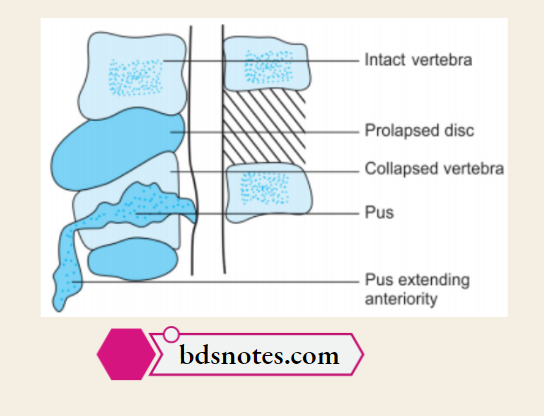
- The tubercular lesion appears as a focus of bone destruction the replacement of the affected tissue by caseous material and the formation of multiple discharging sinuses through the soft tissue and skin.
- Tuberculosis of the spine, Potts disease may be associated with a compression fracture and destruction of intervertebral discs, producing permanent damage and paralysis.
Pott’s disease tuberculosis
Tuberculous osteomyelitis Complications
- Psoas abscess
- Fracture
- Neurological deficit and paraplegia due to extension of the disease process in the dural state with resultant pressure on the cord
- Tuberculous arthritis
- Sinus tract formation
- Ankylosis.
Leave a Reply