Tuberculosis
Write short note on clinical features of TB and its management, especially “DOTS regime”.
Answer. TB is a granulomatous disease caused by Mycobacterium tuberculosis.
“Understanding tuberculosis through FAQs: Causes, symptoms, and treatments explained”
TB Clinical Features
- Seen commonly in middle-aged and older individuals.
- Patient complains of episodes of fever with chills with evening rise of temperature. Patient becomes tired early.
- Presence of gradual loss of weight.
- Patient has persistent cough with or without hemoptysis.
- Swelling on neck is present which is fim and tender on palpation. When abscess is formed swelling perforates and pus drains out.
- Scrofula is the condition in which there is marked enlargement of cervical lymph nodes with caseation
- necrosis and frequent breakdown of gland.
- As skin is involved by tuberculosis, this is known as lupus vulgaris.
- Tubercular involvement of spine is called as Potts disease.
- When tuberculosis spreads through bloodstream it involves organs such as liver, kidney the disease is known as miliary tuberculosis.
“Importance of studying tuberculosis for healthcare professionals: Questions explained”
TB Management—DotS Regimen
- Directly observed treatment strategy adopted by WHO is followed all over the World including India.
- Directly observed treatment means that an observer watches the patient swallowing their tablets.
- DOT ensures accountability of TB services and helps to prevent emergence of drug resistance.
TB Components Of Dots
- Political and administrative commitment at all levels.
- Diagnosis through sputum microscopy
- Uninterrupted supply of short-course chemotherapy drugs.
- Direct observation of drug intake (DOTS)
- Systematic monitoring, evaluation, and supervision at all levels.
“Common challenges in diagnosing and treating tuberculosis effectively: FAQs provided”
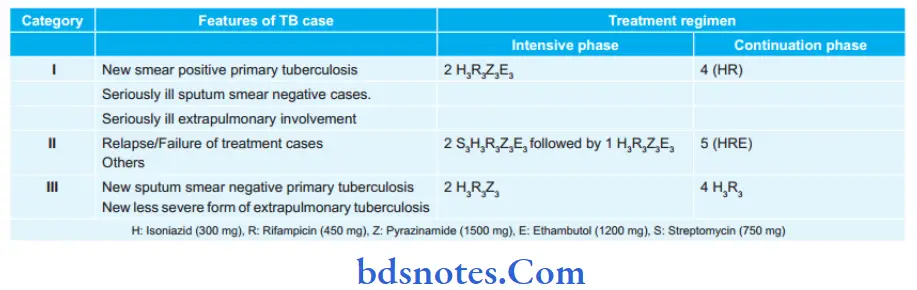
TB Dots Regimen
“Factors influencing success with tuberculosis knowledge: Q&A”
Note: Initial numeral before each regimen indicates the duration of therapy of that regimen. Numerals in subscript refer to thrice weekly schedule for the drugs.
Leave a Reply