Transamination Reactions And Their Features
Transamination reactions.
Answer.
Transamination Definition
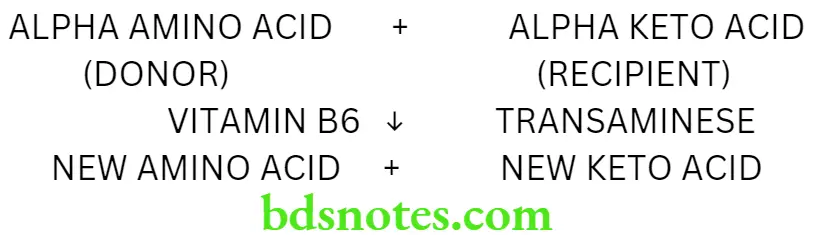
Transamination is a reaction in which the amino group of one amino acid is transferred to a keto acid, resulting in the formation of a new amino acid and a new keto acid
Transamination Reactions: Mechanism and Features
Urea Cycle: Mechanism and Key Steps
Characteristic Features
- Transamination is a reversible reaction
- It takes place in the liver, kidneys, heart, and brain
- The enzyme required is called transaminase
Transamination Reactions in Amino Acid Metabolism
The Urea Cycle: Role in Detoxification and Nitrogen Excretion
- Pyridoxine is required as a coenzyme for the reaction
- While most amino acids can act as donors, the recipient keto acids may be alpha-ketoglutarate, oxaloacetate or pyruvate
- All the recipient keto acids are components of the Krebs cycle
- The amino acids which do not take part in transamination are lysine, threonine, proline, and hydroxyproline
Leave a Reply