Transamination And Deamination
Write a note on transamination and deamination reactions in protein metabolism.
Answer.
Transamination Definition
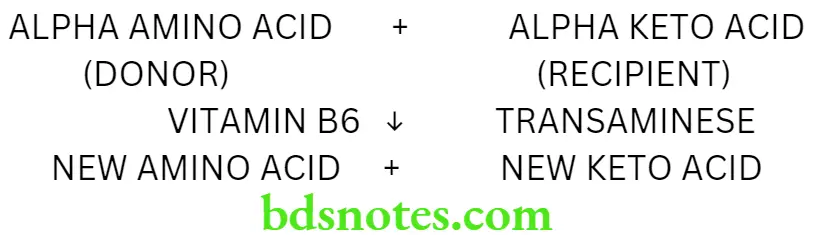
Transamination is a reaction in which the amino group of one amino acid is transferred to a keto acid, resulting in the formation of a new amino acid and a new keto acid
Characteristic Features Of Transamination
- Transamination is a reversible reaction
- It takes place in the liver, kidney, heart and brain
- The enzyme required is called transaminase
- Pyridoxine is required as a coenzyme for the reaction
- While most amino acids can act as donors, the recipient keto acids may be alpha ketoglutarate, oxaloacetate or pyruvate
- All the recipient keto acids are components of the Krebs cycle
- The amino acids which do not take part in transamination are lysine, threonine, proline and hydroxyproline.
Deamination Definition
The removal of amino group from the amino acid is known as deamination
Types Of Deamination
It can be of two types
- Oxidative deamination
- Non oxidative deamination
Oxidative Deamination
- It is a process in which ammonia is removed from the amino acid
- It takes place in the liver and kidney
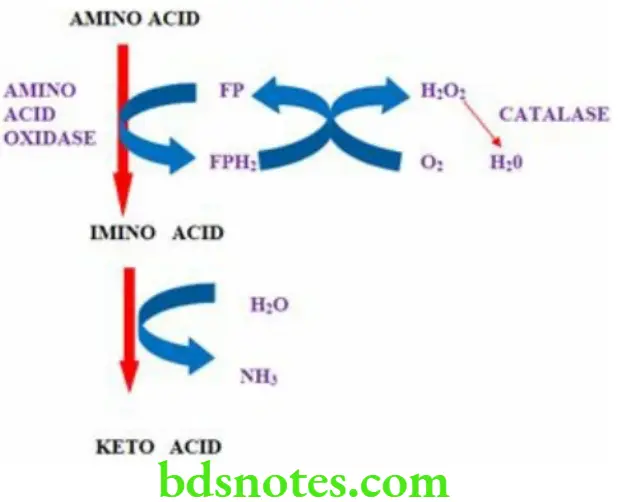
- The enzyme required is amino acid oxidase
- Amino acid is converted to imino acid which then forms keto acid and ammonia is eliminated
- Hydrogen peroxide is formed, which is toxic to the cells and is immediately broken down by the enzyme catalase
- It does not play a major role in the formation of ammonia.
Leave a Reply