• Skip to main content
  • Skip to secondary menu
  • Skip to primary sidebar
  • About Us
  • Terms of Use
  • Privacy Policy
  • Disclaimer
  • Contact Us
  • Sitemap

BDS Notes

BDS notes, Question and Answers

  • Public Health Dentistry
  • Periodontics
  • Pharmacology
  • Pathology
  • Orthodontics
    • Anchorage In Orthodontics
    • Mandibular Growth, Functional Matrix
    • Retention and Relapse
  • General Surgery
    • Cysts: Types, Causes, Symptoms
    • Maxillofacial Fractures, Disorders, and Treatments
    • Lymphatic Disorders
    • Neurological and Facial Disorders
  • Temporal And Infratemporal Regions
    • Spinal and Neuroanatomy
  • Dental Materials
    • Dental Amalgam
Home » Tooth Brushing Techniques

Tooth Brushing Techniques

March 13, 2025 by Kristensmith Taylor Leave a Comment

Tooth Brushing Techniques

Plaque control is defined as the removal of microbial plaque and prevention of its formation on teeth. Basically, there are two types of plaque control methods.

  • Mechanical plaque control.
    • Toothbrushes.
    • Powered toothbrushes.
    • Interdental cleansing aids.
      • Interdental brushes.
      • Single tufted brushes.
      • Dental floss.

“The Role Of The Bass Technique In Preventing Gum Disease”

    • Wooden tips
    • Gum stimulator
    • Oral irrigation devices
    • Dentifrices
  • Chemical Plaque Control.

“Risk Factors For Improper Tooth Brushing”

Stillman Modified Method of Tooth-brushing

  • In modified Stillman method, brush is placed with bristle ends resting partially on the cervical portion of teeth and partially on the adjacent gingiva pointing in an apical direction and at an oblique angle of long axis of teeth.
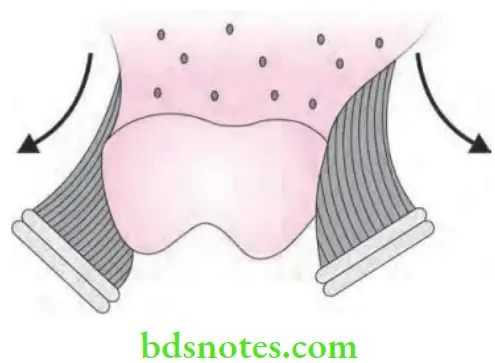
Periodontics Plaque Control Modified Stillman technique

“Understanding The Benefits Of Proper Tooth Brushing Techniques”

  • Apply pressure against the gingival margin to produce a percepitable blenching.
  • Then move the brush in 20 back and forth strokes while simultaneously moving it coronally along the attached gingiva and on gingival margin and tooth surface.
  • A soft or medium multitufted brush should be used with this technique to minimize trauma to gingiva.
  • To reach the lingual surface of maxillary and mandibular incisors the handle of the brush can be held in vertical position.
  • The occlusal surface of molars and premolar are cleaned with the bristles placed perpendicular to the occlusal plane and penetrating into the grooves and interproximal embrasures.
  • The modified Stillman method may be recommended for cleaning in areas with progressing gingival recession and root exposure to minimize abrasive tissue destruction.

Filed Under: Periodontics

Reader Interactions

Leave a Reply Cancel reply

Your email address will not be published. Required fields are marked *

Primary Sidebar

Recent Posts

  • Branchial Cleft Cyst: Background, Pathophysiology, Etiology
  • Maxillary Nerve: Origin, Course, And Branches
  • The Father Of Anatomy And A Great Anatomist Herophilus
  • Bone Structure – Anatomy
  • The External Carotid Artery: Anatomy, Branches, And Functions
  • Occipitofrontalis Muscle
  • Superficial Temporal Artery
  • Platysma Muscle
  • Cartilage
  • Cauda Equina And Conus Medullaris Syndromes
  • Subcutaneous Injections And Device Management
  • Types Of Circulation: Pulmonary, Systemic, And Portal
  • Hierarchical Organization Of Skeletal Muscle Tissue
  • Elastic Cartilage Histology Short Note For Medical Exams
  • Cellular Organelles And Structure
  • The Golgi Apparatus – The Cell
  • The Cytoplasmic Inclusions Of Certain Plant Cells
  • Dental Abscess
  • Laser Surgery
  • Our Facial Muscles And Their Functions

Copyright © 2026 · Magazine Pro on Genesis Framework · WordPress · Log in