The Cusp Of Carabelli
Write short note on cusp of Carabelli.
Answer. This cusp was fist described by George Carabelli in 1842 and was named so.
“Understanding the role of the cusp of Carabelli in dental anatomy: Q&A explained”
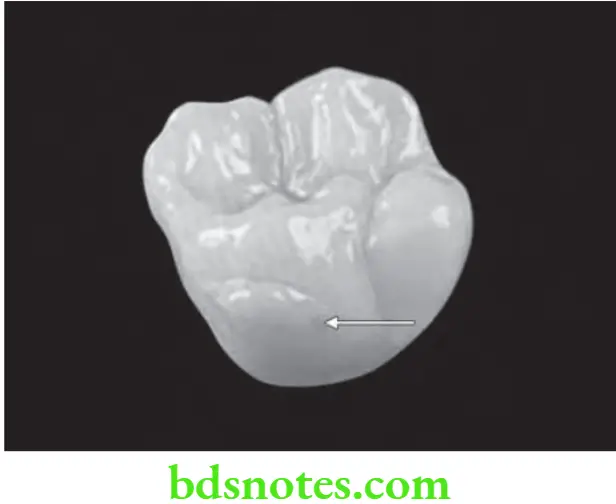
- The Carabelli structure is a tubercle or cuspule, or a groove, often seen on the palatal surface of the mesiopalatal cusp of maxillary permanent molars.
- It includes a variety of expressions that range from complete absence to pits, grooves, tubercles, cusplet, or cusps.
- The cusp of Carabelli is a heritable feature. It has been proposed that homozygosity of a gene is responsible for a pronounced tubercle, whereas, the heterozygote show as slight grooves, pits, tubercles or bulge.
- Its greatest incidence is among the Caucasians.
- It represents the end product of the interaction of a complex system of ontogenetic and environmental factors.
“Importance of studying the cusp of Carabelli for better dental outcomes: Questions explained”
- Carabelli trait is associated with increased caries prevalence.
- Its main clinical signifiance is that dentists are advised to perform a careful examination to the lingual surfaces of the maxillary fist molars to rule out the presence of the Carabelli structure and caries.
- The prefabricated molar bands that are commonly used by orthodontists have no compensation for cusp of Carabelli which results in loose fi. As a result the space which remains between the band and the tooth is filed by food debris and bacteria and it results in early caries and periodontal diseases.
“Common challenges in identifying the cusp of Carabelli effectively: FAQs provided”
Leave a Reply