Tetracyclines And Chloramphenicol (Broad Spectrum Antibiotics)

Tetracyclines and Chloramphenicol Q&A
Question 1. Write A Short Note On Broad Spectrum Antibiotics.
Or
Write Important Indication, Side Effects Of Tetracycline
Answer:
Broad-spectrum antibiotics are tetracyclines and chloramphenicol. They are termed as broad-spectrum antibiotics as they are used against a number of Gram-negative and Gram-positive infections.
Broad Spectrum Antibiotics Tetracyclines
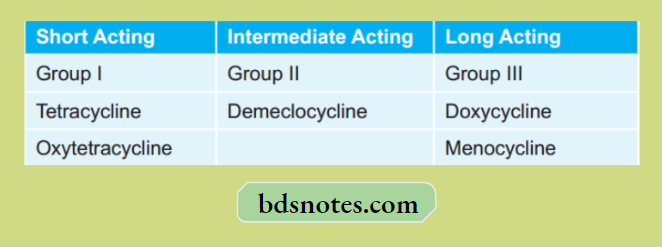
Tetracyclines Classification
Read And Learn More: Pharmacology Question And Answers
Tetracyclines Mechanism Of Action

Tetracycline MCQs with answers
Tetracyclines Therapeutic Uses
- Dentistry: They are mainly used in chronic periodontitis. They are also used in the treatment of acute necrotizing ulcerative gingivitis.
- Rickettsial infections: Tetracyclines are the first choice drugs in rickettsial infections. Doxycycline is given 100 mg BD for a week.
- Mycoplasma pneumonia: Tetracyclines shorten the duration of this illness.
- Chlamydial infections: Here doxycycline is the choice of drug.
- Cholera: Single dosage of tetracycline is effective in adults. It decreases the volume of stool.
- Brucellosis: In this doxycycline is combined with gentamicin.
- Plague: Doxycycline provides good relief.
- Anthrax and leptospirosis: Doxycycline is used in both prophylaxis and treatment of both entities.
- Acne: Tetracycline inhibits propionibacteria and prevents the formation of free fatty acids. A low dose is preferred.
- Malaria: Doxycycline along with antimalarials is indicated in the treatment of chloroQuestionuine-resistant P. falciparum malaria.
Tetracyclines Adverse Reaction
- Gastrointestinal: Nausea, vomiting, epigastric distress, diarrhea, abdominal discomfort.
- On bones and teeth: Usage of tetracycline in children and in pregnancy leads to brown discoloration of teeth. These drugs affect the linear growth of bones.
- Phototoxicity: This adverse effect is seen mainly with doxycycline and demeclocycline. Sun burn-like reaction is seen on the skin when exposed to sunlight.
- Superinfection: It is due to the usage of older tetracyclines which causes alteration of the flora of the gut.
- Hepatotoxicity: It is seen mainly in pregnancy.
- Hypersensitivity reactions: Fever, urticaria, skin rashes, etc can be seen. Cross-reactivity is common.
- Renal toxicity: Demeclocycline can lead to nephrogenic diabetes mellitus by inhibiting ADH of collecting tubules.
Broad Spectrum Antibiotics Chloramphenicol
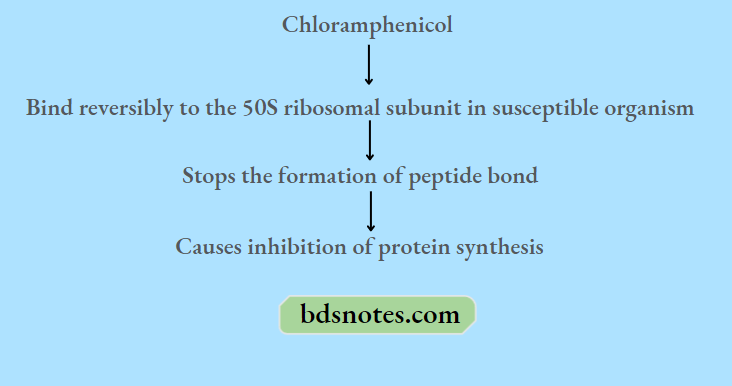
Chloramphenicol Mechanism Of Action
Chloramphenicol Therapeutic Uses
- Typhoid fever: It was considered to be the first choice drug in the treatment of typhoid.
- Bacterial meningitis: Chloramphenicol is used alone or in combination with ampicillin in bacterial meningitis.
- Anaerobic infections: It is effective against many anaerobic bacterias. Along with metronidazole, it is used in the treatment of brain, lung, and pelvic abscesses.
- Rickettsial infections: Chloramphenicol is used in children and pregnant women.
- Eye and ear infection: The drug is used topically in eye and ear infections.
- Brucellosis: Chloramphenicol is used if tetracycline is contraindicated.
Chloramphenicol Adverse Effects
- Hypersensitivity reactions: Drug fever, skin rashes, urticaria, and angioedema.
- Bone marrow suppression: It is either dose-dependent or idiosyncratic. In dose-dependent cases, reversible suppression of bone marrow is seen while in idiosyncratic irreversible aplastic anemia occurs.
- Gastrointestinal effects: nausea, vomiting, and diarrhea. Chronic use can lead to superinfection.
- Grey Baby syndrome: In premature babies due to its decrease in degradation and detoxification of drugs in the liver due to deficiency of glucuronyl transferase enzyme following manifestations can occur, i.e. nausea, vomiting, abdominal distention, diarrhea, cyanosis, and circulatory collapse. The skin of the baby becomes gray in color.
Uses of tetracyclines in clinical practice
Question 2. Explain Why Tetracycline Should Not Be Given Along With Calcium Salts?
Answer:
- Tetracyclines are not given with calcium salts because since the tetracyclines have chelating property so when calcium is taken along with tetracycline will form insoluble complexes and reduces the absorption of tetracyclines.
- Calcium along with tetracycline form the tetracyclinecalcium orthophosphate complex which is deposited in developing teeth and bone. There is permanent brownish discoloration of deciduous teeth due to the deposition of chelates in teeth.
Tetracycline resistance mechanisms
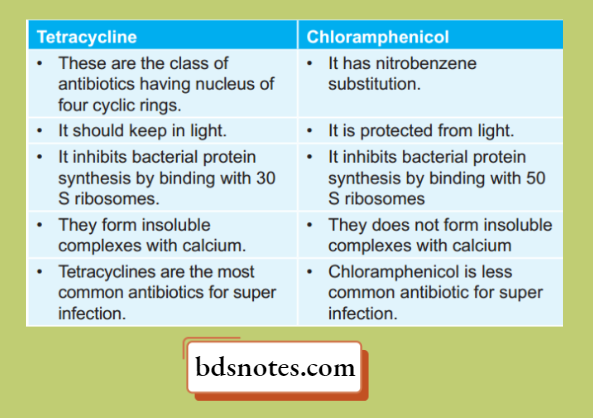
Question 3. Compare And Contrast Tetracycline And Chloramphenicol.
Answer:
Contraindications of chloramphenicol
Question 4. Compare And Contrast Ampicillin And Tetracyclines.
Answer:

Adverse effects of chloramphenicol
Question 5. Write Contraindications If Any Of The Tetracycline.
Answer:
Tetracycline Contraindications
- Along with milk, milk products Ca2+, Mg2+, Fe3-, Zn+2, Al+3, antacids, and bismuth subsalicylates reduce the bioavailability of tetracyclines.
- Tetracyclines should not be mixed with penicillin, inactivation occurs.
- Tetracycline is not preferred with diuretics as blood urea may rise in such patients.
Spectrum of tetracyclines
Question 6. Describe The Mechanism Of Action, Adverse Effects, And Therapeutic Uses Of Doxycycline.
Answer:
Mechanism Of Action Of Doxycycline

Mechanism of action of tetracyclines
Doxycycline Adverse Effects
- Severe headache, dizziness, blurred vision.
- Fever, chills, body aches, flu symptoms, swollen glands, rash or itching, joint pain, or general ill feeling.
- Urinating less than usual or not at all.
- Diarrhea that is watery or bloody, pale or yellowed skin, dark colored urine, fever, confusion, or weakness.
- Severe pain in your upper stomach spreading to your back, nausea and vomiting, and fast heart rate.
- Loss of appetite, jaundice
- Severe skin reaction: Fever, sore throat, swelling in your face or tongue, burning in your eyes, skin pain, followed by a red or purple skin rash that spreads (especially in the face or upper body) and causes blistering and peeling.
- Less serious side effects of doxycycline may include:
- Mild nausea, mild diarrhea
- Upset stomach
- Mild skin rash or itching
- Vaginal itching or discharge.
Doxycycline Therapeutic Uses
- Dentistry: They are mainly used in chronic periodontitis. They are also used in the treatment of acute necrotizing ulcerative gingivitis.
- Rickettsial infections: Doxycycline is the first choice drug in rickettsial infections. Doxycycline is given 100 mg BD for a week.
- Mycoplasma pneumonia: Doxacyclines shorten the duration of this illness.
- Chlamydial infections: Here doxycycline is the choice of drug.
- Cholera: Single dosage of tetracycline is effective in adults. It decreases the volume of stool.
- Brucellosis: In this doxycycline is combined with gentamycin.
- Plague: Doxycycline provides good relief.
- Anthrax and leptospirosis: Doxycycline is used in both prophylaxis and treatment of both entities.
- Acne: Doxycycline inhibits propionibacteria and prevents the formation of free fatty acids. A low dose is preferred.
- Malaria: Doxycycline along with antimalarials is indicated in the treatment of chloroQuestionuine resistant P. falciparum malaria.
Chloramphenicol MCQs for pharmacology viva
Question 7. Explain why tetracyclines are not recommended for use in pregnant women.
Answer:
Tetracyclines should not be given to pregnant women because of the following reasons
- These antibiotics cross the placental barrier and produce fetal malformations.
- Tetracyclines get deposited in the fetal teeth and may cause discoloration, and enamel dysplasia.
- They can also get deposited in the bone leading to either deformity or growth inhibition.
Question 8. Write A Short Note On Doxycycline.
Answer:
- Doxycycline is a long-standing tetracycline drug.
- Doxycycline is a semisynthetic derivative of tetracycline.
- The drug has a broad spectrum of activity against gram-positive, gram-negative organisms, rickettsiae, and chlamydiae.
Advantages Of Doxycycline
- It is administered both orally and intravenously.
- Doxycycline is highly potent.
- The drug is completely absorbed after oral administration
- Food does not interfere with the absorption of doxycycline.
- Doxycycline has a longer duration of action.
- It does not affect intestinal flora.
- Doxycycline is safely given to renal failure patients as the drug gets excreted primarily in bile.
Question 9. Write Short Note On Chloramphenicol.
Answer:
Chloramphenicol is a broad-spectrum antibiotic that is isolated from Streptomyces venezuelae.
Chloramphenicol Mechanism Of Action

Questions on tetracyclines for MBBS exams
Chloramphenicol Pharmacokinetics
Chloramphenicol is commonly given by oral route and it gets rapidly absorbed from the gut. The drug has a better taste. Chloram- phenicol gets activated in the intestine by pancreatic lipase.
The drug is widely distributed to all tissues including both CSF and the brain. Chloramphenicol also crosses the placental barrier and is secreted in the milk. Chloramphenicol is metabolized in the liver by glucuronide conjugation. The metabolite is mainly excreted in the urine.
Chloramphenicol Therapeutic Uses
- Typhoid fever: It was considered to be the first choice drug in the treatment of typhoid.
- Bacterial meningitis: Chloramphenicol is used alone or in combination with ampicillin in bacterial meningitis.
- Anaerobic infections: It is effective against many anaerobic bacterias. Metronidazole it is used in the treatment of brain, lung, and pelvic abscesses.
- Rickettsial infections: Chloramphenicol is used in children and pregnant women.
- Eye and Ear Infection: The drug is used topically in eye and ear infections.
- Brucellosis: Chloramphenicol is used if tetracycline is contraindicated.
Chloramphenicol Adverse Effects
- Hypersensitivity reactions: Drug fever, skin rashes, urticaria, and angioedema.
- Bone marrow suppression: It is either dose-dependent or idiosyncratic. In dose-dependent cases, reversible suppression of bone marrow is seen while in idiosyncratic irreversible aplastic anemia occurs.
- Gastrointestinal effects: Nausea, vomiting, diarrhea. Chronic use can lead to superinfection.
- Grey Baby syndrome: In premature babies due to its decrease in degradation and detoxification of drugs in the liver due to deficiency of glucuronyl transferase enzyme following manifestations can occur, i.e. nausea, vomiting, abdominal distention, diarrhea, cyanosis, and circulatory collapse. The skin of the baby becomes gray in color.
Difference between tetracycline and chloramphenicol
Question 10. Write In Brief On Indications Of Tetracycline In Dentistry.
Answer:
Following are the indications of tetracycline in dentistry
- Dentistry: They are mainly used in chronic periodontitis. They are also used in the treatment of acute necrotizing ulcerative gingivitis.
- Rickettsial infections: Tetracyclines are the first choice drugs in rickettsial infections. Doxycycline is given 100 mg BD for a week.
- Mycoplasma pneumonia: Tetracyclines shorten the duration of this illness.
- Chlamydial infections: Here doxycycline is the choice of drug.
- Cholera: Single dosage of tetracycline is effective in adults. It decreases the volume of stool.
- Brucellosis: In this doxycycline is combined with gentamycin.
- Plague: Doxycycline provides good relief.
- Anthrax and leptospirosis: Doxycycline is used in both prophylaxis and treatment of both entities.
- Acne: Tetracycline inhibits propionibacteria and prevents the formation of free fatty acids. A low dose is preferred.
- Malaria: Doxycycline along with antimalarials is indicated in the treatment of chlorine-resistant P. falciparum malaria.
Chloramphenicol pharmacology short notes
Tetracyclines are of limited usefulness in treating acute dental infections and are seldom selected for this purpose.
- Tetracycline benefits certain forms of periodontal disease, probably by virtue of their broad-spectrum antimicrobial action as well as by suppressing the activity of matrix metalloproteinases derived from neutrophils and fibroblasts that contribute to gingival inflammation. These enzymes are Ca2+ dependent and tetracyclines chelate calcium ions.
- Tetracyclines may benefit periodontal inflammation by scavenging free (oxygen) radicals.
- Tetracyclines have an important adjuvant role in the management of chronic periodontitis refractory to conventional therapy with local hygienic and surgical measures and in juvenile periodontitis.
- In refractory periodontal disease 2-week tetracycline (l g/day) or doxycycline (0.1-0.2 g/day) therapy controls gingival inflammation and helps to normalize the periodontal microflora from a mixture of anaerobic gram-negative bacilli + spirochetes to the usual one in which gram-positive bacteria predominate.
- Tetracyclines are highly active against the Actinobacillus sp. that is held responsible for the destruction of gums and bone loss in juvenile periodontitis. Appropriate surgical treatment combined with 2 to 4-week tetracycline therapy halts the progression of this disease.
Tetracycline important questions and answers
Question 11. ADRs (3) Seen With Broad Spectrum Antibiotics.
Answer:
Following are the adverse drug reactions (3) seen with broad-spectrum antibiotics:
- Gastrointestinal Nausea, vomiting, epigastric distress, diarrhea, abdominal discomfort.
- On bones and teeth, the Usage of tetracycline in children and in pregnancy leads to brown discoloration of teeth. These drugs affect the linear growth of bones.
- Hypersensitivity reactions Fever, urticaria, skin rashes, etc. can be seen. Cross-reactivity is common.
Leave a Reply