Supernumerary Teeth: Classification, Complications, and Care
Question. Write a short note on supernumerary teeth.
Answer.
“Steps to explain causes of supernumerary teeth: Genetic vs developmental factors: Q&A guide”
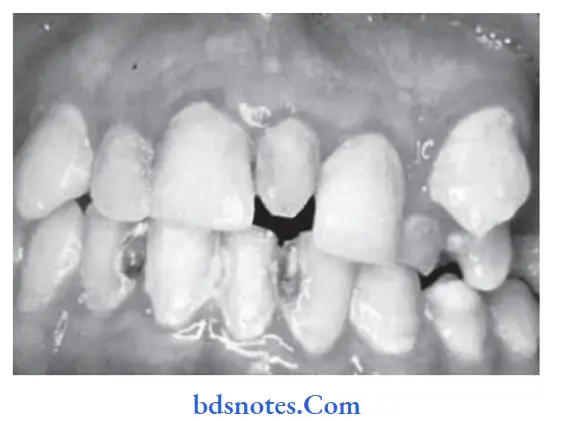
The presence of any extra tooth in the dental arch in addition to the normal series of teeth is known as supernumerary teeth.
Classification
According to the morphology
- Conical: This small peg-shaped conical tooth is supernumerary.
- Tuberculate: This type of supernumerary tooth
possesses more than one cusp or tubercle. It is of barrel-shaped and may be invaginated. - Supplemental: It refers to the duplication of the teeth in normal series. The most common tooth is a permanent maxillary lateral incisor.
- Odontome: This represents the hamartomatous malformation.
“Understanding supernumerary teeth through FAQs: Classification, complications, and care explained”
According to location
- Mesiodens: They are located between two upper central incisors.
- Distomolars: They are located on the distal aspect of regular molar teeth in the dental arch.
- Paramolar: They are located either in the buccal or lingual aspect of normal molars.
- Extra-lateral incisors: They are more common in the maxillary arch.
“Importance of studying supernumerary teeth for better diagnostic outcomes: Questions explained”
Clinical Features
- Supernumerary teeth cause crowding or malocclusion and give rise to cosmetic problem.
- These extra teeth are responsible for the increase caries incidence and periodontal problem.
- Multiple supernumerary teeth can occur in association with the conditions like Gardener’s syndrome.
- Dentigerous cyst may sometimes develop from an impacted supernumerary tooth.
Treatment
- Supernumerary teeth should be extracted.
- Impacted supernumerary teeth should also be removed surgically since they can interfere with normal tooth alignment.
“Common challenges in diagnosing supernumerary teeth effectively: FAQs provided”
Leave a Reply