Submucous Fibrosis in Young Adults – Risk Factors and Symptoms
Question 10. Write a short note on submucous fibrosis.
Answer:
Submucous fibrosis
OSMF is defined as “An insidious chronic disease affecting any part of the oral cavity and sometime pharynx. Although occasionally preceded by and/or associated with vesicle formation, it is always associated with juxtaepithelial inflammatory reaction followed by fire-elastic changes in lamina propria, with epithelial atrophy leading to stiffness of oral mucosa and causing trismus and inability to eat.” Pindborg (1966).
“Understanding submucous fibrosis: Causes and symptoms”
Submucous fibrosis Etiology
The OSMF is caused due to:
- Excessive consumption of red chilies.
- Excessive “areca nut” chewing.
- Nutritive deficiency
- Immunological fractures
- Genetic factors
- Protracted tobacco use
- Patient with deficiency of micronutrients.
Oral submucous fibrosis
“Techniques for managing submucous fibrosis symptoms”
“Importance of early detection of submucous fibrosis”
Submucous fibrosis Clinical Features
- It is caused during 20 to 40 years of age.
- Females are affected more than males.
- In OSMF fibrotic changes are frequently seen in the buccal mucosa, retromolar area, uvula, tongue, etc.
- Initially patient complains of a burning sensation in the mouth, particularly during taking hot and spicy foods.
“Role of surgical intervention in treating submucous fibrosis”
- There can be excessive salivation, decreased salivation, and defective gustatory sensation.
- In the initial phase of the disease palpation of mucosa elicits a “wet leathery” feeling.
- In the advanced stage, the oral mucosa loses its resilience and becomes blanched and stifled and thereby causing trismus.
- Palpation of mucosa often reveals vertical fibrous bands.
Risk factors for oral submucous fibrosis
Submucous fibrosis Histopathology
Microscopically OSMF reveals the following features:
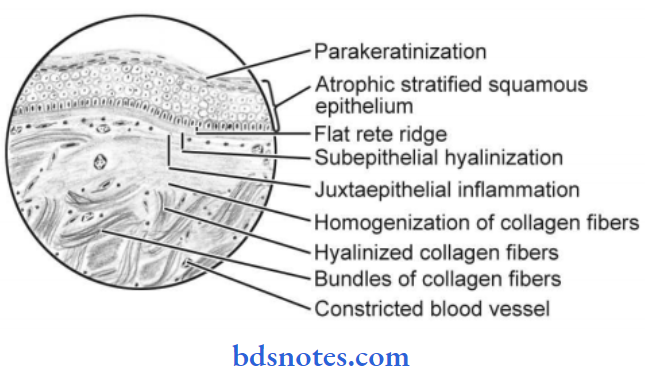
- Overlying hyper keratinized, atrophic epithelium often shows flattening and shortening of rete pegs.
- There can be variable degrees of cellular atypia or epithelial dysplasia.
- In OSMF dysplastic changes are found in epithelium which include nuclear pleomorphism, severe intercellular edema, etc.
“Impact of betel nut consumption on oral health”
- The stromal blood vessels are dilated and congested and there can be areas of hemorrhage.
- The underlying connective tissue stroma in an advanced stage of the disease shows homogenization and hyalinization of collagen fibers.
- Decreased number of fibroblastic cells and narrowing of blood vessels due to perivascular fibrosis are present.
- There can be the presence of signet cells in some cases.
What causes submucous fibrosis
“Common causes of submucous fibrosis explained”
Submucous fibrosis Treatment
- Stop areca nut and tobacco chewing strictly.
- Definitive treatment of OSMF includes intralesional injection of collagenase, corticosteroids, fibrinolysin, etc.
- Systemic administration of steroids in severe cases.
Leave a Reply