• Skip to main content
  • Skip to secondary menu
  • Skip to primary sidebar
  • About Us
  • Terms of Use
  • Privacy Policy
  • Disclaimer
  • Contact Us
  • Sitemap

BDS Notes

BDS notes, Question and Answers

  • Public Health Dentistry
  • Periodontics
  • Pharmacology
  • Pathology
  • Orthodontics
    • Anchorage In Orthodontics
    • Mandibular Growth, Functional Matrix
    • Retention and Relapse
  • General Surgery
    • Cysts: Types, Causes, Symptoms
    • Maxillofacial Fractures, Disorders, and Treatments
    • Lymphatic Disorders
    • Neurological and Facial Disorders
  • Temporal And Infratemporal Regions
    • Spinal and Neuroanatomy
  • Dental Materials
    • Dental Amalgam
Home » Sharpey’S Fibers And Tooth Support: Structure, Function, And Clinical Relevance

Sharpey’S Fibers And Tooth Support: Structure, Function, And Clinical Relevance

February 5, 2026 by Kristensmith Taylor Leave a Comment

Sharpey’S Fibers And Tooth Support: Structure, Function, And Clinical Relevance

Question 1. Periodontal ligament.
Answer:

  • It is soft, specialized connective tissue situated between the cementum covering the root of the tire tooth and the bone forming the socket wall.
  • Width: 0.15 – 0.38 mm.

Periodontal ligament Cells:

1. Synthetic cells

  1. Osteoblasts
  2. Fibroblast
  3. Cementoblast.

2. Resorptive cells.

  1. Osteoclast
  2. Fibroblast
  3. Cementoclast

3. Progenitor cell.

4. Epithelial rest of malassez.

5. Defense cells.

  • Macrophages
  • Eosinophils.

Periodontal ligament Functions:

  • Supportive
  • Sensory
  • Nutritive
  • Homeostatic
  • Eruptive
  • Physical

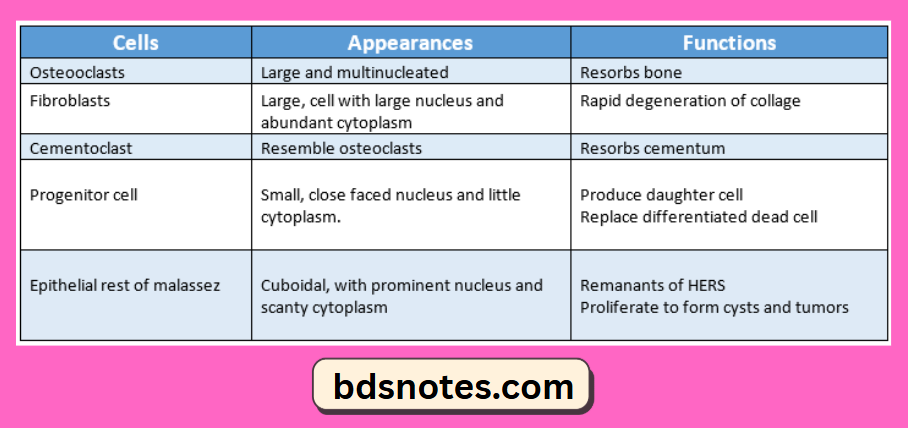
Question 2. Cells of periodontal ligament.
Answer:
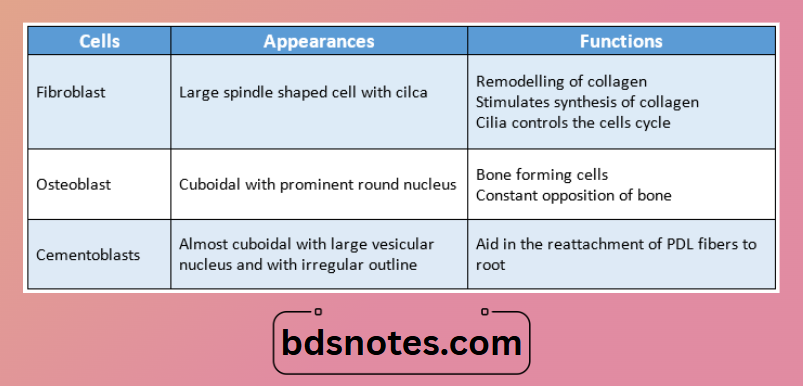
Fibroblast Osteoblast CementoblastDental Resorptive Cells Functions

Question 3. Sharpey’s fibers.
Answer:

  • These are collagen fibers that are embedded into the cementum on one side and into the alveolar bone on another side.
  • Fibers in primary acellular cementum are fully mineralized while those in cellular cementum and bone are partly mineralized.
  • Their mineralized part appears as a projecting covered with mineral clusters.
  • Few of them pass uninterrupted through the alveolar bone to continue as principal fibers of PDL.
  • It passes through alveolar bone only when it consists entirely of compact bone.
  • It consists of noncollagenous proteins like osteopontin and bone sialoprotein.

Filed Under: Anatomy

Reader Interactions

Leave a Reply Cancel reply

Your email address will not be published. Required fields are marked *

Primary Sidebar

Recent Posts

  • Branchial Cleft Cyst: Background, Pathophysiology, Etiology
  • Maxillary Nerve: Origin, Course, And Branches
  • The Father Of Anatomy And A Great Anatomist Herophilus
  • Bone Structure – Anatomy
  • The External Carotid Artery: Anatomy, Branches, And Functions
  • Occipitofrontalis Muscle
  • Superficial Temporal Artery
  • Platysma Muscle
  • Cartilage
  • Cauda Equina And Conus Medullaris Syndromes
  • Subcutaneous Injections And Device Management
  • Types Of Circulation: Pulmonary, Systemic, And Portal
  • Structure Of Skeletal Muscle
  • Elastic Cartilage
  • Cellular Organelles And Structure
  • The Golgi Apparatus – The Cell
  • The Cytoplasmic Inclusions Of Certain Plant Cells
  • Dental Abscess
  • Laser Surgery
  • Our Facial Muscles And Their Functions

Copyright © 2026 · Magazine Pro on Genesis Framework · WordPress · Log in