Pemphigus Vulgaris: Definition, Causes, and Diagnosis Explained
Question. Define vesicle and bulla. Describe in detail the etiopathogenesis, clinical features, histopathology, and investigations of pemphigus vulgaris.
pemphigus vulgaris
Answer. A vesicle is defined as a superficial blister that is 5 mm or less in diameter and is usually filled with clear fluid.
Bulla is defined as a larger blister that is greater than 5 mm in diameter.
Pemphigus vulgaris is an autoimmune, intraepithelial blistering disease affecting the skin and mucous membrane and is mediated by circulating autoantibodies directed against keratinocyte cell surfaces.
“Understanding pemphigus vulgaris through FAQs: Q&A explained”
Etiopathogenesis
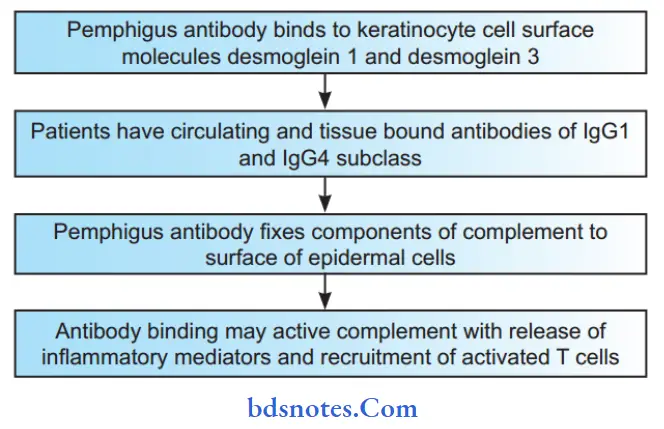
“Importance of studying pemphigus vulgaris for better diagnostic outcomes: Questions explained”
Protease Theory
According to protease theory deposition of autoantibody within the epithelium induces the proteolytic activity by activating tissue plasminogen.
This inturn generate proteolytic enzyme called plasmin which destroy desmosomes.
pemphigus vulgaris causes
“Common challenges in diagnosing pemphigus vulgaris effectively: FAQs provided”
Investigations
- Incisional/punch biopsy of the involved area should be done and is histopathologically examined.
- Immunofluorescent testing: Direct immunofluorescence testing is done to demonstrate the presence of immunoglobulins, predominantly IgG but sometimes in combination with C3, IgA and IgM, in the intercellular spaces or intercellular substance in either oral epithelium or clinically normal epithelium adjacent to lesion.
- Indirect immunofluorescence: This is accomplished basically by incubating normal animal or human mucosa with serum from the patient suspected of having the disease and adding the fluorescein-conjugated human antiglobulin.
A positive reaction in the tissue indicates presence of circulating immunoglobulin antibodies.
Leave a Reply