PCR: Polymerase Chain Reaction
Write short note on PCR.
Answer. Full form of PCR is polymerase chain reaction.
- Process of PCR was first conceptualized by Kary Mullis in 1985. Mullis produced virtually unlimited copies of a specific DNA sequence in test tube.
- PCR has three phases which are carried in a instrument known as thermocycler at different temperatures
- Denaturation (Strand separation): This phase is carried out at 94 to 96°C for 20 to 30 seconds, double helical arrangement of the sample template DNA is denatured yielding single stranded DNA molecule.
- Annealing (Primer binding): This phase allows annealing of primers to the single-stranded DNA template at lower temperature of 68°C for 20 to 40 seconds.
- Extension (New DNA synthesis): Final phase of cycle occur at 72°C; Taq DNA polymerase enzyme is added to the reaction mixture to make primer extend along the length of DNA strand. At the end of this phase, a complementary strand is form for each DNA strand of sample DNA that was denatured.
A standard amplification consists of 25 to 35 cycles resulting in formation of billion copies of original sample DNA which is then visualized. The existence of specific amplification product is usually suggestive of presence of target microorganism. So this method is useful in quantitatively recognize number of periodontopathic bacteria at periodontal site.
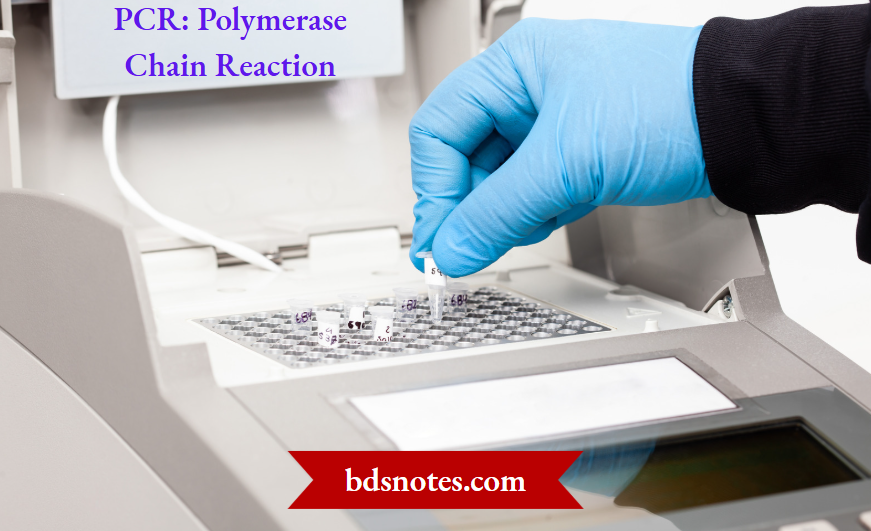
Types of PCR
- Simplex
- Nested
- Multiplex
- Real time PCR
Advantages of PCR
- Specific: Helps to identify specific bacteria.
- Relatively sensitive: Single molecule of DNA in sample can be detected. PCR has significant potential to produce millions to billion of copies of specific product for sequencing, cloning and analysis.
- Rapid: The process may take few hours to a day.
- Variety of samples from different sources can be tested simultaneously.
- It can detect and identify even when no viable organisms present in the sample and also organisms which are different to cultivate.
Disadvantages of PCR
- It cannot discriminate between viable and non-viable bacteria.
- Not useful for sensitivity tests guiding for selection of antibiotics.
- As small samples are used for amplification process. If this small quantity of plaque sample does not contain targeted microorganism, assay will not detect it.
- Subgingival plaque contains enzymes which can alter amplification process.
- Require thermocycler, specific primer and reagents.
- It is expensive
- It requires experienced personnel.
Leave a Reply