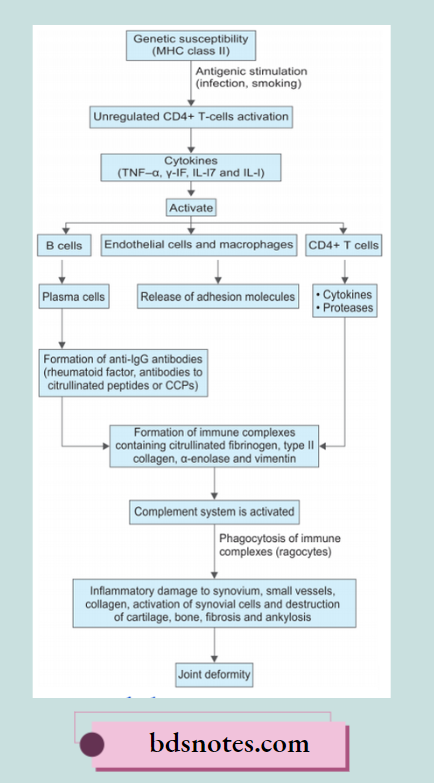
Pathophysiology Of Rheumatoid Arthritis
Question 1. Write a short note on osteomyelitis.
Answer:
Classification of Osteomyelitis
Acute Osteomyelitis:
- Acute suppurative osteomyelitis
- Acute subperiosteal osteomyelitis
- Acute periostitis.
Pathophysiology of rheumatoid arthritis
Chronic Osteomyelitis:
- Non-Specific Type:
- Chronic intramedullary osteomyelitis
- Chronic focal sclerosing osteomyelitis
- Chronic diffuse sclerosing osteomyelitis
- Chronic osteomyelitis with proliferative periostitis
- Chronic subperiosteal osteomyelitis
- Chronic periostitis.
- Specific Type:
- Tuberculous osteomyelitis
- Syphilitic osteomyelitis
- Actinomycotic osteomyelitis.
Radiation-induced osteomyelitis
Idiopathic osteomyelitis.
Acute suppurative osteomyelitis is a serious sequelae of periapical infection, there is the diffuse spread of infection throughout medullary spaces with subsequent necrosis of a variable amount of bone.
Rheumatoid arthritis mechanism
Osteomyelitis Etiology
- Direct spread of infection from dental pulp into the mandible.
- Spread of infection in the mandible from presenting suppurative odontogenic infections.
- Spread of infection following removable of the tooth without proper asepsis and antibiotic coverage.
- Compound fracture of the mandible with exposure of bone outside the mucosa.
- Post-radiation secondary infection.
- Infection to the preexisting bony lesions, For Example. Paget’s disease of bone and fibrous dysplasia.
Osteomyelitis Clinical Features
- It occurs after 50 years of age and males are more commonly affected.
- The mandibular lesions are diffused in nature.
- Acute suppurative osteomyelitis of the mandible in young adults causes severe pain, and diffuse and enlarged swelling of the mandible.
- There is loosening and soreness of the regional teeth with difficulty in food intake.
- Multiple intraoral and extraoral pus-discharging sinuses often develop and discharge of pus is seen from the gingival service of the affected teeth.
- Paresthesia of the lip is common.
- The patient is slightly febrile and general symptoms include fever, malaise, anorexia, and vomiting.
Pannus formation in RA
Osteomyelitis Histopathology
- In acute suppurative osteomyelitis, the bone marrow undergoes liquefaction and purulent exudates occupy the marrow space.
- A large number of acute inflammatory cell infiltrations are present which shows PMNs with the occasional presence of lymphocytes and plasma cells.
- Some areas of affected bone undergo necrosis with the generation of osteoblast and osteocyte cells and therefore results in the development of sequestrum (a piece of dead bone)
- When the acute phase of infection subsides the new shell of bone called “involucrum” is formed over inflammatory focus.
Question 2. Write a note on the pathophysiology of rheumatoid arthritis.
Answer:
Following is the pathophysiology of rheumatoid arthritis.
Leave a Reply