Non-Reducing Sugars: Definition & Functions
Question 1. Name the nonreducing sugars. What are their components?(Or) Explain why sucrose is a non-reducing sugar.
Answer:
- Sucrose is a nonreducing sugar.
Components:
- Sucrose consists of a-D-glucose and p-D fructose.
- These two monosaccharides are held together by a glycosidic bond between Cl of a-glucose and C2 of p-fructose.
- The reducing groups of glucose and fructose are involved in glycosidic bonds, hence sucrose is a non-reducing sugar.
“Understanding non-reducing sugars through FAQs: Definition, composition, and uses explained”
Functions:
It is the major carbohydrate produced in photosynthesis.
Employed ns sweetening agent in the food industry.

“Importance of studying non-reducing sugars for biochemistry students: Questions explained”
Question 2. Amylose amd amylopectin.
Answer:
“Common challenges in mastering non-reducing sugar notes effectively: FAQs provided”
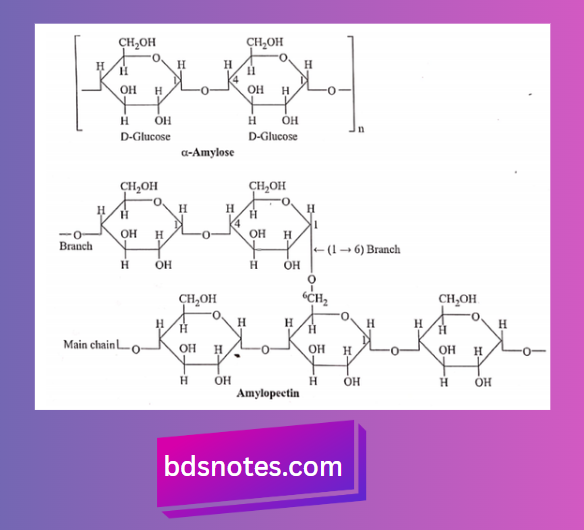
1. Amylose:
- It is water soluble.
- It is a long unbranched chain with 200 – 1000 D-glucose units held by 2 -glycosidic linkages.
- Starches are hydrolyzed by amylase.
2. Amylopectin:
It is water-insoluble.
It is a branched chain with (l→6) glycosidic bonds at the branching points and a (1 → 4) linkages everywhere else.
It consists of 80-85% of total starch.
“Factors influencing success with non-reducing sugar studies: Q&A”
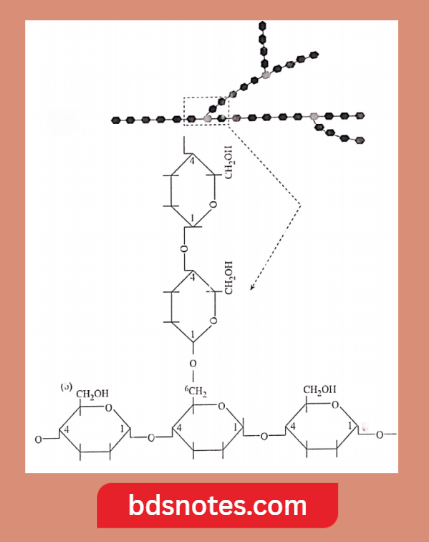
Glycogen:
- It is a tiring carbohydrate reserve in animals.
- It is present in.
- Animals
- Plants.
- Liver, muscle, brain – in humans.
Its structure consists of repeated units of glucose.
These units are joined together by a (1→4) glycosidic bond and a (1→6) glycosidic bond at branching points.
“Steps to explain functions of non-reducing sugars: Energy storage vs structural roles: Q&A guide”
Leave a Reply