Microbial Plaque: The Biofilm Behind Tooth Decay and Gum Disease
Question 1. Write a note on the microbial plaque.
Answer. Microbial plaque is also called as dental plaque or bacterial plaque.
“Importance of studying microbial plaque for better oral health outcomes: Questions explained”
- It was demonstrated first by William in 1897.
- Microbial plaque is the soft, non-mineralized bacterial deposit which forms on teeth and dental prostheses that are not adequately cleaned. It is composed of 80% water and 20% solids.
- Bacterial and salivary proteins comprise one half of dry weight of plaque. Plaque has high concentration of protein, carbohydrates and lipids.
Inorganic components of plaque are calcium and phosphate. - It forms on the tooth surfaces which are not properly cleaned.
- Dental pellicle which is a glycoprotein and is derived from the saliva is adsorbed over the tooth surfaces and serve as nutrient for plaque microorganism.
- Plaque is classified into two types based on its anatomical location, i.e. supragingival plaque and subgingival plaque.
- Supragingival plaque play important role in origin of dental caries while subgingival plaque is responsible for the causation of periodontal diseases.
“Understanding the role of biofilm in tooth decay and gum disease: Q&A explained”
Question 2. Define and classify and write in detail on etiopathogenesis on dental caries.
Answer. “Dental caries is an irreversible progressive microbial disease of the calcified tissues of the teeth, characterized by the demineralization of the inorganic portion and distortion of the organic substances of the tooth, which often leads to cavitation”.
Classification of Dental Caries
- Based on location of the lesion
- Pit and fisure caries
- Occlusal
- Buccal or lingual pit
- Smooth surface caries
- Proximal
- Buccal or lingual surface
- Root caries
- Pit and fisure caries
- Based on tissue involved
- Enamel caries
- Dentinal caries
- Cementum caries
“Common challenges in managing microbial plaque effectively: FAQs provided”
- Based on virginity of the lesion
- Primary caries
- Secondary caries
- Based on progression of lesion
- Progressive caries
- Rapidly progressive like nursing caries and radiation caries
- Slowly progressing
- Arrested caries:
- Progressive caries
“Factors influencing success with microbial plaque prevention: Q&A”
Question 3. Write short note on streptococcus mutans in dental caries.
Answer. It was first isolated by Clarke in 1924 and is termed as Streptococcus mutans.
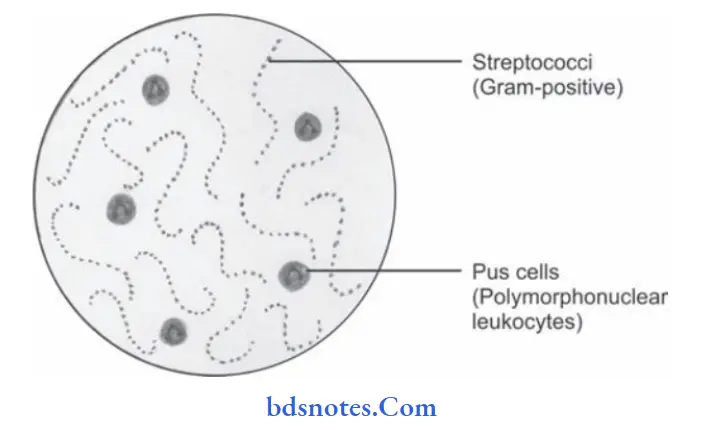
- It is a catalyse negative Gram-positive cocci forming short to medium chains.
- S. mutans synthesizes insoluble polysaccharides from sucrose and is homofermentative.
- Most important substrate for involvement of S. mutans in caries process is disaccharide sucrose.
- S. mutans produces acid from fermentation of sucrose, glucose, lactose, mannitol, etc. This leads to demineralization of tooth structure and fially caries.
- S. mutans can survive at pH as low as 4.2 and can demineralize the tooth causing dental caries.
- S. mutans synthesizes dextran which helps in adhering plaque bacteria to tooth surface which leads to more decay.
- S. mutans adhere to acquired pellicle and helps in plaque formation which fially cause caries.
- S. mutans has ability to adhere on hard and smooth surfaces of tooth structure.
“Steps to explain causes of microbial plaque: Bacteria vs dietary habits: Q&A guide”
Leave a Reply