Maxillary Sinus: Anatomy And Structure
Describe the maxillary air sinus under the following headings:
- Location,
- Boundaries,
- Drainage,
- Development and
- Applied anatomy.
Answer.
Maxillary Air Sinus Location
The maxillary air sinus is the largest paranasal air sinus located in the body of the maxilla.
Maxillary Air Sinus Boundaries
It is a pyramidal-shaped cavity in the body of the maxilla. Its boundaries are as follows:
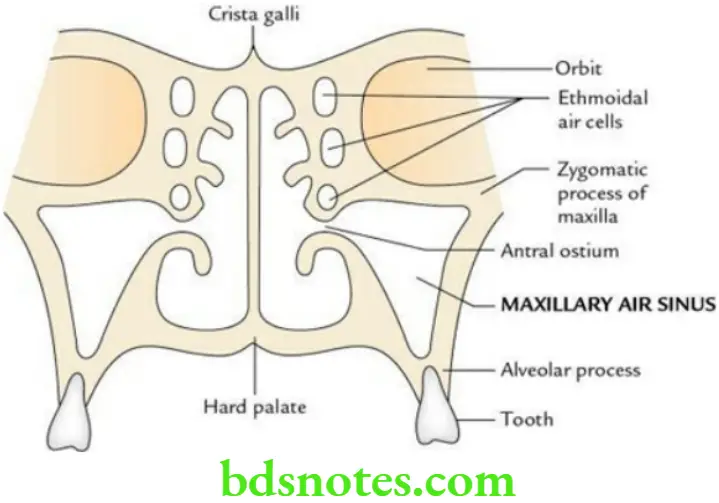
Maxillary Air Sinus Apex:
It is directed towards the zygoma and often extends into the zygotic bone.
Maxillary Air Sinus Base:
It is formed by the lateral wall of the nasal cavity.
Maxillary Air Sinus Roof:
It is formed by the floor of the orbit.
Maxillary Air Sinus Floor:
It is narrow and formed by the alveolar process of the maxilla. It lies about 1 cm below the level of the floor of the nose.
Maxillary Air Sinus Drainage
It drains in the middle meatus of the nose in the posterior part of the hiatus semilunar is.
Note: The ostium for the maxillary air sinus is located near its roof – a disadvantageous location for natural drainage.
Maxillary Air Sinus Development
It is the 1st paranasal air sinus to develop. It develops in the 4th month of IUL. It grows rapidly during 6–7 years of life and reaches adult size after the eruption of permanent teeth.
Maxillary Air Sinus Applied anatomy
Maxillary Sinusitis (most common):
The maxillary sinus is most commonly infected because its ostium is located near the roof, which hampers its drainage. The infection may reach the sinus either from the nasal cavity or from caries of the upper molar teeth.
Maxillary Sinusitis Referred pain:
The pain of the maxillary sinus may be referred to the upper teeth due to the same nerve supply.
Leave a Reply