Lipoproteins Explained: The Body’s Lipid Transport System
Define lipoproteins. Classify lipoproteins and explain their function.
Answer:
Lipoproteins:
- Lipoproteins are molecular complexes consisting of lipids and proteins
Classification:
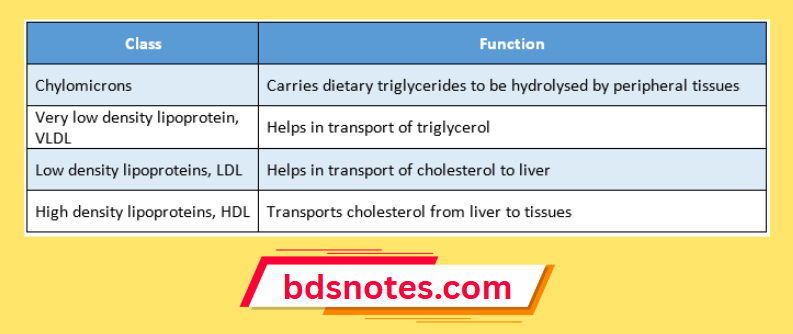
Functions:
- Lipids are hydrophobic in nature while proteins are hydrophilic
- Thus lipoproteins consisting of both hydrophobic and hydrophilic portion helps in the transport of lipids through the bloodstream
- Lipids get broken down into triglycerides in the body
- These triglycerides are transported from mucosal cells of the small intestine to the body cells
- Thus chylomicrons from the first stage of transport of lipids
- Lipids are also synthesized in the liver
- VLDL transports these lipids containing high content of triglycerides from the liver to body cells
- The remaining triglycerides from VLDL either return to the liver or are transformed into LDL
- LDL transports cholesterol from the liver to body cells
- Thus,
- VLDL contains high content of triglycerides
- LDL contains high content of cholesterol
- High VLDL increases the risk of coronary artery disease
Leave a Reply