Leukemoid Reaction
Question 1. Write a short note on leukemoid reaction.
Answer:
Leukemoid reactions are characterized by an increase in total leucocyte count beyond 25000/µl.
- The clinical features of leukemia such as splenomegaly, lymphadenopathy, and hemorrhages are usually absent
- The leukemoid reaction may be myeloid or lymphoid.
Leukemoid reaction
Myeloid Leukemoid Reaction
Her total WBC count is morbidly increased with a predominance of cells of myeloid series including occasional immature cells.
Etiology
- Infection: Staphylococcal pneumonia, Disseminated tuberculosis, Meningitis, diphtheria, endocarditis, etc.
- Intoxication: Mercury poisoning and burns
- Malignant diseases such as multiple myeloma, Hodgkin’s disease, and bone metastasis.
- Severe hemorrhage and severe hemolysis.
Laboratory Findings
- Leucocytosis is present, i.e. beyond 25,000/ml.
- Immature cells are mild to moderate and comprised of metamyelocytes, myelocytes, and blasts, blood picture simulates chronic myeloid leukemia.
- Infective cases show Dohle bodies in the cytoplasm of neutrophils.
- Neutrophil alkaline phosphatase levels are high.
Leukemoid reaction causes
Lymphoid Leukemoid Reaction
Etiology
Infections: Infectious mononucleosis, whooping cough, chickenpox, measles, and tuberculosis.
- Chronic lymphocytic leukemia
- Carcinoma.
Laboratory Diagnosis
- Leucocytosis is present, i.e. beyond 25,000/ml
- Differential leucocyte count reveals mature lymphocytes simulating the blood picture found in chronic lymphocytic leukemia.
Question 2. Write a short note on acute leukemia.
Answer:
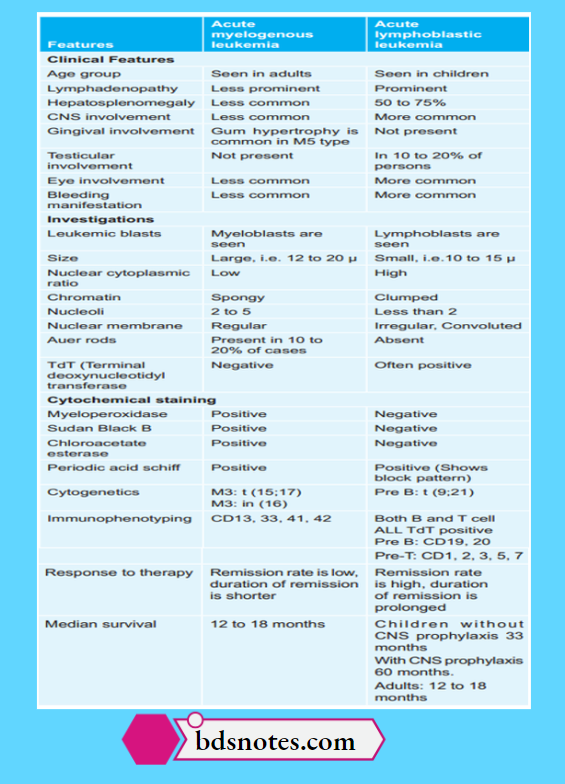
Acute leukemias are of two types, i.e. acute myelogenous leukemia and acute lymphoblastic leukemia.
Both the leukemias are explained on a comparison basis:
Leave a Reply