Irreversible Steps Of Glycolysis
Gluconeogenesis/Describe Irreversible steps of glycolysis.
Answer:
Definition:
“Steps to explain functions of irreversible steps: Energy production vs metabolic regulation: Q&A guide”
The synthesis of glucose from non-carbohydrate compounds is known as gluconeogenesis.
Location:
- It is located in the cytosol
- Mostly occurs in the liver
“Understanding irreversible steps of glycolysis through FAQs: Composition, functions, and uses explained”
Reactions:
- Closely related to the reversed pathway of glycolysis.
- Besides, it overcomes the irreversible steps of glycolysis,
- The irreversible steps of glycolysis are:
Thermodynamics of glycolysis irreversible steps
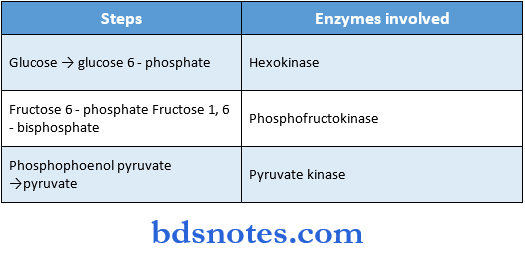
“Importance of studying irreversible steps of glycolysis for biochemistry students: Questions explained”
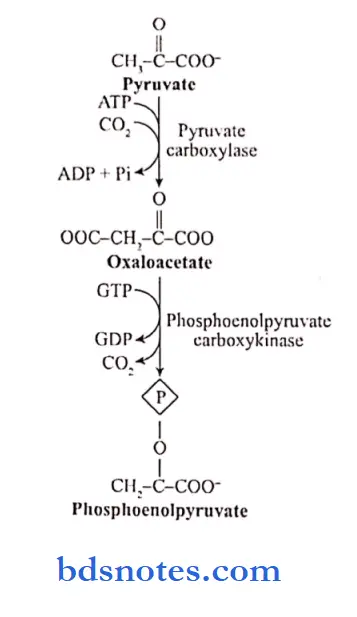
Conversion of pyruvate to phosphoenol private.
- It occurs in two steps.
- Pyruvate converted to oxaloacetate
- It occurs in mitochondrial by the enzyme pyruvate carboxylase in the presence of ATP and CO2.
- As oxaloacetate cannot diffuse out of the mitochondria, it is converted to malate by malate dehydrogenase and transported to cytosol.
- Oxaloacetate is converted to phosphoenol pyruvate.
It occurs in the mitochondrial matrix as well s cytosol by the enzyme phosphoenolpyruvate carboxykinase.
“Factors influencing success with irreversible steps of glycolysis studies: Q&A”
“Common challenges in mastering irreversible steps of glycolysis notes effectively: FAQs provided”
2. Conversion of fructose 1; 6 – bisphosphate to fructose 6 – phosphate.
- Fructose 1,6- bisphosphatase converts fructose 1, 6 – bisphosphate to fructose 6 – phosphate.
3. Conversion of glucose 6 – phosphate to glucose.
- It is catalyzed by glucose 6 – phosphatase.
Leave a Reply