Hyalinization During Orthodontic Tooth Movement
Question 1. Write short note on hyalinization.
Answer. If the orthodontic force increases more than the capillary pulse pressure, i.e. 20–26 gm/cm2 blood vessels get compressed or occluded.
“Understanding the role of hyalinization in orthodontic treatment”
- As PDL get compressed the blood supply of compressed area get cut off
- Now the cells which become activated osteoclasts remain inactive.
- A sterile necrotic area is visible in compressed PDL.
- This is when seen in light microscope appear as area devoid of cells and this is known as hyalinized area and process is known as hyalinization.
- Hyalinization is a reversible process.
- The effect of hyalinization is that it does not allow tooth to move.
- In hyalinization tooth can be moved in the condition in which bone beneath the hyalinized area undergo resorption.
- Hyalinization last for one to two weeks after which resorption occur by undermining resorption.
“Importance of studying hyalinization for better orthodontic outcomes”

“Common challenges in managing hyalinization effectively”
Frontal Resorption In Orthodontics
Summary of Hyalinization
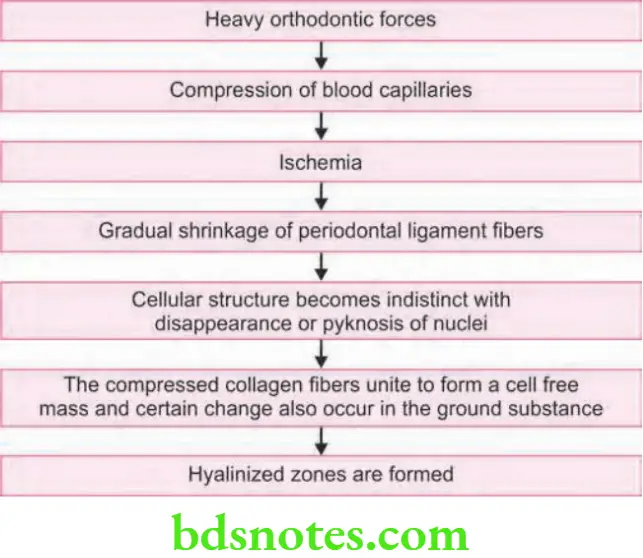
“Steps to explain hyalinization during orthodontic tooth movement”
Question 2. Briefly differentiate Frontal and undermining resorption.
Or
Differentiate between frontal vs Rear resorption.
Or
Briefly differentiate rear and frontal resorption.
Or
Write a short note on frontal vs undermining resorption.
Or
Briefly differentiate between frontal and undermining resorption.
Answer.
“Role of pressure and tissue response in hyalinization: Questions answered”
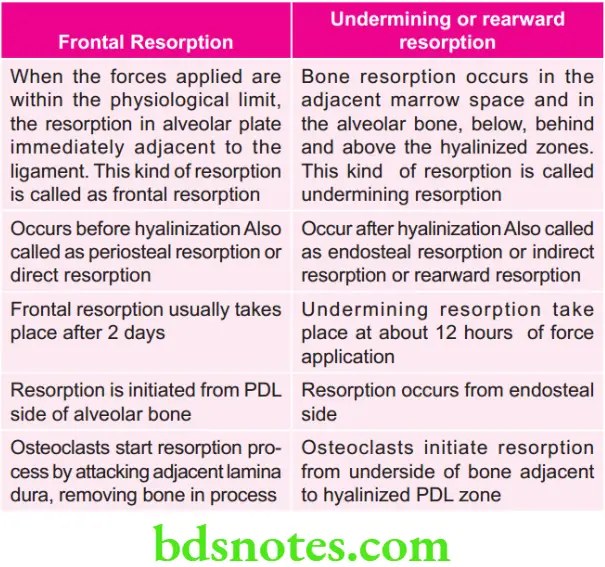
“Early warning signs of excessive hyalinization during orthodontic treatment”
Leave a Reply