Autacoids And Related Drugs Histamine And Antihistaminics

“Understanding the role of histamine in allergic reactions”
Question 1. Write The Antihistaminic Drugs Names And Uses.
Answer:
Antihistaminic Drugs High Sedative:
- Diphenhydramine
- Dimenhydrinate
- Promethazine
- Hydroxyzine.
Antihistaminic Drugs Moderately Sedative:
- Pheniramine
- Cyproheptadine
- Meclizine
- Buclizine
- Cinnarizine.
Read And Learn More: Pharmacology Question And Answers
Antihistaminic Drugs Mild Sedative:
- Chlorpheniramine
- Methdilazine
- Mepyramine
- Dimethindene
- Triprolidine
- Mebhydroline
- Cyclizine
- Clemastine.
“Importance of studying histamine and antihistaminics for healthcare professionals”
Antihistaminic Drugs Second Generation (NonSedative):
- Fexofenadine
- Loratidine
- Desloratadine
- Cetrizine
- Levocetrizine
- Azelastein
- Mizolastine
- Ebastine
- Rupatadine.
Uses Of Anti-Histaminic Drugs
- Allergic disorders: Antihistaminics do not suppress the antigen-antibody reaction, but block the effects of released histamine-are only palliative.
They effectively control certain immediate types of allergies, for Example. itching, urticaria, seasonal hay fever, allergic conjunctivitis, and angioedema of lips, eyelids, etc. - Other conditions involving histamine: Histaminics block symptoms produced by histamine liberators; afford symptomatic relief in insect bites and ivy poisoning.
- Pruritides: Many conventional antihistamines have antipruritic action independent of H1 antagonism.
Though relief is often incomplete, older antihistaminics remain the first choice of drugs for idiopathic pruritus. - Common cold: Antihistaminics do not affect the course of the illness but may afford symptomatic relief by reducing rhinorrhea and sedative actions.
Motion sickness: Promethazine, diphenhydramine, dimenhydrinate, and cyclizine have prophylactic value in milder types of motion sickness; should be taken one hour before starting the journey.
“Common challenges in managing histamine-related conditions with medications”
- Vertigo: Cinnarizine is the H1 antihistamine having additional anticholinergic, anti-5-HT, sedative, and vasodilator properties which have been widely used in vertigo.
It modulates calcium fluxes and attenuates the vasoconstrictor action of many endogenous substances.
Preanesthetic medication: Promethazine has been used for its anticholinergic and sedative properties. - Cough: Antihistaminics like chlorpheniramine, diphenhydramine, and promethazine are constituents of many popular cough remedies.
They have no selective cough suppressant action but may afford symptomatic relief by sedative and anticholinergic properties. - Parkinsonism: Promethazine and some others afford mild symptomatic relief in early cases.
- Acute muscle dystonia: Caused by antidopaminergic antipsychotic drugs is promptly relieved by parenteral promethazine or hydroxyzine.
This is again based on the central anticholinergic action of the drugs. - As sedative, hypnotic, anxiolytic: Antihistamines with CNS depressant action have been used as sedative and to induce sleep, especially in children.
“Signs of reduced allergy symptoms with antihistamines”
Question 2. Write Briefl On NonSedating H1 Antihistaminics.
Answer:
The nonsedating H1 antihistaminics are:
- Fexofenadine
- Loratidine
- Desloratadine
- Cetrizine
- Levocetirizine
- Azelastine
- Mizolastine
- Ebastine
- Rupatadine
“Role of H1 receptor antagonism in blocking histamine effects”

“Biomechanics of histamine release and action explained”
Question 3. Classify H1 Blockers (Antihistaminics). Describe The Important Actions, Adverse Effects, And Uses Of Cetrizine.
Answer:
H1 Blockers (Antihistaminics) High Sedative:
- Diphenhydramine
- Dimenhydrinate
- Promethazine
- Hydroxyzine.
H1 Blockers (Antihistaminics) Moderately Sedative:
- Pheniramine
- Cyproheptadine
- Meclizine
- Buclizine
- Cinnarizine.
H1 Blockers (Antihistaminics) Mild Sedative:
- Chlorpheniramine
- Methdilazine
- Mepyramine
- Dimethindene
- Triprolidine
- Mebhydroline
- Cyclizine
- Clemastine.
“Treatment options for allergies requiring antihistamines”
H1 Blockers (Antihistaminics) Second Generation (NonSedative):
- Fexofenadine
- Loratidine
- Desloratadine
- Cetrizine
- Levocetrizine
- Azelastein
- Mizolastine
- Ebastine
- Rupatadine.
Actions Of Cetrizine
- It inhibits the release of histamine and cytotoxic mediators from platelets as well as eosinophil chemotaxis during the secondary phase of allergic response.
- They cause very minimal or no sedation because they poorly cross the blood-brain barrier.
- They do not block cholinergic receptors and are pure H1 blockers.
Cetrizine Adverse Effects
- At higher doses produce sedative effects.
- At times lead to dizziness and inability to concentrate.
Uses Of Cetrizine
It is useful in:
- Upper respiratory allergies.
- Urticaria and atopic dermatitis.
- Seasonal asthma.
“Role of combination therapies in managing refractory allergies”
Question 4. Classify Antihistaminics. Describe The Therapeutic Uses And Adverse Effects Of Newer Antihistaminics.
Answer:
Antihistaminics High Sedative:
- Diphenhydramine
- Dimenhydrinate
- Promethazine
- Hydroxyzine.
Antihistaminics Moderately Sedative:
- Pheniramine
- Cyproheptadine
- Meclizine
- Buclizine
- Cinnarizine.
Antihistaminics Mild Sedative:
- Chlorpheniramine
- Methdilazine
- Mepyramine
- Dimethindene
- Triprolidine
- Mebhydroline
- Cyclizine
- Clemastine.
Antihistaminics Second Generation (NonSedative):
- Fexofenadine
- Loratidine
- Desloratadine
- Cetrizine
- Levocetirizine
- Azelastine
- Mizolastine
- Ebastine
- Rupatadine.
“Follow-up care after initiating antihistamine therapy”
Therapeutic Uses Of Newer Antihistaminics
- Drugs, i.e. fexofenadine, cetirizine, mezolastine, and rupatadine are used in the treatment of allergic rhinitis and hay fever.
- Azelastine is used in the form of nasal spray for allergic rhinitis.
- Drugs, i.e. fexofenadine, cetirizine, azelastine, loratadine, and ebastine are used in the treatment of urticaria, atopic dermatitis, and various other skin allergies.
- Drugs, i.e. Azelastine and levocarbastine are used in allergic conjunctivitis.
Adverse Effects Of Newer Antihistaminics
- Fexofenadine at higher doses leads to polymorphic ventricular tachycardia.
- Loratidine on overdose leads to seizures.
- Cetrizine poorly penetrates the blood-brain barrier so at times leads to somnolence.
- Azelastine leads to a burning sensation in the nose, altered taste perception, and drowsiness.
- Azelastine also leads to an increase in weight after use orally.
“Complications of ignoring histamine-related condition progression”
Question 5. Write Short Note On Second Generation Antihistaminics.
Or
Write Short Note On Newer Antihistaminics.
Answer:
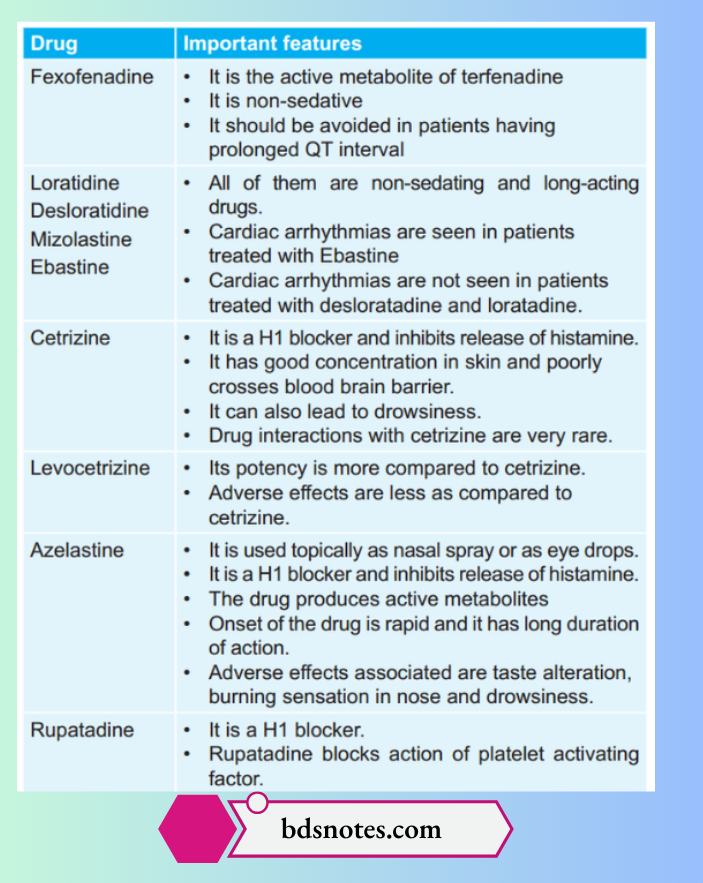
Second-generation antihistaminics are defined as those H1 receptor blockers which are marked after the year 1980.
Following are the second-generation antihistaminics:
- Fexofenadine
- Loratidine
- Desloratadine
- Cetrizine
- Levocetirizine
- Azelastine
- Mizolastine
- Ebastine
- Rupatadine.
“Techniques for managing high-risk groups with allergies”
“Pathophysiology of untreated histamine-related conditions explained”
Therapeutic Uses Of Newer Antihistaminics
- Drugs, i.e. fexofenadine, cetirizine, mezolastine, and rupatadine are used in the treatment of allergic rhinitis and hay fever.
- Azelastine is used in the form of nasal spray for allergic rhinitis.
- Drugs, i.e. fexofenadine, cetirizine, azelastine, loratadine, and ebastine are used in the treatment of urticaria, atopic dermatitis, and various other skin allergies.
- Drugs, i.e. Azelastine and levocarbastine are used in allergic conjunctivitis.
Question 6. Explain Why Cetrizine Is Preferred Over Chlorpheniramine In The Treatment Of Allergy.
Answer:
Cetrizine in addition inhibits the release of histamine and cytotoxic mediators from platelets as well as eosinophil chemotaxis during the secondary phase of the allergic response.
In this way it benefits allergic disorders through other actions as well, that’s why cetirizine is preferred over chlorpheniramine.
“Emerging research on advanced antihistamine treatments”
Question 7. Write a Short Note On Therapeutic Uses Of H1 Antihistaminics.
Or
Describe Therapeutic Uses Of H1 Blockers.
Or
Classify Antihistamines. Describe The Therapeutic Uses Of H2 Antihistaminics.
Answer:
classification of antihistaminics
Antihistamines High Sedative:
- Diphenhydramine
- Dimenhydrinate
- Promethazine
- Hydroxyzine.
Antihistamines Moderately Sedative:
- Pheniramine
- Cyproheptadine
- Meclizine
- Buclizine
- Cinnarizine.
Antihistamines Mild Sedative:
- Chlorpheniramine
- Methdilazine
- Mepyramine
- Dimethindene
- Triprolidine
- Mebhydroline
- Cyclizine
- Clemastine.
Antihistamines Second Generation (NonSedative):
- Fexofenadine
- Loratidine
- Desloratadine
- Cetrizine
- Levocetrizine
- Azelastein
- Mizolastine
- Ebastine
- Rupatadine.
“Case studies on outcomes of antihistamine therapies”
Uses Of Anti-Histaminic Drugs
- Allergic disorders: Antihistaminics do not suppress the antigen-antibody reaction, but block the effects of released histamine-are only palliative.
They effectively control certain immediate types of allergies, for Example. itching, urticaria, seasonal hay fever, allergic conjunctivitis, and angioedema of lips, eyelids, etc. - Other conditions involving histamine: Histaminics block symptoms produced by histamine liberators; afford symptomatic relief in insect bites and ivy poisoning.
- Pruritides: Many conventional antihistamines have antipruritic action independent of H1 antagonism.
Though relief is often incomplete, older antihistaminics remain the first choice of drugs for idiopathic pruritus. - Common cold: Antihistaminics do not affect the course of the illness but may afford symptomatic relief by reducing rhinorrhea and sedative actions.
Motion sickness: Promethazine, diphenhydramine, dimenhydrinate, and cyclizine have prophylactic value in milder types of motion sickness; should be taken one hour before starting the journey.
“Complications of delaying treatment for histamine-related conditions”
- Vertigo: Cinnarizine is the H1 antihistamine having additional anticholinergic, anti-5-HT, sedative, and vasodilator properties which have been widely used in vertigo.
It modulates calcium fluxes and attenuates the vasoconstrictor action of many endogenous substances.
Preanesthetic medication: Promethazine has been used for its anticholinergic and sedative properties. - Cough: Antihistaminics like chlorpheniramine, diphenhydramine, and promethazine are constituents of many popular cough remedies.
They have no selective cough suppressant action but may afford symptomatic relief by sedative and anticholinergic properties. - Parkinsonism: Promethazine and some others afford mild symptomatic relief in early cases.
- Acute muscle dystonia: Caused by antidopaminergic antipsychotic drugs is promptly relieved by parenteral promethazine or hydroxyzine.
This is again based on the central anticholinergic action of the drugs. - As sedative, hypnotic, anxiolytic: Antihistamines with CNS depressant action have been used as sedative and to induce sleep, especially in children.
Therapeutic Uses Of Newer Antihistaminics
- Drugs, i.e. fexofenadine, cetirizine, mezolastine, and rupatadine are used in the treatment of allergic rhinitis and hay fever.
- Azelastine is used in the form of nasal spray for allergic rhinitis.
- Drugs, i.e. fexofenadine, cetirizine, azelastine, loratadine, and ebastine are used in the treatment of urticaria, atopic dermatitis, and various other skin allergies.
- Drugs, i.e. Azelastine and levocarbastine are used in allergic conjunctivitis.
“Global prevalence of allergies and their management”
Question 8. Give Three Indications For The Use Of Antihistaminics, With Appropriate Antihistamine For Each Indication.
Answer:
Following are the three indications of antihistaminics with examples:
1. Antihistaminics Allergic disorders: Antihistaminics do not suppress antigen: antibody reaction, but block the effects of released histamine-are only palliative.
They effectively control certain immediate types of allergies, for Example. itching, urticaria, seasonal hay fever, allergic conjunctivitis, and angioedema of lips, and eyelids, for Example. Cetrizine, Levocetrizine, Fexofenadine etc.
2. Antihistaminics Motion sickness: Promethazine, diphenhydramine, dimenhydrinate, and cyclizine have prophylactic value in milder types of motion sickness; should be taken one hour before starting the journey.
3. Vertigo: Cinnarizine is the H1 antihistamine having additional anticholinergic, anti-5-HT, sedative, and vasodilator properties which have been widely used in vertigo.
It modulates Calcium fluxes and at venues vasoconstrictor action of many endogenous substances.
Leave a Reply