• Skip to main content
  • Skip to secondary menu
  • Skip to primary sidebar
  • About Us
  • Terms of Use
  • Privacy Policy
  • Disclaimer
  • Contact Us
  • Sitemap

BDS Notes

BDS notes, Question and Answers

  • Public Health Dentistry
  • Periodontics
  • Pharmacology
  • Pathology
  • Orthodontics
    • Anchorage In Orthodontics
    • Mandibular Growth, Functional Matrix
    • Retention and Relapse
  • General Surgery
    • Cysts: Types, Causes, Symptoms
    • Maxillofacial Fractures, Disorders, and Treatments
    • Lymphatic Disorders
    • Neurological and Facial Disorders
  • Temporal And Infratemporal Regions
    • Spinal and Neuroanatomy
  • Dental Materials
    • Dental Amalgam
Home » Hemolytic Jaundice: Causes, Symptoms, And Lab Tests

Hemolytic Jaundice: Causes, Symptoms, And Lab Tests

February 6, 2026 by Kristensmith Taylor Leave a Comment

Hemolytic Jaundice: Causes, Symptoms, And Lab Tests

Question 1. Name two hormones acting on pancreas.
Answer:
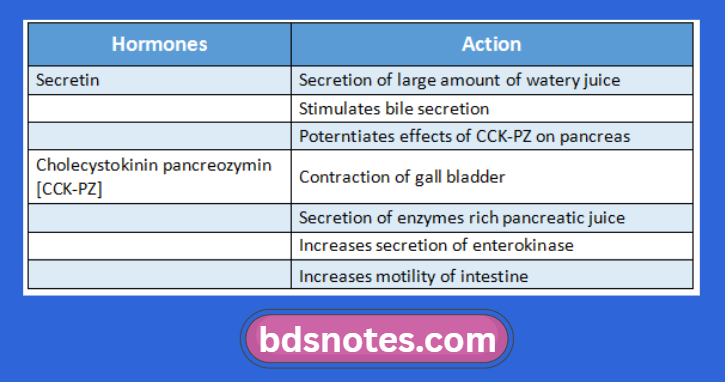
Digestive Hormones And Their Actions

Question 2. Jaundice.
Answer:

Definition:

  • Jaundice is a yellow discoloration of the skin, eyes, mucous membrane and deeper tissues due to increased accumulation of bilirubin in the plasma and tissue fluids.

Value:

  • Normal serum bilirubin level -0.2-0.8 mg/dl
  • In jaundice – more than 2 mg/dl.

Types:
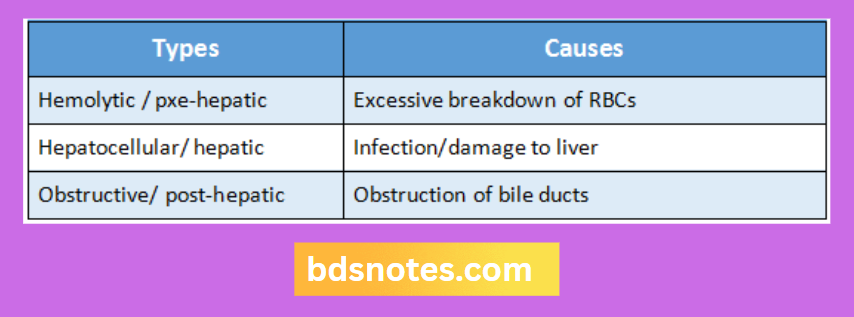
Jaundice Types And Their Causes

Question 3. Hemolytic jaundice.
Answer:

Cause:

  • Excessive breakdown of RBCs.

Laboratory investigation:

1. Van den bergh test – indirect positive.

2. Blood.

  1. Blood smear.
    • It shows anaemia, reticulocytosis and abnormal RBC.
  2. Plasma.
    • Plasma proteins normal.
  3. Bilirubin – unconjugated.
  4. Serum alkaline phosphatise level-normal.

3. Urine.

  1. Bilirubin – absent.
  2. Urobilinogen – increased.

4. Faeces.

  1. Stercobilinogen – increased
  2. Faecal fat-normal.

5. Liver.

  • Liver function normally

Question 4. Bile pigments.
Answer:

  • Bile pigments are the excretory products in bile.

Bile pigments:

1. Bilirubin.

2. Biliverdin.

Formation and circulation:

Senile RBC are destroyed and haemoglobin is released.
↓
Hemoglobin into.

1. Globin

2. Heme.

  • Heme split into.
    1. Iron-stores in iron pool.
    2. Biliverdin.

Biliverdin is reduced to unconjugated bilirubin.
↓
Bilirubin is released into blood and transported to liver through albumin.
↓
Here, it becomes conjugated.

Fate:

1. 50% of bilirubin

  • Converted into urobilinogen.

2. Remaining 50%.

  • Absorbed into blood
  • Re-enters the liver.
  • Re-excreted in bile.

Filed Under: Anatomy

Reader Interactions

Leave a Reply Cancel reply

Your email address will not be published. Required fields are marked *

Primary Sidebar

Recent Posts

  • Branchial Cleft Cyst: Background, Pathophysiology, Etiology
  • Maxillary Nerve: Origin, Course, And Branches
  • The Father Of Anatomy And A Great Anatomist Herophilus
  • Bone Structure – Anatomy
  • The External Carotid Artery: Anatomy, Branches, And Functions
  • Occipitofrontalis Muscle
  • Superficial Temporal Artery
  • Platysma Muscle
  • Cartilage
  • Cauda Equina And Conus Medullaris Syndromes
  • Subcutaneous Injections And Device Management
  • Types Of Circulation: Pulmonary, Systemic, And Portal
  • Structure Of Skeletal Muscle
  • Elastic Cartilage
  • Cellular Organelles And Structure
  • The Golgi Apparatus – The Cell
  • The Cytoplasmic Inclusions Of Certain Plant Cells
  • Dental Abscess
  • Laser Surgery
  • Our Facial Muscles And Their Functions

Copyright © 2026 · Magazine Pro on Genesis Framework · WordPress · Log in