Hemihydrate
Write short notes on α and β hemihydrates.
Answer:
Alpha Hemihydrate: It is also known as a type III gypsum product or dental stone or hydrocal.
Manufacture of Alpha Hemihydrate:
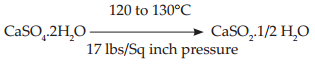
Here gypsum is calcined under steam pressure in an autoclave at 120°C to 130°C at 17 lbs/sq inch for 5 to 7 hours. So the product obtained is much stronger and harder. Microscopically there are cleaved fragments and crystals inform of rods and prisms.
Composition of Alpha Hemihydrate: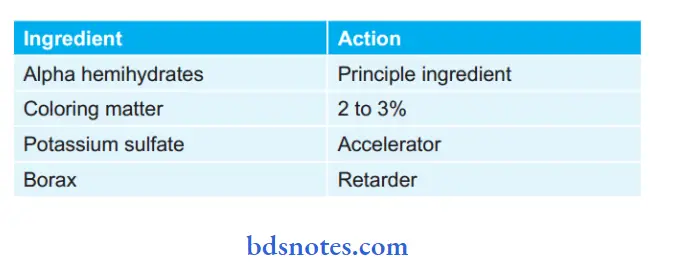
A stone with a setting time established by the addition of proper quantities of both accelerator and retarder is known as a balanced stone.
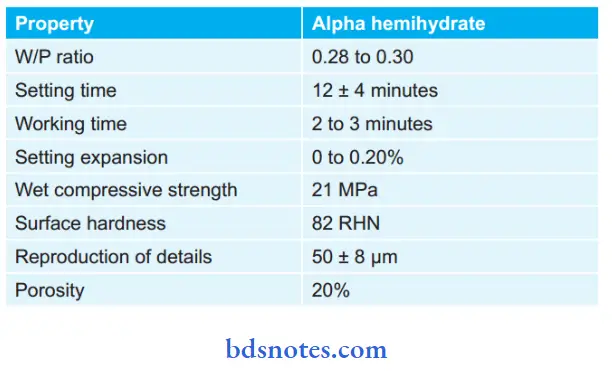
Properties of Alpha Hemihydrate:
Advantages of Alpha Hemihydrate:
- It is inexpensive and is easy to manipulate.
- Dimensional stability and accuracy is good.
- It has the ability to reproduce fie details and sharp margins of impressions.
Disadvantages of Alpha Hemihydrate:e:
- Its mechanical properties are not ideal.
- Fractures of teeth from stone casts can occur with careless handling.
- It has low abrasion resistance.
Uses of Alpha Hemihydrate:
- It is used to pour the workable casts in the fabrication of complete dentures.
- It is used to process the denture base because the stone has adequate strength.
Beta Hemihydrates: It is also known as dental plaster or model plaster or laboratory plaster or mounting plaster.
Manufacture of Beta Hemihydrates:
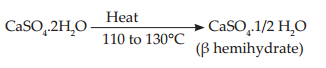
Gypsum is ground and heated in an open letter or klin at a temperature of 110 to 130°C. The process is known as dry calculations. Here β types of crystals are formed. Microscopically, fibrous aggregate of fie crystals with capillary pores are present. They are then ground to break up the needle-like crystals. This improves packing.
Composition of Beta Hemihydrates:
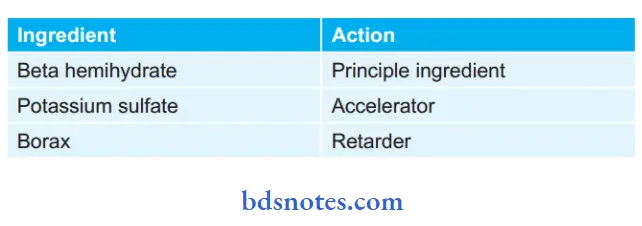
Properties of Beta Hemihydrates:
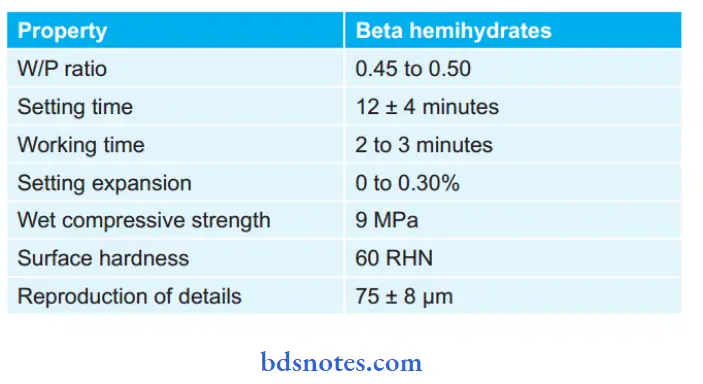
Advantages of Beta Hemihydrates:
- It is very easy to trim the models.
- It is least expensive of all the gypsum materials.
Uses of Beta Hemihydrates:
It is used for pouring the cast of oral structures when high strength and high abrasion resistance is not required, and dimensional accuracy is not typical.
- It is used for filing a flsk in denture construction.
- It is used for mounting stone models in articulators.
Manipulation of Alpha Hemihydrates or Beta Hemihydrates:
Dental stone or plaster is mixed in flxible rubber or plastic bowl with stif bladed plaster spatula. Take proper W/P ratio in rubber bowel and add the pre-weighted quantity of powder. Spatulate with stirring motion for 45 to 60 seconds. Tap the bowel or keep it on vibrator to avoid air bubbles and immediately pour it in the impression by inversion or boxing method.
Leave a Reply