Heart Rate
What is normal heart rate? Describe variation and regulation of heart rate.
Answer:
Heart rate:
- Normal heart rate in adults in 70-80 beats per minute.
“Understanding heart rate through FAQs: Normal ranges, factors, and uses explained”
Variations:
1. Physiological variations:
- Age.
- After birth, heart rate decreases with age.
- However, in old age it is high.
- Sex.
- Heart rate is slightly higher in females.
- Surface area.
- Heart rate is inversely proportional to surface area.
- Body temperature.
- For each 1oF rise in body temperature, heart rate increase by about 10 beats per minutes.
- Emotions.
- Excitement, fear, anger – increases heart rate.
- Shock, grief decreases heart rate.
- Exercise.
- Heart rate increases with severity of exercise.
- Respiration.
- During inspiration, heart rate increases while during expiration, heart rate decreases.
- Metabolic rate.
- An increase in metabolic rate, increases heart rate.
“Importance of studying heart rate for medical students: Questions explained”
2. Pathological variations:
- Increase in intracranial tension, heart rate decreases.
- Thyrotoxicosis – increases heart rate.
- In fever, anaemia, hypoxia – heart rate increases.
- In jaundice, hypothyroidism- heart rate decreases.
3. Drugs:
- Epinephrine – increases heart rate.
- Nor epinephrine causes reflex brady cardia.
Regulation of heart rate:
- Heart rate is regulated by the nervous mechanism.
- It consists of three components.
“Common challenges in mastering heart rate notes effectively: FAQs provided”
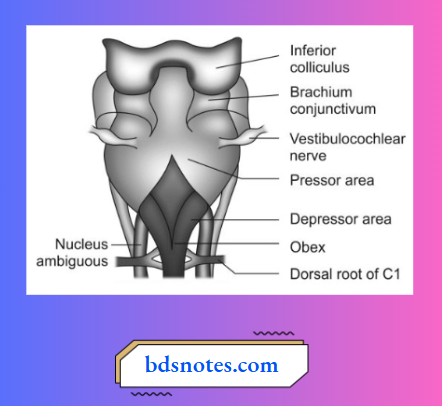
1. Vasomotor center:
Situation:
- Bilaterally in the reticular formation of medulla oblongata and lower part of the pons.
Areas:
- Vasodilator area/depressor area.
- Forms medial portion of vasomotor center controlled by cerebral cortex and hypothalamus.
- Functions:
- Decreases heart rate
- Decreases BP
- Decreases stroke volume
- Decreases venous return.
- Causes vasodilation.
- Vasoconstrictor/pressor area.
- Forms lateral portion of vasomotor center.
- Controlled by cerebral cortex and hypothalamus.
Functions: - Incraeses heart rate
- Increases BP.
- Increases stroke volume.
- Increases venous return.
- Sensory areas.
- Causes vasoconstriction.
- Forms posterior part of vasomotor center.
- It receives sensory impulses via. glossopharyngeal and vagus nerve.
Function: - Controls vasoconstrictor and vasodilator area.
“Factors influencing success with heart rate studies: Q&A”
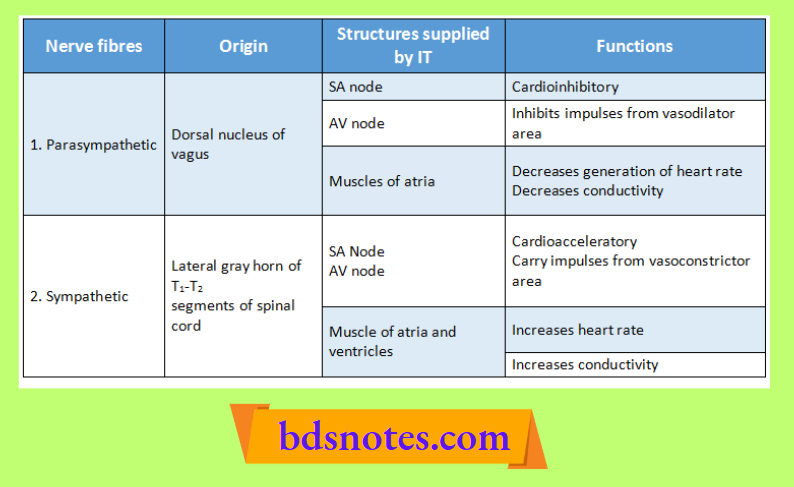
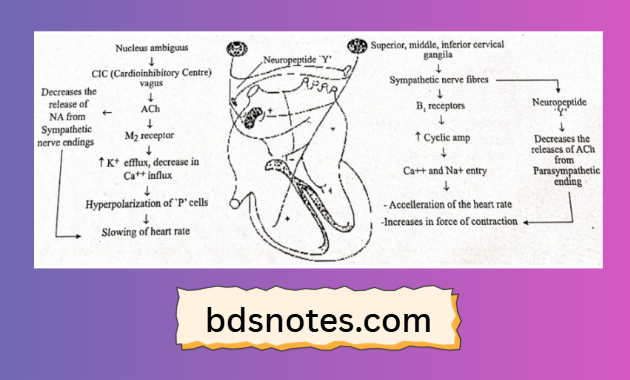
2. Motor (Efferent) Nerve Fibres:
“Steps to explain factors affecting heart rate: Age vs fitness level: Q&A guide”
“Role of age in determining heart rate: Questions answered”
3. Sensory (Afferent) nerve fibers:
- These fibers pass through the inferior cervical sympathetic nerve.
Function: - Carries pain and stretch sensations from the heart to the brain.
Leave a Reply