• Skip to main content
  • Skip to secondary menu
  • Skip to primary sidebar
  • About Us
  • Terms of Use
  • Privacy Policy
  • Disclaimer
  • Contact Us
  • Sitemap

BDS Notes

BDS notes, Question and Answers

  • Public Health Dentistry
  • Periodontics
  • Pharmacology
  • Pathology
  • Orthodontics
    • Anchorage In Orthodontics
    • Mandibular Growth, Functional Matrix
    • Retention and Relapse
  • General Surgery
    • Cysts: Types, Causes, Symptoms
    • Maxillofacial Fractures, Disorders, and Treatments
    • Lymphatic Disorders
    • Neurological and Facial Disorders
  • Temporal And Infratemporal Regions
    • Spinal and Neuroanatomy
  • Dental Materials
    • Dental Amalgam
Home » Glycolysis Explained: Steps, Pathway, and Energetics of Glucose Breakdown

Glycolysis Explained: Steps, Pathway, and Energetics of Glucose Breakdown

September 23, 2025 by Kristensmith Taylor Leave a Comment

Glycolysis Explained: Steps, Pathway, and Energetics of Glucose Breakdown

Explain glycolysis in detail with its energetics.
Answer.

Glycolysis Definition

The oxidation of glucose to pyruvate and lactate is called glycolysis

Characteristic Features Of Glycolysis

  • It is meant for the provision of energy
  • It is also called the Embden-Meyerhof-Parnas (EMP) pathway
  • It occurs in all the tissues
  • Erythrocytes and the brain derive energy mainly from glycolysis.
  • It can take place in both aerobic and anaerobic conditions.

Glycolysis Pathway: Step-by-Step Breakdown of Glucose

  • Glycolysis takes place in the cytoplasm of the cell
  • It is important in skeletal muscles as glycolysis provides ATP even in the absence of oxygen, hence muscles can survive anoxic episodes
  • In fast-growing cancer cells, the rate of glycolysis is very high, leading to the accumulation of lactic acid, causing acidosis. The local acidic environment is helpful in cancer therapy
  • Deficiency of certain enzymes (hexokinase and pyruvate kinase) of glycolysis can cause haemolytic anaemia.

Glycolysis Explained: Steps, Pathway, and Energetics of Glucose Breakdown

Reactions Of Glycolysis

  • Glucose is freely permeable to liver cells
  • In the intestinal mucosa and kidney tubules, glucose is taken up by active transport
  • In other tissues such as skeletal muscles, cardiac muscle, diaphragm, and adipose tissue, insulin facilitates the uptake of glucose
  • In aerobic conditions, glucose is oxidized to pyruvic acid, and in anaerobic conditions, it is oxidized to lactic acid.
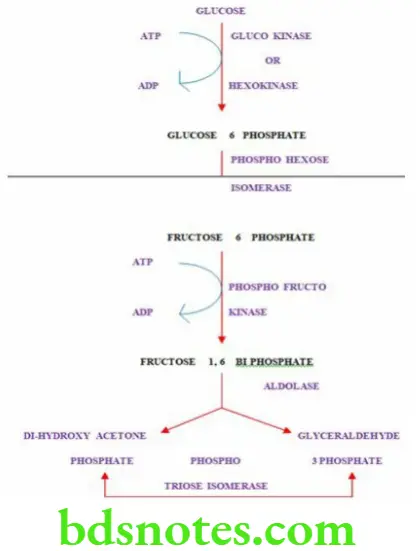
Nutrition And Biochemistry Composition And Metabolism Of Carbohydrates Glycolysis 1

Glycolysis Steps: Overview of Glucose to Pyruvate Conversion
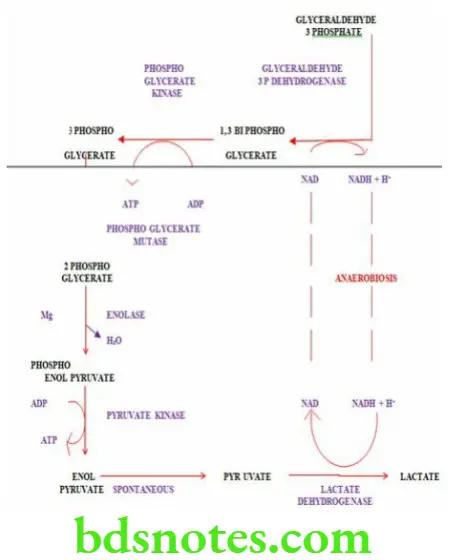
Nutrition And Biochemistry Composition And Metabolism Of Carbohydrates Glygolysis 2

Glycolysis Pathway: Enzymes and Reactions in Glucose Breakdown
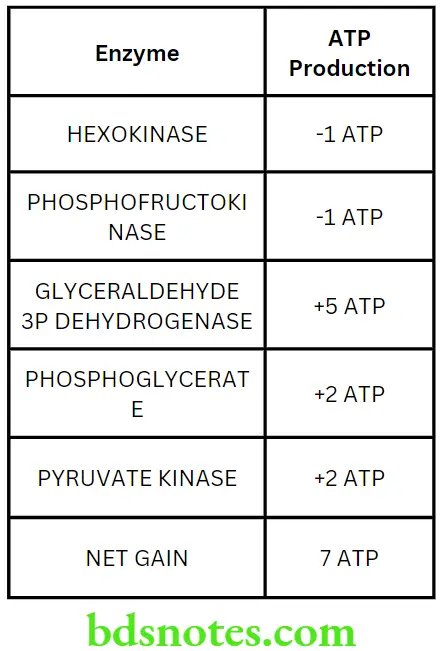
Nutrition And Biochemistry Composition And Metabolism Of Carbohydrates Energitics Of Glycolysis

Filed Under: Nutrition And Biochemistry

Reader Interactions

Leave a Reply Cancel reply

Your email address will not be published. Required fields are marked *

Primary Sidebar

Recent Posts

  • Branchial Cleft Cyst: Background, Pathophysiology, Etiology
  • Maxillary Nerve: Origin, Course, And Branches
  • The Father Of Anatomy And A Great Anatomist Herophilus
  • Bone Structure – Anatomy
  • The External Carotid Artery: Anatomy, Branches, And Functions
  • Occipitofrontalis Muscle
  • Superficial Temporal Artery
  • Platysma Muscle
  • Cartilage
  • Cauda Equina And Conus Medullaris Syndromes
  • Subcutaneous Injections And Device Management
  • Types Of Circulation: Pulmonary, Systemic, And Portal
  • Structure Of Skeletal Muscle
  • Elastic Cartilage
  • Cellular Organelles And Structure
  • The Golgi Apparatus – The Cell
  • The Cytoplasmic Inclusions Of Certain Plant Cells
  • Dental Abscess
  • Laser Surgery
  • Our Facial Muscles And Their Functions

Copyright © 2026 · Magazine Pro on Genesis Framework · WordPress · Log in