Gangrene
Write A Short Note On Gangrene.
Or
Write In Brief On Gangrene.
Or
Defie Gangrene And Describe Wet Gangrene.
Answer:
Gangrene is the necrosis of tissue that is associated with super-added putrefaction, most often following coagulative necrosis due to ischemia. For Example. Gangrene of the bowel, gangrene of the limb, etc. There are three main forms of gangrene, i.e., dry, wet, and gas gangrene.
Gangrene
1. Dry Gangrene
- This form of gangrene begins in the distal part of a limb due to ischemia. For example, in toes and feet du
- e to arteriosclerosis and ergot poisoning.
- Other causes of dry gangrene foot include Buerger’s disease, Raynaud’s disease, and trauma.
- Dry gangrene starts in one of the toes, which is farthest from the blood supply and has a small amount of blood that invading bacteria find very hard to grow in the necrotic area.
- Dry gangrene spreads slowly upwards till it reaches a point where the blood supply is adequate to keep tissue viable.
- The characteristic appearance of this gangrene is the formation of a line of separation between the gangrenous and viable parts.

Dry Gangrene Pathologic Changes
- The affected part is dry, shrunken, and black.
- The line of separation usually brings about complete separation.
- The line of separation consists of inflammatory granulation tissue.
2. Wet Gangrene
This occurs in naturally moist tissues and organs such as the bowel, mouth, lung, cervix, vulva, etc.
- Two other examples of clinical significance are:
- Diabetic foot is due to high glucose content in necrosed tissue, which favors the growth of bacteria.
- Bedsores in a bedridden patient.
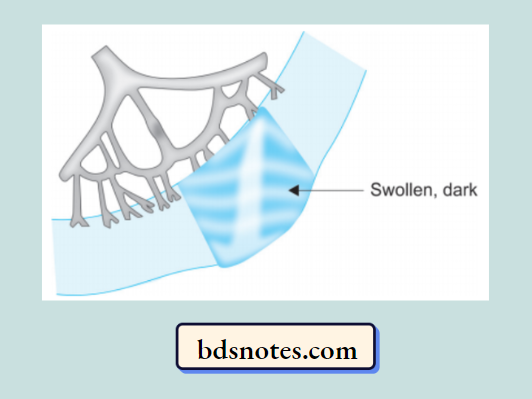
- Wet gangrene occurs due to blockage of venous and arterial blood flow. The affected part is stuffed with blood, which favors the rapid growth of putrefactive bacteria. Toxic products formed by bacteria get absorbed, causing the systemic manifestation of septicemia and, finally, death.
Wet Gangrene Pathologic Changes
- The affected part is soft, swollen, putrid, rotten, and dark.
- No clear line of demarcation.
Gangrene definition
Wet Gangrene Histologically
- Presence of coagulative necrosis with the stuff of the affected part with blood.
- The mucosa is ulcerated and sloughed.
- There is the presence of intense, acute inflammatory exudates and thrombosed vessels.
- The line of demarcation between the gangrenous segment and the viable bowel is not clear-cut.
Wet gangrene
3. Gas Gangrene
- It is a special form of wet gangrene caused by forming clostridia.
- Clostridia gain entry from the open, contaminated wounds into the tissues, mainly in muscles.
- Clostridia produce various toxins that produce necrosis and edema locally and are also absorbed, producing profound systemic manifestations.
Gas Gangrene Gross Changes
- The affected area is swollen, edematous, painful, and crepitant due to the accumulation of gas bubbles in tissues.
- The affected area becomes dark black and foul-smelling.
Gas Gangrene Histologically
- Muscle fibers undergo coagulative necrosis along with liquefaction.
- A large number of Gram-positive bacilli can be identified.
- At the periphery, a zone of leucocyte infiltration, edema, and congestion is found.
- Capillary and venous thrombi are commonly seen.
Leave a Reply