Down’s Analysis
Write short note on Down’s analysis.
Answer. For skeletal parametres,
Dental Analysis
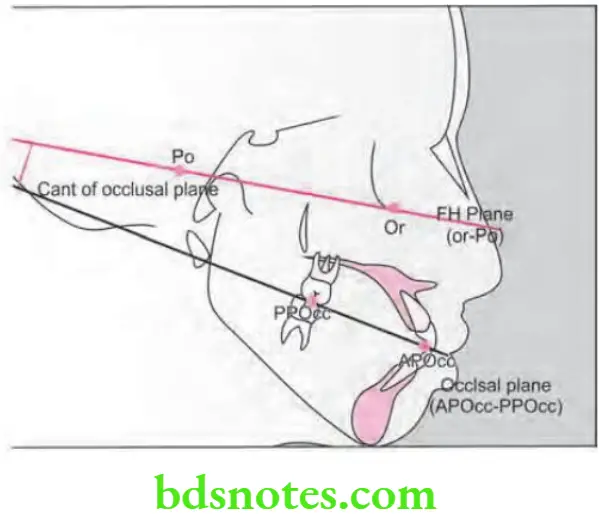
Cant of Occlusal Plane
- It is the measurement of slope of occlusal plane to Frankfort horizontal plane.
- Occlusal plane is formed by drawing a line bisecting overlapping cusps of first molars and overbite of incisors.
- Cant of occlusal plane is gained by measuring angle between occlusal plane and Frankfort horizontal plane.
- Mean value is 9.3°
“Understanding the role of Down’s analysis in cephalometric evaluation”
“Importance of studying Down’s analysis for better orthodontic outcomes”
- Decrease in the value occurs in the cases of long ramus while it is increased in cases of short ramus.
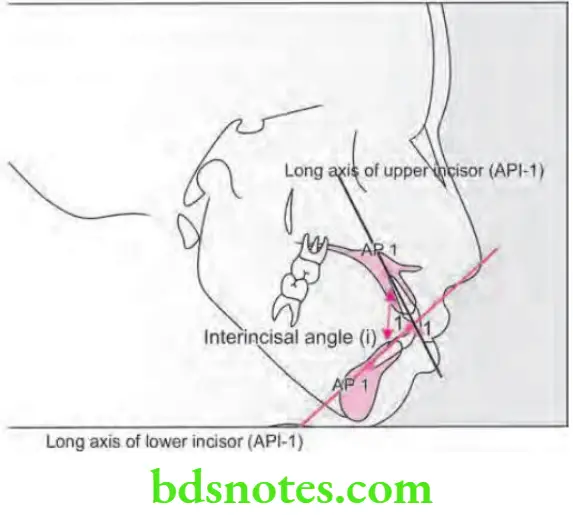
Interincisal Angle
- It is formed by long axis of maxillary and mandibular incisor.
- Mean value is 135.4°.
- Interincisal angle is less in people whose incisors are tipped forward.
“Common challenges in using Down’s analysis effectively”
“Factors influencing the accuracy of Down’s analysis measurements”
“Steps to explain the components of Down’s analysis in orthodontics”
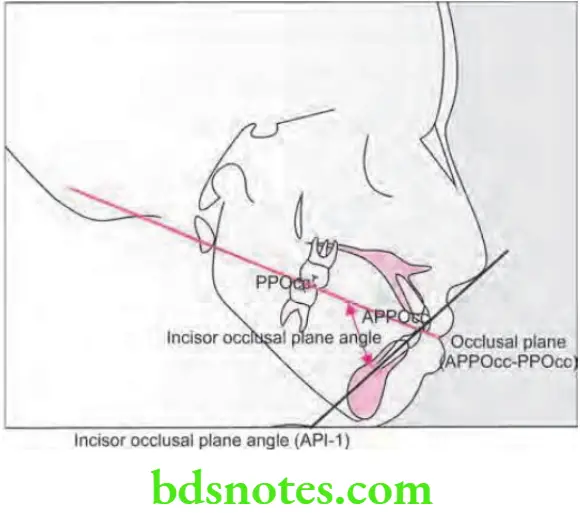
Incisor Occlusal Plane Angle
- It is formed where the occlusal plane and long axis of mandibular incisor meets at an intersection.
- Its mean value is +14.5°.
- At the point of intersection inside the angle can be positive or negative based on deviation from right angle.
- Its value is increased in proclined mandibular incisors and decreased in retroclined mandibular incisors.
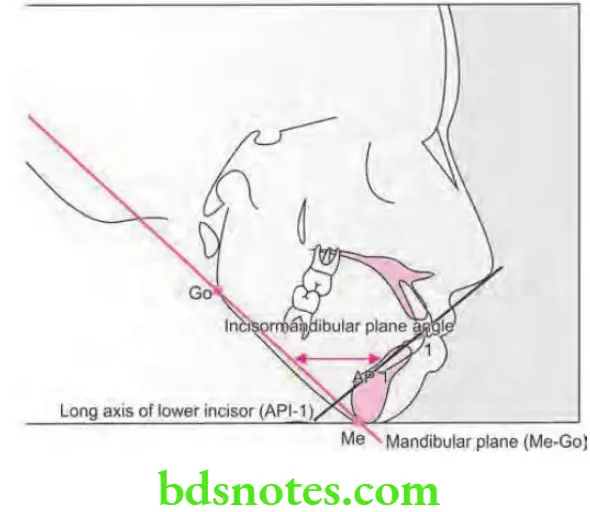
Incisor Mandibular Plane Angle
- It is formed where the mandibular plane and long axis of mandibular incisor meets at an intersection.
- Its mean value is +1.40.
- At the point of intersection inside, the angle can be positive or negative based on deviation from right angle.
- Its value is increased in proclined mandibular incisors and decreased in retroclined mandibular incisors.
“Role of angular measurements in Down’s analysis”
“Early warning signs of errors in Down’s analysis interpretation”
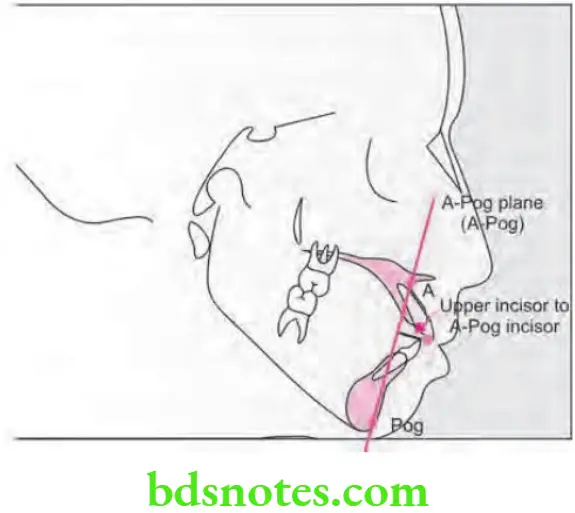
Protrusion of Maxillary Incisors
- It is gained by drawing a line from point A to pogonion and calculating the distance between incisal edge of maxillary central incisor to A-pog line.
- Mean value is + 2.7 mm.
- When incisal edge lies ahead of A-Pog line the value is positive.
- Increase in value is suggestive of protruded maxillary incisors while decrease in value is suggestive on retruded maxillary incisors.
“Asymptomatic vs symptomatic effects of misinterpreted Down’s analysis data”
“Steps to educate patients about Down’s analysis and its importance”
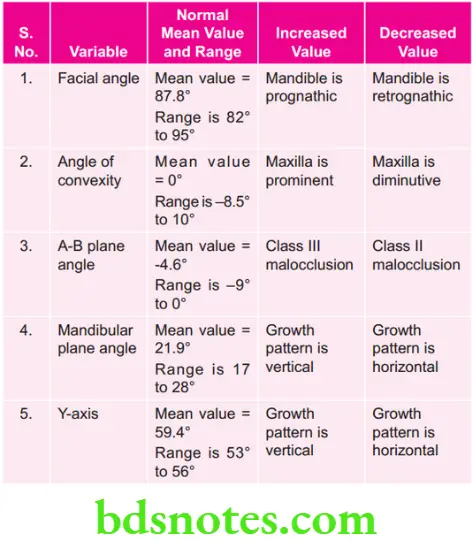
Summary of Dental Parameters of Down’s Analysis
Leave a Reply