Different Realms Of Twin Block
“What is a Twin Block appliance in orthodontics?”
Twin Block Myofunctional Appliance
- Twin block myofunctional appliance was discovered by Scottsh orthodontist, Mr. William Clark.
- These are simple bite blocks which modify occlusal inclined plane.
- They should be weared for full time.
Types of Twin Block
- Standard
- Sagittal
- Reverse
- Magnetic.
“Understanding the role of Twin Block in Class II correction”
Design
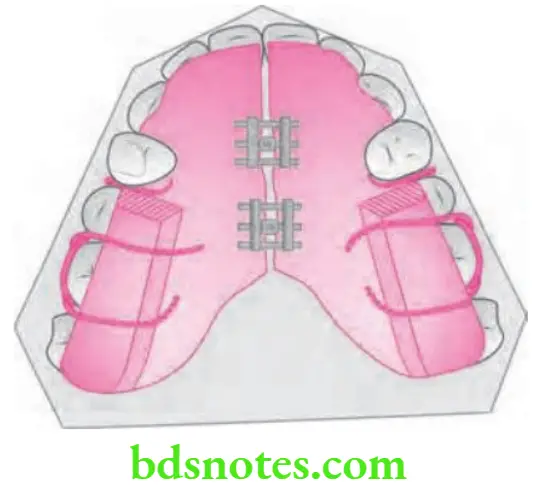
Parts of twin block are: (1) Acrylic part which consists of base plate and occlusal inclined plane, (2) Wire component which consists of labial bow, delta clasp and ball end clasp.
Acrylic Part
Twin block is the combination of two separate appliances.
Twin block consists of upper and lower occlusal inclined planes which lock at 70 degree to occlusal plane.
Upper inclined plane
- It is angled from mesial surface of lower fist molar.
- Flat part of inclined plane passes distally above the remaining posterior teeth in form of wedge.
- It only covers lingual cusps of posterior teeth.
“Twin Block appliance for mandibular advancement”
Lower inclined plane
- In this lower molars are free to erupt.
- Buccolingually it covers the occlusal surface of lower premolars and deciduous molars.
- It must be clear of mesial surface which is contacting with the lower molars.
Wire Component
Clasps
- Initially Adam’s clasp were in usage.
- These days delta clasps are preferred in lower premolars and upper fist molar.
- In mandibular anterior region ball end clasps are used.
“Complications of untreated Class II malocclusion”
Labial bow
- It can be used optionally.
- Its main aim is to achieve retention.
- Used in cases of proclination.
Construction bite
- Horizontal bite should be taken edge-to-edge.
- In vertical opening 2 mm interincisal clearance should be present.
- In premolar area 5 mm clearance should be present.
“Role of Twin Block in correcting overjet”
Other Attachments to Twin Block Which are Optional
- Headgear: Used in cases where maxilla should be extruded or intruded.
- Expansion screw: In cases where maxillary arch get constricted or in cases where the horizontal mandibular advancement leads to crossbite.
- Concorde facebow: In cases where combined extraoral and intermaxillary traction is used.
Myofunctional Appliances Management
Management of patient by twin block should be done in three phases, i.e.
- Active phase: Treatment by twin block for 6 to 9 months.
- Supportive phase: Treatment by twin block for 3 to 6 months is done and after that upper anterior inclined plane is given to patient.
- Retention phase: Regular retention appliance is given for duration of 9 months.
“Clinical examination for Twin Block candidacy”
Myofunctional Appliances Indications/Uses
It is used in following conditions:
- Class 2 div 1 and 2 malocclusions.
- Class 3 malocclusion.
- In TMJ problems.
- In Class 1 open and closed bites.
- In lateral arch constriction cases.
Leave a Reply