• Skip to main content
  • Skip to secondary menu
  • Skip to primary sidebar
  • About Us
  • Terms of Use
  • Privacy Policy
  • Disclaimer
  • Contact Us
  • Sitemap

BDS Notes

BDS notes, Question and Answers

  • Public Health Dentistry
  • Periodontics
  • Pharmacology
  • Pathology
  • Orthodontics
    • Anchorage In Orthodontics
    • Mandibular Growth, Functional Matrix
    • Retention and Relapse
  • General Surgery
    • Cysts: Types, Causes, Symptoms
    • Maxillofacial Fractures, Disorders, and Treatments
    • Lymphatic Disorders
    • Neurological and Facial Disorders
  • Temporal And Infratemporal Regions
    • Spinal and Neuroanatomy
  • Dental Materials
    • Dental Amalgam
Home » Gemination vs Fusion: Developmental Dental Anomalies Explained

Gemination vs Fusion: Developmental Dental Anomalies Explained

July 12, 2025 by Joankessler parkland Leave a Comment

Gemination vs Fusion: Developmental Dental Anomalies Explained

Question 1. Write notes on gemination and fusion.

Answer. Gemination

  • Gemination is a developmental anomaly which refers to partial development of two teeth from single tooth bud following incomplete division.
  • The structure is usually one with two completely or incompletely separated crowns that have a single root and a root canal.
  • The condition is seen in both deciduous and permanent dentition.
  • It appears to exhibit a hereditary tendency.

“Understanding the role of gemination and fusion in dental anomalies: Q&A explained”
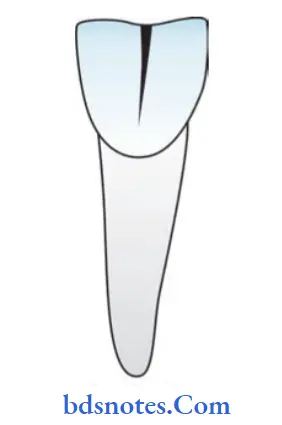
Developmental Disturbances of Oral and Para oral Structures Gemination

Fusion

“Importance of studying gemination vs fusion for better diagnostic outcomes: Questions explained”
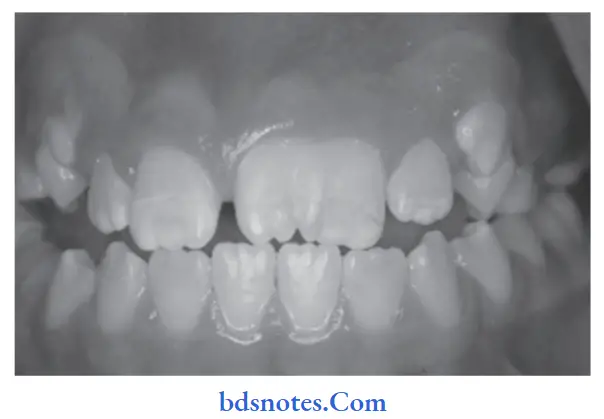
Developmental Disturbances of Oral and Para oral Structures Fusion

“Common challenges in diagnosing gemination and fusion effectively: FAQs provided”

  • Fusion is defined as union of two adjacent normal tooth germs at level of dentin during development.
  • One of the most important criteria for fusion is that fused tooth must exhibit conflent dentin.
  • Both permanent and deciduous dentition are affcting in case of fusion, although it is more common in deciduous teeth.
  • Fusion can be complete or incomplete and its extent will depend on stage of odontogenesis at which fusion takes place.
  • The incisor teeth are more frequently affcted in both the dentitions during the condition.

Filed Under: Oral Pathology

Reader Interactions

Leave a Reply Cancel reply

Your email address will not be published. Required fields are marked *

Primary Sidebar

Recent Posts

  • Branchial Cleft Cyst: Background, Pathophysiology, Etiology
  • Maxillary Nerve: Origin, Course, And Branches
  • The Father Of Anatomy And A Great Anatomist Herophilus
  • Bone Structure – Anatomy
  • The External Carotid Artery: Anatomy, Branches, And Functions
  • Occipitofrontalis Muscle
  • Superficial Temporal Artery
  • Platysma Muscle
  • Cartilage
  • Cauda Equina And Conus Medullaris Syndromes
  • Subcutaneous Injections And Device Management
  • Types Of Circulation: Pulmonary, Systemic, And Portal
  • Hierarchical Organization Of Skeletal Muscle Tissue
  • Elastic Cartilage Histology Short Note For Medical Exams
  • Cellular Organelles And Structure
  • The Golgi Apparatus – The Cell
  • The Cytoplasmic Inclusions Of Certain Plant Cells
  • Dental Abscess
  • Laser Surgery
  • Our Facial Muscles And Their Functions

Copyright © 2026 · Magazine Pro on Genesis Framework · WordPress · Log in