Dental Implant Classification: Materials, Design, And Biological Response
Write a short note on the classification of dental implants.
Or
Write a short note on the types of implants.
Answer:
Classifiation of Implants:
1. Based on the Materials Used:
- Metals and alloys: It consists of titanium and its alloys, stainless steel, cobalt-chromium, and molybdenum
- Ceramics and carbon implants: Made of carbon with stainless steel
- Polymers and composites: Polymethylmethacrylate and polytetrafluoroethylene.
2. Based on Biological Response:
- Biotolerant: Such materials are not easily rejected when implanted in living tissue and are surrounded by a fibrous layer in the form of a capsule. For example,
- Metals such as gold, cobalt–chromium alloy, stainless Steel, zirconium, niobium
- Polymers like polyethylene, polyamide, Polymethylmethacrylate,
- Bioinert: These materials allow close apposition of bone over their surface causing contact osteogenesis. Examples are:
- Metals such as commercially pure titanium and titanium alloy
- Ceramics like aluminium oxide and zirconium oxide
- Bioactive: These materials allow the formation of bone onto their surface, but the exchange of ions along with host tissue causes the formation of the chemical bond at the interface. ,
- Examples are: Ceramics like HA, tricalcium phosphate, bioglass, fluorapatite, and carbon–silicon.
3. Based on Histology:
- Osseointegrated
- Non-osseointegrated.
4. Based on the Design of the Implant:
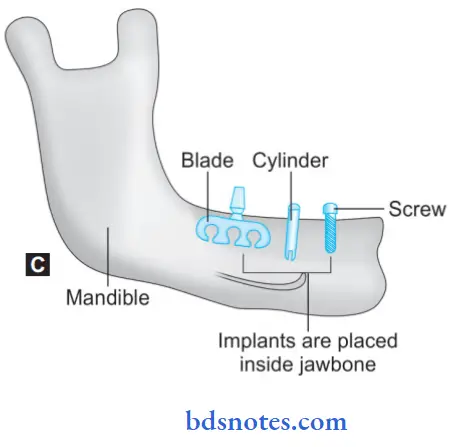
- Endosteal implants: They are placed in the alveolar or basal bone of the maxilla and mandible and they transect only one cortical plate, For example, Blade implants and ramus frame implants.
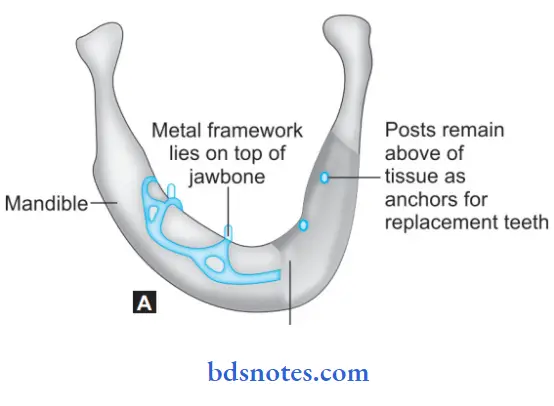
- Subperiosteal implant: It consists of an implant substructure which is a custom-cast frame placed directly over the bony cortex just below the periosteum.
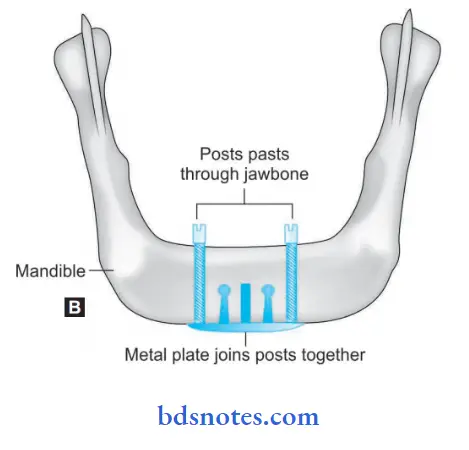
- Transosteal implant: It penetrates both cortical plates, For example, the Transmandibular implant, and mandibular staple implant.
5. Based on Macroscopic Design:
- Threaded or threadless
- Cylindrical or conical
- Hollow or solid
6. Based on surface treatment:
- Titanium plasma-sprayed
- Aluminum oxide coated
- Hydroxyapatite coated
- Machined
- Blasted or etched with biomaterials
- Electropolished.
Leave a Reply