Dental Caries Important Question And Answers
Question 1. Describe briefly etiology of dental caries.
Answer. The following is the etiology of dental caries:
“Understanding the role of dental caries in oral health: Q&A explained”
Read And Learn More: Oral Pathology Question And Answers
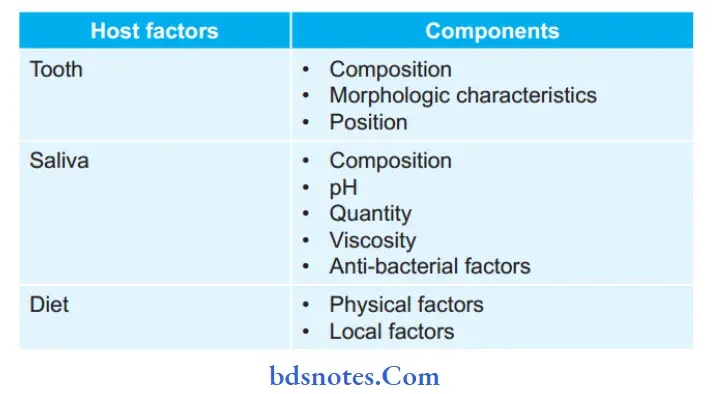
Tooth
Composition
- The structure and composition of the teeth influence the initiation and rate of progression of dental caries.
- Surface enamel is more resistant to caries as compared to subsurface enamel. Surface enamel consists of more quantity of fluoride, zinc, lead and iron.
The concentration of carbonate, magnesium,, and sodium is lower ithe n the surface layer.
Level of carbon dioxide is also lower in the surface layer,, which causes dissolution othe f surface layer by acids at a lower rate,, and it consists of less organic and water content. - Age changes in enamel,, such as a decrease in the density and permeability and an increase in nitrogen and fluoride content,causees teeth to become more caries-resistant.
“Importance of studying dental caries for better diagnostic outcomes: Questions explained”
Morphologic Characteristic
- Deep and narrow occlusal fissures or buccal and lingual pits lead tothe the development of dental caries.
- As age increases, attrition of teeth occurss and this leads to less accumulation of food in fissures, and there is less occurrence of caries.
Position
A malaligned tooth or rotated tooth has more chances of predisposition to caries as it tends to accumulate more food debris, cariogenic plaque, and bacteria. In all these,e teeth cleaning cannot be done.
“Common challenges in diagnosing dental caries effectively: FAQs provided”
Saliva
Composition
- Inorganic components of saliva: In normal conditions saliva is supersaturated with calcium and phosphate ions.
This causes prevention of dissolution of enamel and also precipitates apatite crystals on the surface of the enamel of the carious lesion, which helps in partial repair of the tooth damaged by dental caries. During caries, saliva is unsaturated with calcium and phosphate ions, which lleadstthe o dissolution of enamel.
Fluoride also plays an excellent role the the in reduction he dental caries. - Organic components of saliva: High concentration of ammonia retards plaque formation and neutralizes acid.
- Urea increases the neutralizing power of saliva. Enzyme salivary amylase leads to the degradation of starch and makes it more soluble in this way starch is washed away from tooth surface.
pH
“Factors influencing success with dental caries prevention: Q&A”
- Critical pH is the pH at which saliva appears to be saturated with calcium and phosphorus ions.
The value of critical pH is 5.5, below the critical pH inorganic portion of the tooth starts dissolving. As there is an increase in the concentration of hydrogen ions in cariogenic plaque, this leads to the loss of more phosphate ions from the tooth. - Buffering property of saliva leads to diffusion of bicarbonate ions in dental plaque and neutralizes the acid during caries process.
The quantity of saliva is inversely proportional to dental caries activity.
- The more thelessivary flow less is the caries index.
- Hyposalivation occurs due to conditions like diabetes mellitus, uremia, and usage of antisialogogues.
“Steps to explain causes of dental caries: Bacteria vs poor hygiene: Q&A guide”
Viscosity
If saliva is thick, mucin is there ce of high caries incidence.
Anti-Bacterial Factors
- Saliva consists of many antibacterial products such as lysozyme, salivary peroxidase, and immunoglobulins.
- Lysozyme, in the presence of sodium lauryl sulphate, can lyse cariogenic streptococci.
- Salivary peroxidase inactivates bacterial enzymes of the glycolytic pathway and inhibits their growth. This is more effective against lactobacillus bacteria.
- IgA immunoglobulin inhibits S. mutants in saliva.
“Role of Streptococcus mutans in causing dental caries: Questions answered”
Diet
Physical Factors
- Raw, unrefined food consists of roughage, which clears the teeth, butthe presence of soil and sand leads to attrition of occlusal and proximal surfaces of teeth and reduces dental caries.
- Soft and refined foods stick to the teeth and causes increased accumulation of debris which causes increased risk of dental caries.
Local Factors
- Carbohydrates, i.e., starch, sucrose, lactose, glucose, fructose,e or maltose,se play an important role in the process of dental
caries. Synthesis of extracellular polysaccharides, glucans, and levan helps in adherence of bacteria to teeth. - In lipids, medium chain fattyy acids and their salts have antibacterial properties at low pH.
- Deficiency of Vitamin A and D can lead to enamel hypoplasia which can lead to dental caries in affected teeth.
“Early warning signs of issues addressed by understanding dental caries pathogenesis: Common questions”
Systemic Conditions
- Hereditary: There is the possibility of dental caries, which leads to the inheritance of tooth form or structure which predisposes to dental caries.
- Pregnancy: In later stages of pregnancy because of lack of oral hygiene there is increased risk of dental caries.
Leave a Reply