Cori’s Cycle
Question 1. Explain Cori’s cycle.
Answer.
Cori’s Cycle
Understanding Cori’s Cycle: Lactic Acid and Glucose Metabolism
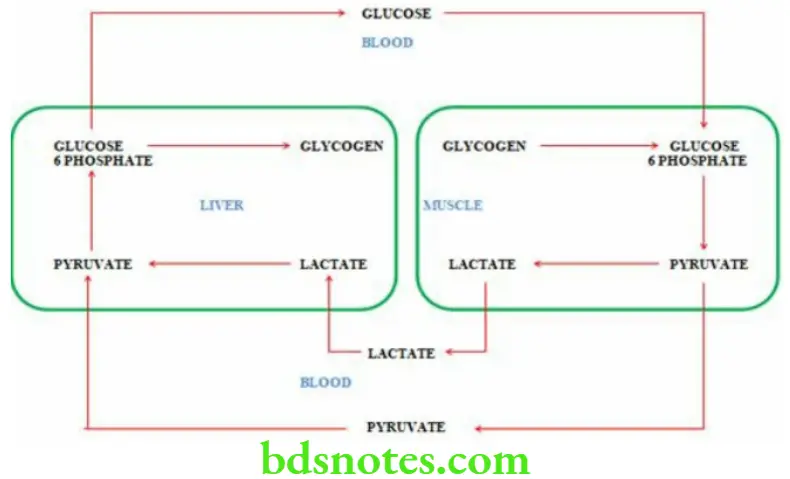
- Muscles cannot convert glucose 6 phosphate to glucose due to absence of the enzyme glucose 6 phosphatase
- Lactate formed in the muscles enters the blood and is carried to the liver where it is converted to glucose by gluconeogenesis
- The glucose thus formed then enters the muscles
- This cycle is called Cori’s cycle
Read And Learn More: BSc Nursing 1st Year Nutrition And Biochemistry Previous year Question and Answers
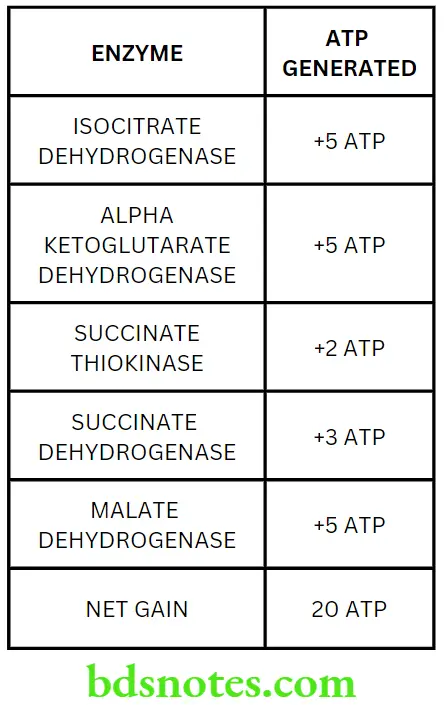
Question 2. Describe the steps of TCA cycle. Add a note on its energetics.
Answer.
Characteristic Features Of KREBS Cycle
- Krebs cycle is also known as the citric acid cycle or tricarboxylic acid cycle (TCA cycle)
- It is the final common pathway for the breakdown of carbohydrates, lipids and proteins
- It takes place in the mitochondrial matrix
- It takes place only in the presence of oxygen (aerobic conditions)
- Absence of oxygen (anoxia) or partial deficiency of oxygen (hypoxia) causes total or partial inhibition of the cycle
- NADH and FADH2 formed in the Krebs cycle enter the electron transport chain and generate ATP’s
- Intermediates of Krebs cycle play a role in the synthesis of many important compounds such as non-essential amino acids, fatty acids, haeme, cholesterol and steroids.
Cori’s Cycle: Function, Process, and Role in Metabolism
Reactions Of KREBS Cycle
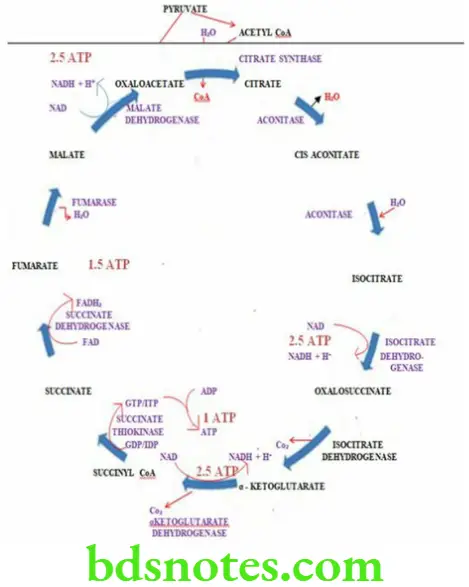
- Krebs cycle takes place in the mitochondria
- Oxaloacetate combines with acetyl COA to form citrate in the first step of Krebs cycle
- Citrate then undergoes a series of reactions to regenerate oxaloacetet
Leave a Reply