Classification Of Malocclusion
“What is malocclusion classification? A question and answers guide”

Question 1. Define malocclusion. Describe the Angle’s classification of malocclusion.
Or
Write Angle’s classification of malocclusion.
Or
Write a short note on Angle’s classification.
Answer. Malocclusion is a condition in which there is a departure from the normal relation of the teeth to other teeth in the same arch and/or to teeth in the opposing arch. Gardiner, White, and Leighton
Angle’s Classification of Malocclusion
Edward Angle introduced a system of malocclusion in 1899.
- Angle’s classification was based on the mesiodistal relation of the teeth, dental arches and the jaws.
- According to Angle the maxillary first permanent molar is the key of occlusion.
- Based on the relation of the lower 1st permanent molar to the upper 1st permanent molar, Angle classified malocclusion into 3 main classes:
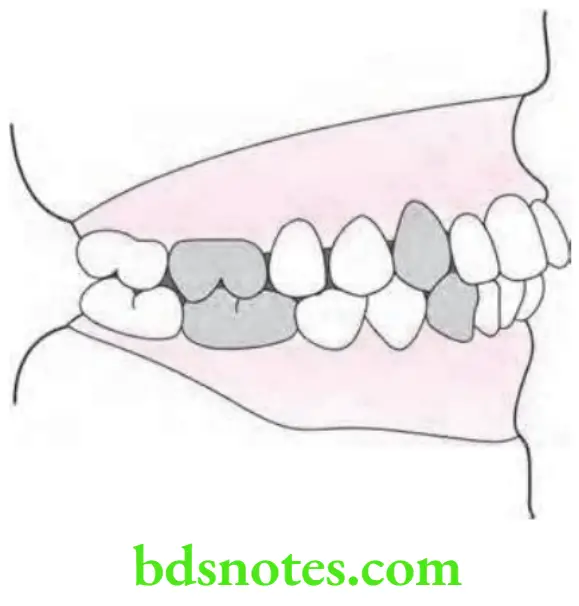
Angle’s Class 1 Malocclusion (Neutrocclusion)
Molar relation: Mesiobuccal cusp of maxillary fist permanent molar occludes in the mesiobuccal groove of mandibular fist permanent molar.
“Importance of studying malocclusion classification via Q&A format”
“Understanding malocclusion classification through Q&A”
Canine relation: Mesial inclination of maxillary canine occludes with distal inclination of mandibular canine whereas distal inclination of maxillary canine occludes with mesial inclination of mandibular fist premolar.
Read And Learn More: Orthodontics Question And Answers
Line of occlusion: It get alter in maxillary and mandibular arches.
- Tooth irregularities like crowding, spacing, missing of tooth and rotations are seen.
- Interarch problems such as deep bite, increased overjet, cross bite and open bite are seen.
Class 1 Bimaxillary Protrusion
It is a condition in which key of occlusion and line of occlusion are not altered, but maxillary and mandibular anteriors are proclined and exist in edge-to-edge relationship.
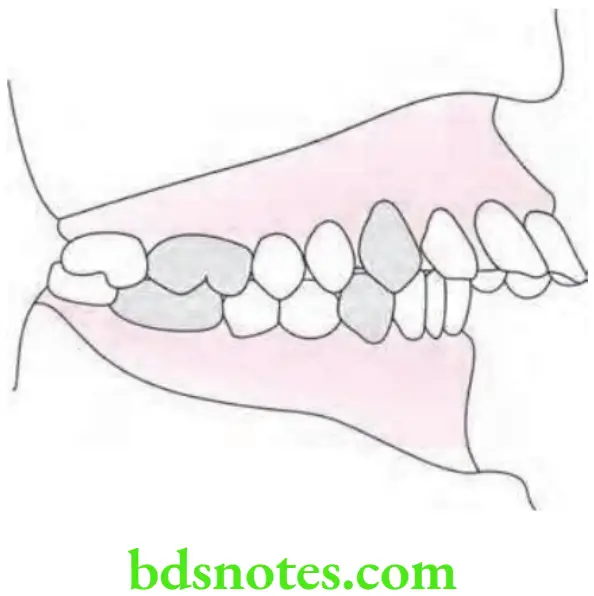
Angle’s Class 2 Division 1 Malocclusion (Distocclusion)
Molar relation: This group is characterized by class II molar relation where the distobuccal cusp of permanent maxillary fist molar occludes in the buccal groove of the permanent mandibular fist molar.
“Common questions about malocclusion classification in orthodontic practice”
“Steps to explain different types of malocclusion classification: Q&A”
Class 2 canine relation: Distal incline of maxillary canine occludes with mesial inclines of mandibular canine.
Line of occlusion: It will get altered. Various other features of class 2 division 1 malocclusion are:
- Proclined maxillary incisors.
- Deep bite.
- Lip trap.
- V-shaped maxilla.
- Exaggerated curve of Spee.
Class 2 division 1 subdivision: In this there is unilateral class 2 molar relationship with normal class 1 molar occlusion over other side.
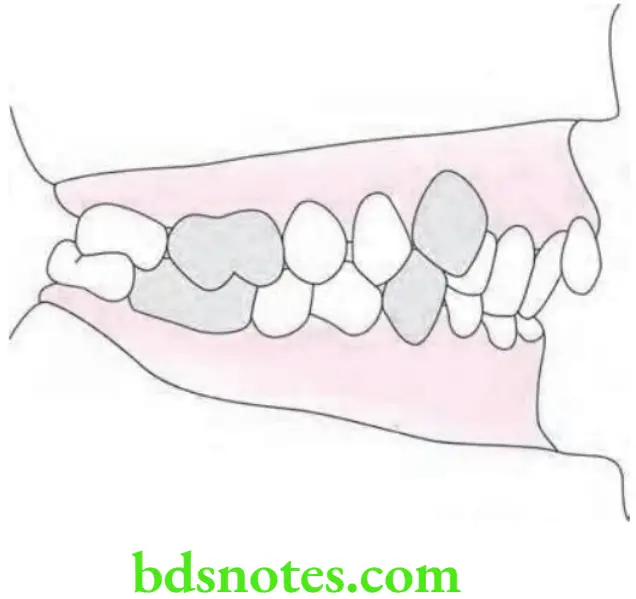
Angle’s Class 2 Division 2 Malocclusion
Class 2 molar relation: Mandibular arch is distally positioned in relation to maxillary arch. Distobuccal cusp of maxillary fist molar occludes with mesiobuccal groove of mandibular fist molar.
Class 2 canine relation: Distal incline of maxillary canine occludes with the mesial incline of mandibular canine.
Line of occlusion: It becomes altered.
“Role of Angle’s classification in diagnosing malocclusions: Explained”
“Early warning signs of untreated issues detectable via malocclusion classification: FAQs”
- Other Features: Arch become square shaped.
- Curve of Spee is exaggerated.
- Close bite.
- Lingual inclination of maxillary central incisor or lingual inclination of both maxillary central and lateral incisors.
- Retroclined incisors overlapped by canine.
Class 2 division 2 subdivision: Class II molar relation occur on one side with normal molar relation on other side.
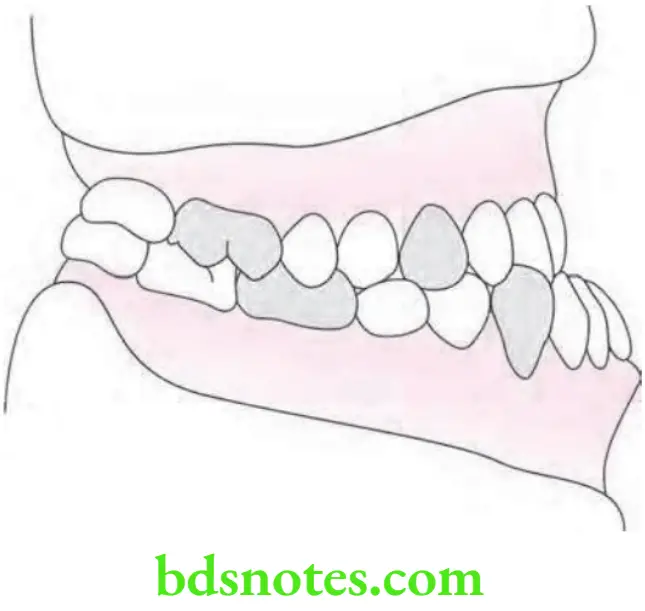
Angle’s Class 3 Malocclusion (Mesiocclusion)
Class 3 molar relation: Mesiobuccal cusp of maxillary fist permanent molar occlude with interdental space between mandibular fist and second permanent molars.
Class 3 canine relation: Maxillary canine occludes with interdental space between mandibular first and second premolars.
Line of occlusion: It can or cannot be developed.
“Asymptomatic vs symptomatic effects of misclassified malocclusions: Questions”
“Steps to educate patients about malocclusion classification: Q&A format”
Other Features:
- Anterior crossbite
- Posterior crossbite
- Maxillary anterior crowding.
Class 3 subdivision: In this class III molar relation is present over one side with normal molar relation to other side.
True Class 3:
“Role of counseling in clarifying malocclusion goals: Questions answered”
It is a skeletal malocclusion.
Causes are prognathic mandible, retrognathic maxilla, combination of both.
Pseudo Class 3:
- It occurs because of occlusal prematurities, when the mandible moves from rest to occlusion, it slide forward into pseudo class III malocclusion.
- In rest position patient show normal molar relationship.
Leave a Reply