Chronic Osteomyelitis
Write a short note on chronic osteomyelitis.
Or
Write briefly on chronic osteomyelitis.
Answer:
Chronic osteomyelitis may be the sequelae of acute osteomyelitis, in which proper treatment is either not done or inadequately done.
Chronic osteomyelitis X-ray findings
- The disease may also arise primarily as a chronic, low-grade inflammatory reaction in the bone, without any pre-existing acute phase.
- It is generally believed that lower levels of virulence of the causative microorganisms, For Example. Staphylococci, Bacteroids, Actinomyces, etc. are mostly responsible for the development of chronic suppurative osteomyelitis. Nonspecific microorganisms like staphylococci, streptococci, Bacteroids, Actinomyces, etc. mostly cause the disease.
Chronic Osteomyelitis Clinical Features
- The molar area of the mandible is more frequently affected.
- In the case of chronic osteomyelitis, the pain is usually mild dull vague even if the disease is very extensive.
- Patients often give a history of dull vague pain in the jaw for several weeks, which had started following an acute tooth abscess, tooth fracture or extraction, etc.
- Pain is usually mild and insidious in nature.
- Jaw swelling is a common feature but mobility of teeth and sinus tract formations, etc. are rare.
- On rare occasions, sinus tracts may develop both intraorally and extraoral with the intermittent discharge of purulent materials.
- Sequestrum is often found, which protrudes from the ulcerated skin or mucosal surfaces.
Chronic osteomyelitis
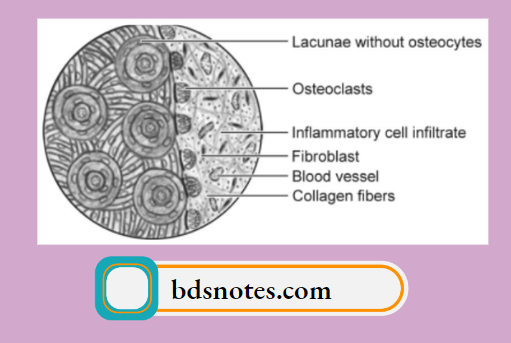
Chronic osteomyelitis Histopathology
Chronic suppurative osteomyelitis often presents the following features:
- Chronic inflammatory reaction in the bone with an accumulation of exudates and pus within the medullary spaces.
- The lymphocytes, plasma cells, macrophages, etc. predominate among the inflammatory cells.
- Osteoblastic and osteoclastic activity occur parallel with the formation of irregular bony trabeculae having reversal lines.
- Sequestrum may develop in the later stages of the disease.
Leave a Reply