Cephalometrics In Orthodontics
“What is cephalometrics in orthodontics? A question and answers guide”
Cephalometry is extensively used for diagnosis and treatment planning purposes.
The role of cephalometry for diagnosis and treatment purposes is divided into four parts:
- Anteroposterior relationships
- Vertical relationships
- Dentoalveolar relationships
- Soft tissue relationships
“Steps to explain different types of cephalometric analysis: Q&A”
Analysis of Anteroposterior Relationships
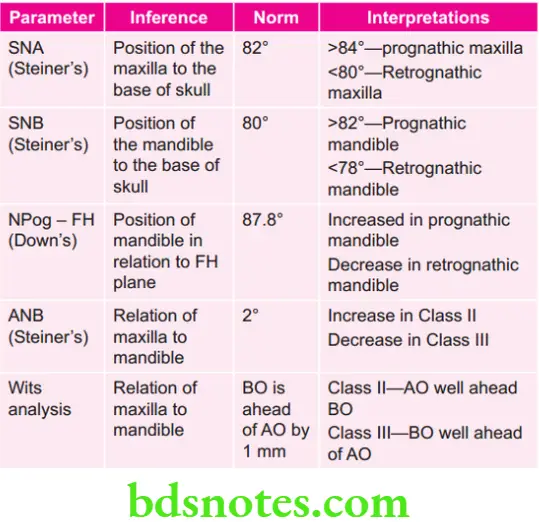
“Understanding cephalometrics orthodontics through Q&A”
Analysis of vertical Relationship
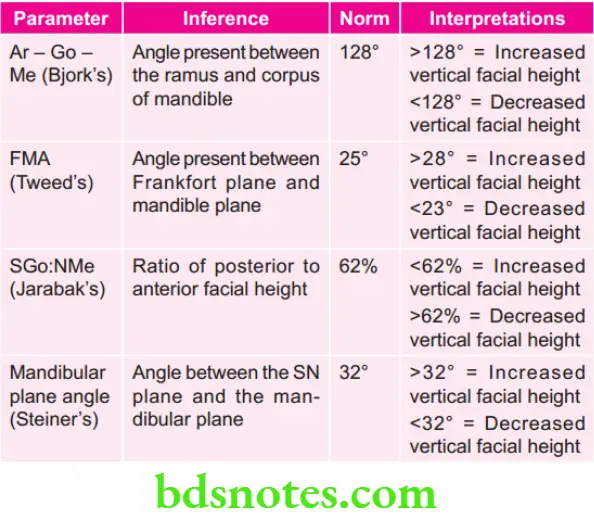
“Importance of studying cephalometrics orthodontics via Q&A format”
Assessment of Dentoalveolar Relationships

“Common questions about cephalometrics in orthodontic practice”
Soft Tissue Relationships
Steiner’s soft tissue analysis
- Steiner’s S line is drawn from the middle of S S-shaped curve formed by the lower border of the nose to the soft tissue contour of the chin.
- Lips are well-balanced face lies along this line
- Lips that are located anterior to this line are protrusive. Orthodontic treatment can be done to reduce protrusion.
Leave a Reply