Cephalometric Planes
“What are cephalometric planes and why do they matter in orthodontics?”
- Cephalometrics uses certain lines or planes
- The planes/lines are obtained by connecting two landmarks.
- The planes can be horizontal/vertical.
“Understanding the role of cephalometric planes in treatment planning”
Horizontal Planes
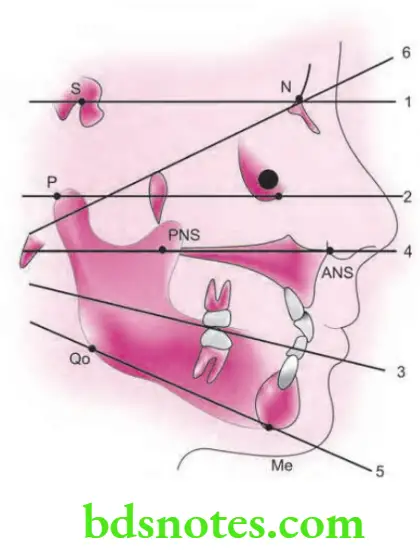
- SN plane: It is the cranial line between the sella and the nasion.
- It represent anterior cranial base.
- FH plane (Frankfort Horizontal plane): This plane connects the orbitale to porion (superior point of external auditory meatus).
- Occlusal plane: It is a denture plane bisecting the posterior occlusion of the permanent molar and premolars and extends anteriorly.
- Palatal plane: It is a line between ANS to PNS.
- Mandibular plane: Mandibular plane joining the gonion to gnathion.
- Basion-nasion plane: It represent cranial base, connect nasion to basion.
“Importance of studying cephalometric planes for better orthodontic outcomes”
“Common challenges in identifying and using cephalometric planes”
“Steps to explain different types of cephalometric planes in orthodontics”
Vertical Planes
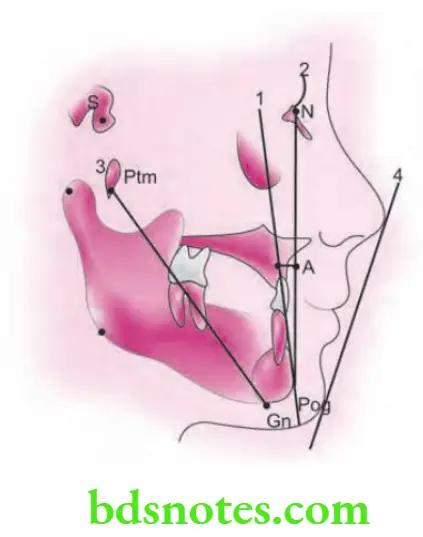
- A- Pog line: A line from point A to pogonion
- Facial plane: A plane from nasion to the pogonion.
- Facial axis: A line from pterygomaxillary fisure to gnathion
- Esthetic plane (E-plane): A line between the most anterior point of the soft tissue nose and soft tissue chin.
Leave a Reply