Structure Of Skeletal Muscle Write a short note on the nerve supply of a skeletal muscle. Answer. The nerves supplying skeletal muscles are somatic nerves and consist of three functional components. Nerve Supply Of Motor fibres: They enter the individual muscle fibres at a point called motor end plate/neuromuscular junction. The nerve fibres are of following two types: … [Read more...] about Hierarchical Organization Of Skeletal Muscle Tissue
General Anatomy
Motor Unit: Definition And Diagram
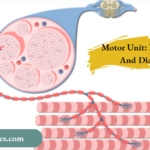
Motor Unit: Definition And Diagram Question 1. Write a short note on motor unit. Answer. It is a functional unit of muscle. It consists of a single alpha motor neuron and all the muscle fibres which it innervates. "The Role Of Motor Neurons In Controlling Muscle Fibers" "What Is A Motor Unit In Anatomy" About 150 muscle fibres are innervated by a single alpha … [Read more...] about Motor Unit: Definition And Diagram
Aponeurosis: Definition, Function, and Role in Muscle Movement
Aponeurosis might sound like a complicated term, but it refers to a type of flat connective tissue that plays a key role in how our muscles work. These structures are like a bridge, connecting muscles to bones and helping with movements all over the body. Understanding what aponeurosis is, how it functions, and where it is found can give us insight into how our bodies perform … [Read more...] about Aponeurosis: Definition, Function, and Role in Muscle Movement
Structure Of Skeletal Muscle
Structure Of Skeletal Muscle Question 1: What is the difference between the fleshy and tendinous parts of a muscle. Answer. Differences Between Fleshy and Tendinous Parts of a Muscle "The Role Of Sarcomeres And Myofibrils In Skeletal Muscle Contraction" "Components Of Skeletal Muscle Anatomy" "Best Ways To Understand Skeletal Muscle Structure" Question … [Read more...] about Structure Of Skeletal Muscle
Muscles Of The Body: Types, Groups, Anatomy & Functions
Muscles Of The Body: Types, Groups, Anatomy & Functions What are the properties of the muscles? Answer. The properties of muscles are as follows: Irritability, i.e. they are sensitive to stimuli. Contractility, i.e. they contract in response to stimuli. Extensibility, i.e. they can stretch. Elasticity, i.e. they can assume a desired shape after being … [Read more...] about Muscles Of The Body: Types, Groups, Anatomy & Functions