Carcinoma of the Tongue: Etiology, Clinical Features, and Histopathology
Question. Describe etiology, histopathology and clinical features of carcinoma of tongue.
Or
Describe in detail the etiology, clinical features and histopathology of squamous cell carcinoma of tongue.
Answer.
Carcinoma of Tongue Etiology
- Syphilis either an active case or past history of it coexistent with carcinoma of tongue. Syphilis is accepted as having strong association with development of dorsal tongue carcinoma. Arsenicals and heavy metals used to treat syphilis before advent of modern antibiotics have carcinogenic properties themselves and are responsible for some of earlier carcinoma development in this disease.
- Leukoplakia is the common lesion of tongue which leads to carcinoma of tongue.
- Carcinoma of tongue is due to poor oral hygiene, chronic trauma and use of alcohol and tobacco.
- Carcinoma of tongue is due to source of chronic irritation such as carious or broken tooth or an ill fitting denture.
“Understanding the role of carcinoma of the tongue in oral cancer: Q&A explained”
Carcinoma of Tongue Histopathology
- Cells are generally large and show distinct cell membrane.
- Nuclei of neoplastic cells are large.
- Carcinomas of tongue ranges from well diffrentiated keratinizing carcinoma to highly diffrentiated neoplasm.
- Changes of epithelial dysplasia are present.
- There is increased number of mitotic fiure per fild.
“Importance of studying carcinoma of the tongue for better diagnostic outcomes: Questions explained”
Carcinoma of Tongue Clinical Features
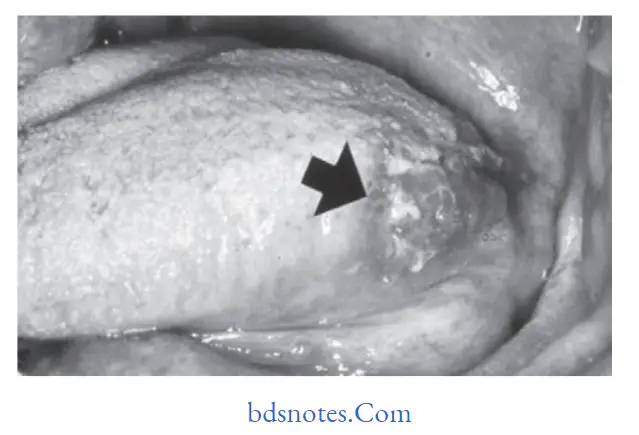
- Most common presenting signs of carcinoma of tongue is painless mass or ulcer. The lesion becomes painful when it is secondarily affcted.
- Tumor begins as superfiially indurated ulcer with slightly raised borders and may proceed either to develop a fungating, exophytic mass or to infitrate deep layers of tongue,producing fiation and induration without much surface change.
- If carcinoma is present on the dorsum of tongue,then patient has past or present history of syphilitic glossitis.
- Paresthesia of tongue frequently occurs due to invasion of lingual nerve by tumor cells.
- The common site where the lesion develops is lateral border of tongue and ventral surface of tongue.
- Initial lesions often appear as erythematous macules or nodules or fisured areas over the tongue.
“Common challenges in diagnosing carcinoma of the tongue effectively: FAQs provided”
Leave a Reply