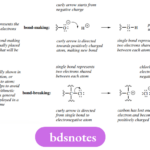
Reaction Mechanisms A reaction mechanism is a detailed step-by-step description of a chemical process in which reactants are converted into products. It consists of a sequence of bond-making and bond-breaking steps involving the movement of electrons and provides a rationalization for chemical reactions. Above all, following a few basic principles allows one to predict the … [Read more...] about Reaction Mechanisms
Nycleophilic Reactions: Nucleophilic Substitution
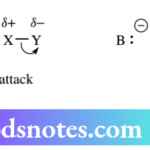
Nucleophilic Reactions: Nucleophilic Substitution As the term suggests, a substitution reaction is one in which one group is substituted for another. For nucleophilic substitution, the reagent is a suitable nucleophile and it displaces a leaving group. As we study the reactions further, we shall see that mechanistically related competing reactions, eliminations, and … [Read more...] about Nycleophilic Reactions: Nucleophilic Substitution
Acids And Bases
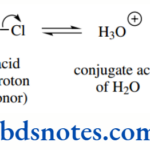
Acids And Bases Acid-Base Equilibria A fundamental concept in chemistry is associated with proton loss and gain, i.e. acidity and basicity. Acids produce positively charged hydrogen ions H+ (protons) in aqueous solution; the more acidic a compound is, the greater the concentration of protons it produces. In water, protons do not have an independent existence but become … [Read more...] about Acids And Bases
Brainstem Anatomy Explained: Parts, Functions, and Clinical Significance
Brainstem Anatomy Explained: Parts, Functions, and Clinical Significance Question 1. What is the brainstem? Discuss its functions. Answer: The brainstem is the stem-like lower part of the brain consisting of three parts – midbrain, pons and medulla oblongata. Anatomy of the brainstem Functions Of the Brainstem Provides passages to various ascending and descending … [Read more...] about Brainstem Anatomy Explained: Parts, Functions, and Clinical Significance
Medulla Oblongata Transverse Sections: Key Structures at Decussation Levels
Medulla Oblongata Transverse Sections: Key Structures at Decussation Levels Question 1. Enumerate the main structures seen in the transverse section of the medulla oblongata at the level of the pyramidal decussation. Answer. The main structures seen in the transverse section of the medulla oblongata at the level of the pyramidal decussation are as follows: Decussation … [Read more...] about Medulla Oblongata Transverse Sections: Key Structures at Decussation Levels