Ascites
Collection of the flid in peritoneal cavity is called ascites.
At least 1500 mL of flid must collect in peritoneal cavity before physical examination.
Causes of Ascites: Liver Disease, Heart Failure, and Cancer
Pathogenesis of ascites

“Understanding ascites through FAQs: Causes, symptoms, and treatment explained”
Causes of ascites
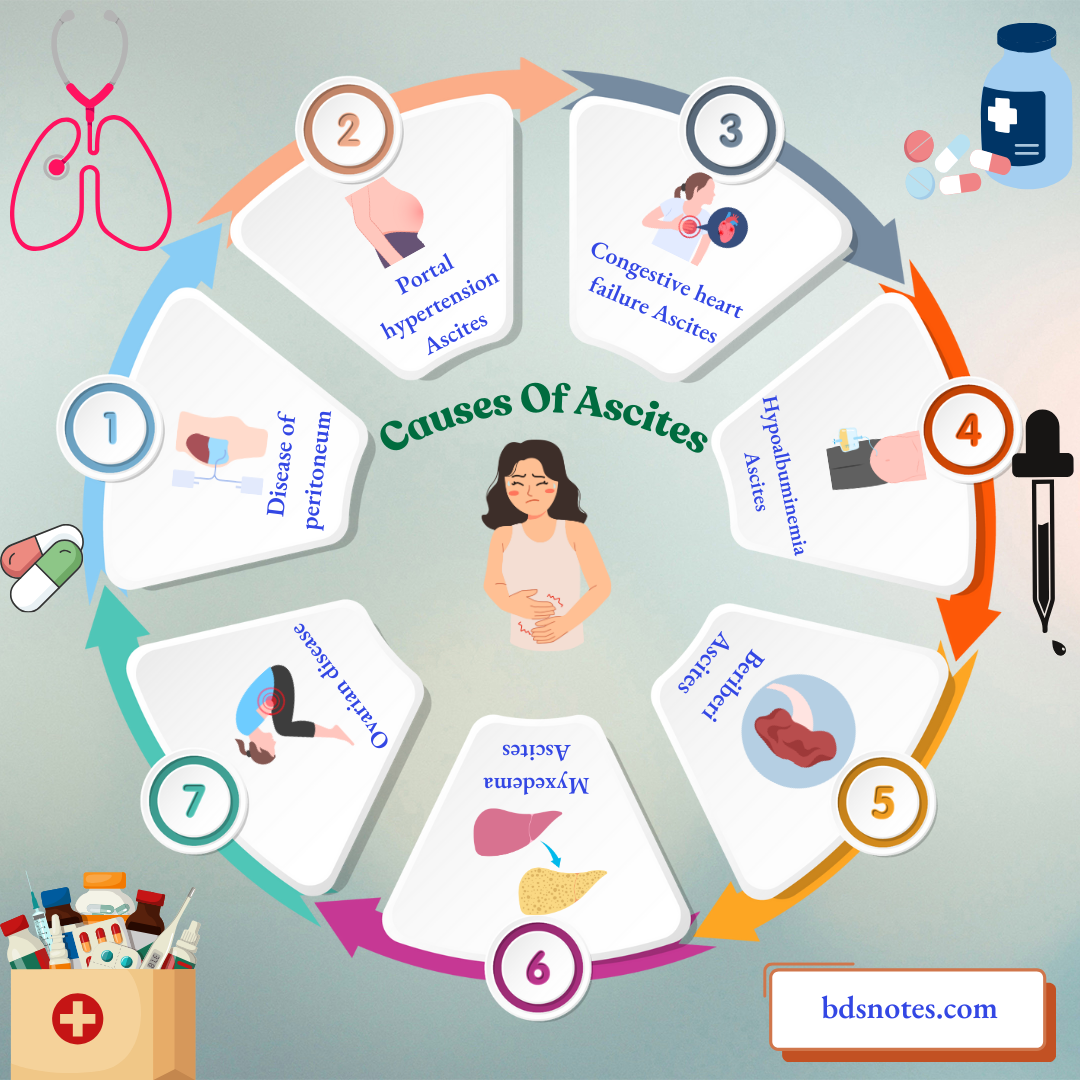
“Importance of studying ascites for healthcare professionals: Questions explained”
1. Disease of peritoneum
1. Infections Ascites
- Tuberculous peritonitis.
- Spontaneous bacterial peritonitis.
- FungalCandida, histoplasma.
- Parasitic — Schistosoma, enterobius.
- Viral — Acute severe hepatitis.
“Common challenges in diagnosing and treating ascites effectively: FAQs provided”

“Factors influencing success with ascites knowledge: Q&A”
Read And Learn More: General Medicine Question And Answers
Fatty Liver
2. Neoplasms Ascites
- Primary mesothelioma.
- Secondary carcinomatosis, e.g. adenocarcinoma,sarcoma, teratoma, leukemia, Hodgkin’s disease,lymphocytic lymphoma, myeloid metaplasia.
- Pseudomyxoma peritonei
3. Familial paroxysmal peritonitis
“Steps to explain ascites: Causes vs symptoms vs treatment: Q&A guide”
4. Miscellaneous Ascites
- Vasculitis — SLE and other collagen vascular diseases, allergic vasculitis (HenochSchonlein purpura).
- Eosinophilic gastroenteritis.
- Whipple’s disease.
- Granulomatous peritonitis — Sarcoidosis,
- Crohn’s disease, starch peritonitis.
- Peritoneal loose bodies.
- Peritoneal encapsulation.
2. Portal hypertension Ascites
3. Congestive heart failure Ascites
“Asymptomatic vs symptomatic effects of ignoring ascites principles: Q&A”
4. Hypoalbuminemia Ascites
- Nephrosis
- Malnutrition
- Proteinlosing enteropathy
5. Beriberi Ascites
6. Myxedema Ascites
7. Ovarian disease:
- Meigs syndrorne
- Struma ovari
- Ovarian overstimulation syndrome
- Pancreatic ascites due to retroperitoneal leakage of pancreatic enzymes from a ruptured cyst or pancreatic duct.
- Bile ascites
- Chylous ascites
- Epidemic dropsy
“Role of portal hypertension in causing ascites: Questions answered”
Investigations Ascites or Ascites Treatment
- Ultrasonography: USG of abdomen shows presence of minimum amount of fluid and is very needful when clinical signs are absent. This used for guiding paracentesis.
- Paracentesis: Abdominal paracentesis is done which helps in determination of etiology.
- In cirrhosis, ascitic flid is clear and straw coloured. The flid is milky white in chyle ascites while it is cloudy in infections. Hemorrhagic flid is seen due to trauma, tumor or tuberculosis.
- Presence of more than 500 leucocytes/µL is suggestive of inflmmatory conditions.
- Basedonthespecifigravityandtotalproteinconcentration,ascitic flid has traditionally been classifid as transudative and exudative.
“Early warning signs of gaps in understanding ascites basics: Common questions”
Management of Ascites or Ascites Treatment
- In every case of ascites oral diuretics, i.e. furosemide 40 to 80 mg + spironolactone 25 to 100 mg is administered.
- Sodium intake is restricted and diet which is low in sodium is given.
- In case of massive ascites which produce cardiorespiratory enlargement, abdominal paracentesis is done and flid is drained slowly. Fluid should not be drained quickly because it causes vasovagal attck.
- Portac aval shunt surgery or implantation of peritoneovenous shunt can be done in refractory ascites.
Leave a Reply